Anode free lithium metal batteries – Auto Ultrathin Polymer Layer Solves the Biggest Weakness of Anode-Free Lithium Batteries, Unlocking Longer Lifespan and Commercial Viability for EVs and DronesDraft 04-01-2026
Anode free lithium metal batteries
Ultrathin Polymer Coating Breaks a Major Barrier in Anode-Free Lithium Batteries
Anode-free lithium metal batteries are widely regarded as a next-generation energy storage technology for electric vehicles, drones, and large-scale energy storage systems. They promise significantly higher energy density and lower manufacturing costs than conventional lithium-ion batteries. However, their commercial adoption has been slowed by one critical limitation: extremely short cycle life.
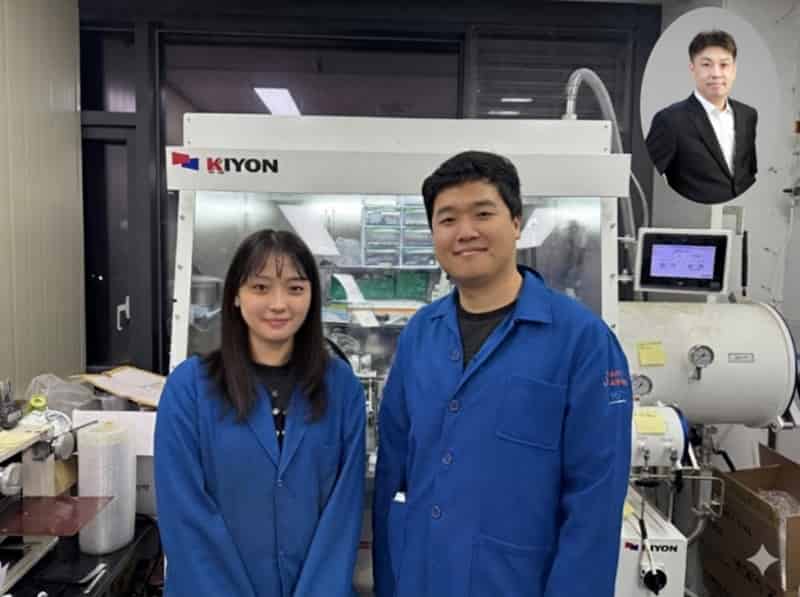
A research team from the Korea Advanced Institute of Science and Technology has now demonstrated a simple yet powerful solution. By applying an ultrathin polymer layer to the electrode surface, the researchers dramatically improved the stability and lifespan of anode-free lithium metal batteries, marking a major step toward real-world deployment. anode free lithium metal batteries
Why Anode-Free Lithium Metal Batteries Matter
Unlike conventional lithium-ion batteries that rely on graphite or lithium metal anodes, anode-free lithium metal batteries use only a copper current collector. Lithium metal forms directly on the copper surface during the first charging cycle.
This simplified design offers multiple advantages. Anode-free lithium metal batteries can achieve 30 to 50 percent higher energy density, reduce raw material usage, and simplify manufacturing processes. These benefits make them highly attractive for electric vehicles, drones, and advanced energy storage systems. anode free lithium metal batteries
Despite these strengths, their short lifespan has remained a fundamental obstacle.
The Core Problem: Interfacial Instability
The main weakness of anode-free lithium metal batteries arises during initial charging. Lithium deposits directly onto the copper surface, triggering rapid electrolyte decomposition. This reaction forms an unstable protective layer known as the solid electrolyte interphase, or SEI.
An unstable SEI leads to uneven lithium deposition and the formation of dendrites. These needle-like lithium structures grow over repeated cycles, consuming electrolyte, reducing battery capacity, and increasing the risk of internal short circuits and thermal runaway.
Previous efforts to solve this problem focused primarily on modifying electrolyte compositions. While partially effective, those approaches added cost and complexity and often lacked long-term stability. anode free lithium metal batteries
A New Approach: Engineering the Electrode Surface
Instead of altering the electrolyte, the KAIST research team targeted the root of the problem: the electrode surface itself.
Using an initiated chemical vapor deposition process, the researchers coated the copper current collector with an ultrathin polymer layer measuring just 15 nanometers thick. This layer was applied uniformly without using liquid solvents, making the process clean and highly controllable. anode free lithium metal batteries
The polymer layer fundamentally changes how the electrolyte interacts with the electrode surface, reshaping lithium-ion transport and chemical reactions at the interface.
How the Polymer Layer Improves Battery Lifespan
In conventional anode-free lithium metal batteries, electrolyte solvents decompose first, forming a soft, organic SEI. This unstable layer promotes dendrite growth and continuous electrolyte consumption. anode free lithium metal batteries
The newly developed polymer layer behaves differently. It is immiscible with the electrolyte solvent, which shifts decomposition reactions toward the salt components instead. This change leads to the formation of a hard, inorganic SEI that is far more stable.
As a result, lithium deposits more evenly on the copper surface. Dendrite formation is suppressed, electrolyte loss is minimized, and excessive SEI growth is prevented. Together, these effects dramatically extend the cycle life of anode-free lithium metal batteries.
Simulation Confirms the Mechanism
To better understand the process, the research team conducted simulations that revealed how the polymer layer creates an anion-rich environment at the electrode interface during battery operation. anode free lithium metal batteries
This anion-rich condition promotes the formation of the stable inorganic SEI and helps maintain interfacial integrity over repeated charge and discharge cycles. The simulations confirmed that electrode surface design alone can control interfacial chemistry without modifying the electrolyte itself.
Scalable and Industry-Compatible Manufacturing
One of the most significant advantages of this breakthrough is its compatibility with existing battery manufacturing infrastructure.
The initiated chemical vapor deposition process can be integrated into roll-to-roll production systems, enabling large-area, continuous coating of electrode materials. This approach adds minimal cost because it requires only a thin surface modification rather than new materials or complex electrolyte formulations. anode free lithium metal batteries
Such scalability makes the technology suitable for mass production, accelerating the commercialization of anode-free lithium metal batteries for electric vehicles and energy storage systems.
Implications for EVs, Drones, and Energy Storage
By solving the long-standing issue of interfacial instability, this ultrathin polymer layer removes one of the final barriers preventing anode-free lithium metal batteries from entering the market. anode free lithium metal batteries
Higher energy density means longer driving range for electric vehicles, extended flight times for drones, and more compact energy storage solutions. Improved stability also enhances safety and reliability, which are critical requirements for commercial adoption.
A Design Principle for Next-Generation Batteries
Beyond the immediate performance gains, this research establishes a broader design principle for battery development. It demonstrates that interfacial stability and electrolyte reactions can be precisely controlled through electrode surface engineering.
This insight opens new pathways for advancing not only anode-free lithium metal batteries but also other high-energy battery systems that face similar interfacial challenges. anode free lithium metal batteries
More…