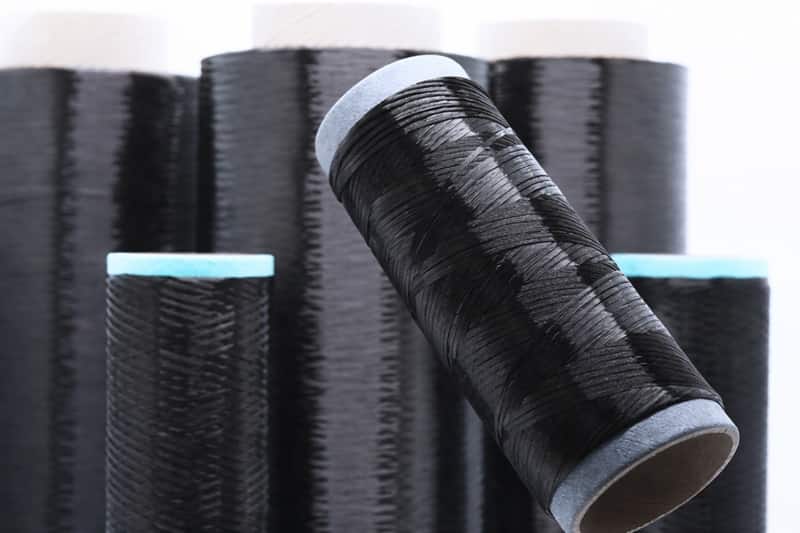
Germany accelerates industrial-scale biobased carbon fibers through a €53 million pilot plant, bridging research and real-world applications
Biobased carbon fibers
The transition toward sustainable materials is accelerating, and biobased carbon fibers are emerging as one of the most promising alternatives to traditional fossil-based solutions. In Germany, a major step forward is underway as research moves beyond laboratory experimentation into industrial-scale implementation, driven by a new initiative coordinated by Fraunhofer IAP.
For years, scientists have explored how biobased carbon fibers can replace conventional carbon fibers derived from polyacrylonitrile, a petroleum-based precursor
The objective is clear: reduce dependence on fossil resources while maintaining high performance in applications such as automotive, aerospace, and construction. Now, with significant public investment and coordinated research efforts, this vision is becoming tangible.
At the core of this transformation is the use of renewable raw materials such as cellulose and lignin derived from wood. These materials are first dissolved and processed into precursor fibers through advanced spinning techniques. Once formed, the fibers undergo carbonization, a high-temperature process that converts them into strong, lightweight carbon fibers. This approach not only reduces environmental impact but also opens new pathways for material innovation.
Fraunhofer IAP has taken a decisive step by launching the construction of a pilot plant in Guben, located within the Carbon Lab Factory Lausitz. This facility represents a critical milestone for scaling biobased carbon fibers production. With more than €53 million in funding from the German federal government and the state of Brandenburg, the project signals strong institutional commitment to sustainable industrial transformation.
The investment is strategically distributed
The city of Guben is contributing approximately €20 million to build the infrastructure that will house the pilot plant. Meanwhile, Fraunhofer IAP will allocate the remaining funds to develop the production systems, install specialized equipment, and manage the operational launch, which is scheduled for the end of 2029. This coordinated funding model ensures both physical infrastructure and technological capability are developed in parallel.
The new facility is designed to produce innovative precursor fibers at ton-scale capacity, a significant leap from laboratory volumes.
This scale is essential for validating the commercial viability of biobased carbon fibers and enabling industrial stakeholders to test the material in real-world scenarios. According to project leaders, the plant will support multiple types of precursor fibers, expanding the versatility and potential applications of the technology.
In addition to the precursor production line, Fraunhofer IAP is also developing a laboratory-scale carbonization unit within the same ecosystem. This complementary facility will convert precursor fibers into carbon fibers at kilogram scale. The purpose is to evaluate material behavior, refine processing techniques, and generate data critical for further scale-up. Importantly, it will also provide sample materials to industry partners, facilitating early-stage adoption and collaboration.
This initiative does not operate in isolation
It is part of a broader regional strategy to establish Lausitz as a hub for advanced materials and lightweight technologies. Another pilot plant, currently under construction in Saxony and operated by the Technical University of Chemnitz, will produce carbon fibers at ton scale. This facility will be capable of processing both conventional and biobased carbon fibers, enabling direct comparison and integration within existing industrial frameworks.
Collaboration is a defining feature of this ecosystem. Fraunhofer IAP is working closely with the Brandenburg University of Technology Cottbus-Senftenberg, particularly its Institute for Lightweight Design and Value Chain Management. Together, they are developing carbon fiber-reinforced composites tailored to meet the demands of various structural applications. These include automotive components, aerospace structures, and energy-efficient construction materials.
The involvement of local companies further strengthens the initiative
By participating in the development and testing of prototypes, industry partners gain early access to biobased carbon fibers and contribute to refining their performance. Demonstrators and pilot applications will be tested under real-world conditions, accelerating the transition from research to market-ready solutions.
From a sustainability perspective, the implications are substantial. Traditional carbon fiber production is energy-intensive and heavily reliant on fossil resources. By contrast, biobased carbon fibers offer a pathway to reduce carbon emissions, improve resource efficiency, and support circular economy principles. The use of lignin, a byproduct of the paper and pulp industry, is particularly promising, as it adds value to an otherwise underutilized material.
The project also aligns with broader European and global objectives related to climate neutrality and green industrial policy
As industries seek to decarbonize, materials innovation becomes a critical lever. Lightweight composites made from biobased carbon fibers can reduce energy consumption in transportation, improve fuel efficiency, and enable new design possibilities.
From a technological standpoint, challenges remain. Scaling production while maintaining consistent quality is a complex task. Process optimization, cost competitiveness, and supply chain integration will determine how quickly biobased carbon fibers can compete with established materials. However, the infrastructure being built in Germany is specifically designed to address these challenges through iterative testing and industrial collaboration.
Another key advantage of this initiative is its modular and flexible approach
By supporting multiple precursor types and integrating research with pilot-scale production, the system can adapt to evolving technological insights. This flexibility increases the likelihood of identifying the most efficient and scalable pathways for biobased carbon fibers manufacturing.
Looking ahead, the success of this project could redefine the carbon fiber industry. If scalable, cost-effective production is achieved, biobased carbon fibers could become a standard material in numerous sectors. This would not only reduce environmental impact but also enhance supply chain resilience by diversifying raw material sources.
In conclusion, Germany’s investment in pilot-scale infrastructure marks a turning point for biobased carbon fibers
By bridging the gap between research and industrial application, the Fraunhofer IAP initiative is setting the foundation for a more sustainable materials economy. The combination of public funding, academic collaboration, and industry involvement creates a robust framework for innovation. As the project progresses toward its 2029 launch, it stands as a clear example of how strategic investment can accelerate the transition from laboratory breakthroughs to real-world impact.
China’s 1 Breakthrough Carbon Fiber Could Disrupt Global Advanced Materials Industry
More…