India Plastic Recycling: Why Advanced Technology Is Now a Global Competitiveness Issue – Polymer Price Trends
India plastic recycling – Full price table (29/06/2026 →06/07/2026)
| ITEM | 29/06/2026 | 06/07/2026 | +/− |
|---|---|---|---|
| Bottle grade PET chips domestic market | 7,100 yuan/ton | 6,950 yuan/ton | -150 |
| Chinese bottle-grade PET chips FOB export price | 970 $/ton | 950 $/ton | -20 |
| LDPE CFR Est China | 1,235 $/ton | 1,085 $/ton | -150 |
| PET Semidull — Fiber chips | 6,660 yuan/ton | 6,610 yuan/ton | -50 |
| PET Bright — Fiber chips | 6,760 yuan/ton | 6,660 yuan/ton | -100 |
| Pure Terephthalic Acid PTA domestic market | 5,725 yuan/ton | 5,645 yuan/ton | -80 |
| Pure Terephthalic Acid PTA FOB China | 760 $/ton | 750 $/ton | -10 |
| Monoethyleneglycol (MEG) South China | 4,292 yuan/ton | 4,182 yuan/ton | -110 |
| Monoethyleneglycol (MEG) CFR China | 520 $/ton | 505 $/ton | -15 |
| Paraxylene PX FOB Taiwan market | 959 $/ton | 953 $/ton | -6 |
| Paraxylene PX FOB South-Korea market | 958 $/ton | 952 $/ton | -6 |
| Paraxylene PX FOB EU market | 1,134 $/ton | 1,134 $/ton | – |
| Polyester filament POY 150D/48F domestic market | 8,050 yuan/ton | 7,900 yuan/ton | -150 |
| Recycled Polyester filament POY 150/48F domestic market | 7,100 yuan/ton | 7,000 yuan/ton | -100 |
| Polyester filament DTY 150D/48F domestic market | 9,200 yuan/ton | 9,100 yuan/ton | -100 |
| Polyester filament FDY 68D/24F | 9,000 yuan/ton | 8,750 yuan/ton | -250 |
| Polyester filament FDY 150D/96F domestic market | 8.300 yuan/ton | 8,100 yuan/ton | -200 |
| Polyester staple fiber 1.4D 38mm domestic market | 7,230 yuan/ton | 7,170 yuan/ton | -60 |
| Caprolactam (CPL) domestic market | 10,900 yuan/ton | 11,000 yuan/ton | +100 |
| Caprolactam (CPL) CFR China | 1,770 $/ton | 1,80 $/ton | +30 |
| Nylon 6 chips overseas market |
Northeast Asia / China $1,810 – $1,840 / MT Middle East $2,020 – $2,050 / MT Southeast Asia $2,120 – $2,150 / MT North America (US) $2,510 – $2,540 / MT |
Northeast Asia $1.,32/MT Southeast Asia $1,62/MT Middle East $1,50/MT Europe $2,37/MT North America $2,47/MT |
– |
| Nylon 6 chips conventional spinning domestic market | 11,200 yuan/ton | 11,350 yuan/ton | +150 |
| Nylon 6 chips high speed spinning domestic market | 11,650 yuan/ton | 11,650 yuan/ton | – |
| Nylon 6.6 chips domestic market | 17,800 yuan/ton | 16,000 yuan/ton | -1,800 |
| Nylon6 Filament POY 86D/24F domestic market | 13,400 yuan/ton | 13,400 yuan/ton | – |
| Nylon6 Filament DTY 70D/24F domestic market | 15,800 yuan/ton | 15,800 yuan/ton | – |
| Nylon6 Filament FDY 70D/24F | 13,600 yuan/ton | 13,600 yuan/ton | – |
| Spandex 20D domestic market | 31,700 yuan/ton | 31,700 yuan/ton | – |
| Spandex 30D domestic market | 31,200 yuan/ton | 31,200 yuan/ton | – |
| Spandex 40D domestic market | 28,500 yuan/ton | 28,500 yuan/ton | – |
| Adipic Acid China domestic market | 7,980 yuan/ton | 7,800 yuan/ton | -180 |
| Adipic Acid Europe market | 1,930 $/ton | 1,930 $/ton | – |
| Benzene domestic market East China | 6,800 yuan/ton | 7,000 yuan/ton | +200 |
| Benzene CFR China | 830 $/ton | 847 $/ton | +17 |
| Ethylene South East market | 830 $/ton | 790 $/ton | -40 |
| Ethylene NWE market CIF | 680 $/ton | 746 $/ton | +66 |
| Acrylonitrile (ACN) domestic market | 10,450 yuan/ton | 9,750 yuan/ton | -700 |
| Acrylonitrile ACN Southeast Asia | 1,590 $/ton | 1,575 $/ton | -15 |
| Acrylic staple fiber (ASF) CFR China | 16,055 yuan/ton | 15,855 yuan/ton | -200 |
| VSF viscose staple fiber | 14,200 yuan/ton | 14,200 yuan/ton | – |
| PP Powder domestic market | 8,000 yuan/ton | 8,000 yuan/ton | – |
| Naphtha overseas market | 682 $/ton | 609 $/ton | -71 |
| Phenol domestic market (Jinan Dezheng / Yanshan Petrochemical, Shandong) | 7,450 yuan/ton | 7,750 yuan/ton | +300 |
| Recycled PET | 4,200 yuan/ton | 4,200 yuan/ton | – |
India Plastic Recycling: Why Advanced Technology Is Becoming Essential
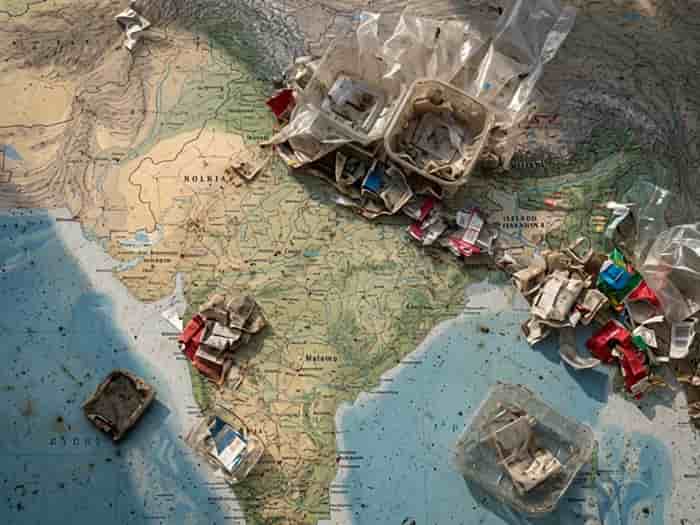
India plastic recycling is entering a decisive phase. The country already has one of the world’s most active plastics recovery ecosystems, but the next challenge is no longer only about how much plastic is collected and recycled. It is about quality, traceability, global compliance and the ability to turn waste into high-value materials.
That shift is becoming clearer as policymakers, recyclers, technology providers and manufacturers gather around the same message: India’s plastics sector must modernise faster if it wants to stay competitive internationally.
The 3rd Global Conclave on Plastics Recycling and Sustainability, taking place from 2 to 5 July 2026 at Bharat Mandapam in New Delhi, is positioned as a major platform for recycling, waste management, plastic machinery and circular economy solutions. The event is jointly organised by the All India Plastics Manufacturers’ Association and the Chemicals and Petrochemicals Manufacturers’ Association, bringing together manufacturers, recyclers, policymakers, technology companies and sustainability leaders.
From recycling volume to recycling value
For years, India’s plastics industry has been recognised for its large-scale recycling network. Much of that system has depended on collection, sorting and mechanical recycling, supported by a vast informal workforce that has kept large quantities of plastic waste moving away from dumpsites.
But global markets are changing. Buyers increasingly want recycled polymers that meet consistent technical, safety and environmental standards. Packaging companies need materials that can support recycled-content targets. Exporters need quality assurance, documentation and compliance with international expectations.
This means India’s next phase of plastic recycling cannot rely only on volume. It must deliver cleaner streams, better sorting, improved material design and higher-grade recyclates.
Why advanced recycling technologies matter
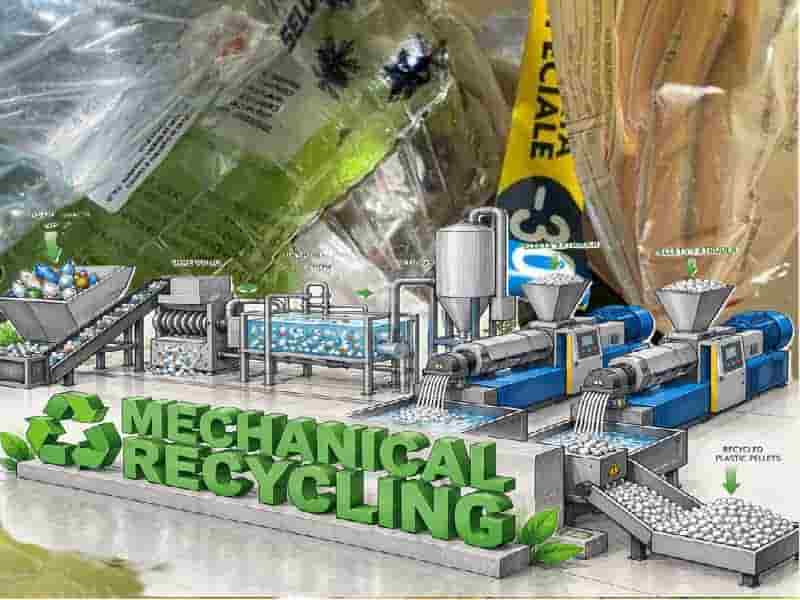
Traditional mechanical recycling remains important, especially for clean and well-sorted plastic waste. However, it has limits when dealing with mixed, contaminated, flexible or multi-layer packaging.
That is where advanced recycling technologies become more relevant. These may include chemical recycling, improved washing and sorting systems, AI-enabled material identification, digital traceability tools, and better processing lines for difficult plastic streams.
Recent industry coverage has also highlighted new activity around plastics recycling knowledge resources and technology-led circularity, including the launch of a comprehensive plastics recycling handbook by PPRDC, reported by Modern Plastics in its July 2026 updates.
The industry’s practical challenge is to identify which technologies can scale economically, meet environmental safeguards and produce materials that manufacturers can confidently use again. India plastic recycling
Packaging design must change too
Technology alone will not solve the problem if products are not designed for recovery.
A major obstacle in plastic recycling is packaging made from multiple materials that are difficult to separate. Multi-layer and mixed-material formats often perform well for shelf life and product protection, but they can reduce recyclability after use.
A stronger shift toward mono-material packaging could make collection and recycling more efficient. It would also help recyclers produce more consistent output, which is essential for higher-value applications.
For brands, this means recyclability must be built into packaging design from the start, not treated as an end-of-life problem.
R&D is now a competitiveness requirement
India’s plastics sector also needs deeper investment in research and development. The goal is not only to recycle more, but to create materials and systems that can compete with international benchmarks.
That includes work on recycled polymers, biodegradable and compostable alternatives where appropriate, better testing standards, safe material use, and technologies that reduce energy, water and emissions across the recycling chain.
The Global Conclave’s focus on circular economy practices and sustainability innovation reflects how recycling is becoming a strategic industrial issue rather than a narrow waste-management topic.
If India can connect industry, academia, government labs and private technology providers, it can build an ecosystem capable of producing higher-quality recycled materials at scale.
The informal sector cannot be left behind
India’s recycling system depends heavily on informal waste collectors, aggregators and small processors. Their role is essential, but many still work without adequate safety, formal recognition, training or access to better equipment.
Modernisation should not mean excluding them. Instead, the transition should formalise and strengthen their role through safer working conditions, skill development, digital inclusion and stronger links to organised recycling infrastructure.
A more formal and transparent value chain would also improve traceability, which is increasingly important for companies that need to prove recycled-content claims and comply with sustainability rules.
Export growth depends on trust
India’s plastics industry has significant export ambitions. But global competitiveness will depend on trust: trust in material quality, trust in compliance data, trust in recycling claims and trust in environmental safeguards.
International customers are unlikely to accept recycled plastic only because it is cheaper. They will look for consistent specifications, tested performance and credible documentation.
This is why advanced recycling, better standards and stronger R&D are directly connected to export growth. They can help Indian recyclers and manufacturers move from low-margin recycled products to higher-value applications.
Environmental responsibility must stay central
The push for new recycling technologies must be matched with environmental accountability. Not every technology labelled “advanced” is automatically sustainable. Each solution needs evidence on emissions, residues, energy use, product quality and real circularity.
India’s plastics sector should therefore prioritise technologies that reduce pollution, improve resource efficiency and keep materials in productive use for longer.
The wider message is clear: recycling should not be used as an excuse for unlimited plastic production or poor design. It should be part of a broader circular economy strategy that includes reduction, reuse, better packaging design, responsible manufacturing and strong waste collection systems.
The road ahead for India plastic recycling
India plastic recycling is moving into a more demanding era. The country has scale, entrepreneurial energy and an established recovery network. What it now needs is higher quality, stronger science, better infrastructure and globally credible standards.
The winners in this next phase will be companies that invest early in technology, traceability, R&D and sustainable design. They will be better placed to serve domestic brands, meet export requirements and support India’s circular economy goals.
For India’s plastics industry, the opportunity is substantial. But the direction is unavoidable: the future of recycling will be measured not just by tonnes processed, but by the value, safety and sustainability of the materials brought back into use.
Plastic Recycling Boom Drives 7 Positive Industry Shifts
More…