Oil Prices Plunge to Four-Year Lows on November 21, 2025: Brent at $62.29, WTI at $57.84 Amid Oversupply Fears and Geopolitical Shifts - Archive
Oil Price
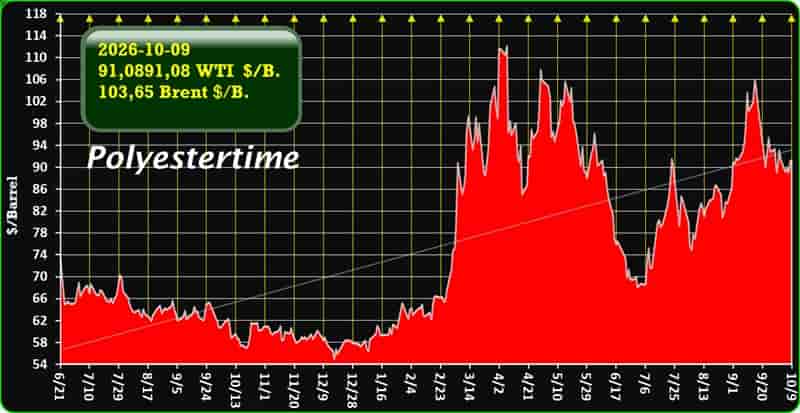
In the volatile world of energy commodities, the oil price took another sharp hit on November 21, 2025. Brent crude, the global benchmark, dipped to $62.29 per barrel, while West Texas Intermediate (WTI), the U.S. staple, slid to $57.84 per barrel.
This marks a continuation of a multi-week decline, with both benchmarks down over 2% from the previous session and more than 13% lower year-to-date.
For investors and consumers alike, this oil price slump brings a mix of relief and uncertainty, as supply outpaces demand in an increasingly oversupplied market.The immediate trigger for today’s oil price drop? Renewed U.S. diplomatic efforts to broker a peace deal between Russia and Ukraine. Reports emerged of a draft framework aimed at ending the three-year conflict, easing fears of prolonged supply disruptions from the region.
This geopolitical thaw overshadowed a larger-than-expected draw in U.S. crude inventories—down 3.4 million barrels last week—failing to buoy prices as traders focused on broader oversupply risks.
A strengthening U.S. dollar further pressured the oil price, making crude more expensive for international buyers and amplifying the downward momentum.
At its core, this oil price decline stems from a classic case of supply glut. Global oil production has surged 6.2 million barrels per day (mb/d) since January 2025, split evenly between OPEC+ and non-OPEC nations like the U.S. and Brazil.
OPEC+, the powerhouse cartel, confirmed plans on November 2 to pause further output hikes through March 2026 but has already unwound cuts by ramping up to targets, adding pressure on the oil price.
Meanwhile, U.S. shale drillers, though facing profitability squeezes below $60 per barrel, continue to pump at record levels, contributing to inventories that now exceed five-year averages.
Demand-side woes compound the issue. China’s strategic stockpiling—averaging 0.8 mb/d through September—has masked weaker underlying consumption, but economists warn of slowing growth amid U.S.-China trade frictions.
Globally, the International Energy Agency (IEA) projects oil demand growth at just 790,000 b/d for 2025, led by petrochemicals but hampered by economic headwinds and a shift toward renewables.
In the U.S., cooler winter forecasts and stagnant gasoline demand aren’t helping lift the oil price either.
To illustrate the oil price trajectory, consider this historical snapshot:
|
Date
|
Brent ($/Bbl)
|
WTI ($/Bbl)
|
Key Event
|
|---|---|---|---|
|
January 16, 2025
|
82.65
|
80.77
|
Peak amid Middle East tensions
|
|
October 2025 Avg
|
65.00
|
62.00
|
Supply growth outweighs sanctions
|
|
November 19, 2025
|
63.51
|
59.47
|
Peace talks draft leaks
|
|
November 21, 2025
|
62.29
|
57.84
|
Inventory draw fails to rally
|
This table highlights a stark 25% oil price erosion since early 2025, underscoring the market’s sensitivity to supply dynamics.
Geopolitics adds another layer to the oil price puzzle. U.S. sanctions on Russian giants Rosneft and Lukoil, effective November 21, were meant to curb Moscow’s exports and force peace negotiations.
Yet, with loadings resuming at key Russian ports and nearly a third of seaborne oil stuck in tankers due to compliance fears, the impact has been muted so far.
Analysts at JPMorgan note this could shave 500,000 b/d from Russian flows long-term, but short-term stockpiling delays any oil price rebound.
For everyday consumers, this oil price dip is a silver lining. U.S. gasoline prices, which derive about 50% of their cost from crude, could fall 10-15 cents per gallon in the coming weeks, per the Energy Information Administration (EIA).
Inflation-weary households stand to save billions, with the New York Times estimating an 18% crude drop translating to lower pump costs nationwide.
Airlines and shipping firms, big oil users, may pass on savings, potentially boosting travel and e-commerce.Yet, the oil price slump spells trouble for producers. At sub-$60 levels, many U.S. rigs are unprofitable, leading to a 13% drop in active drilling sites year-over-year.
Chevron and ConocoPhillips have announced job cuts, while OPEC+ members like Saudi Arabia grapple with market share battles.
ConocoPhillips, for instance, hiked its dividend by 8% in Q3 but warned of flat 2026 output amid low oil price pressures.
Looking ahead, forecasts paint a cautious picture for the oil price. The EIA’s Short-Term Energy Outlook, released November 12, predicts Brent averaging $68.76 for 2025 but plummeting to $54.92 in 2026 as inventories swell through non-OPEC gains.
The IEA echoes this, forecasting a 3.1 mb/d supply rise next year, outstripping 790 kb/d demand growth and risking a “super glut.”
WalletInvestor sees WTI ranging $56-67 in 2026, with volatility from trade wars and elections.
In summary, today’s oil price at Brent $62.29 and WTI $57.84 reflects a market tipping toward oversupply, tempered by fleeting geopolitical hopes. As the energy transition accelerates— with U.S. ethanol exports hitting records and nuclear pushes gaining traction—traders must navigate this low-price era wisely
 Global Oil Price Falls Sharply Today as Brent Hits $63.92 and WTI Drops to $59.67 Amid Geopolitical Uncertainty and Market Volatility