Oil Prices Slip as Geopolitical Tensions Ease and Market Sentiment Softens While Traders Reassess Global Demand Signals on January 19, 2026
Oil Price Trend on January 19, 2026: What’s Driving Brent and WTI Today
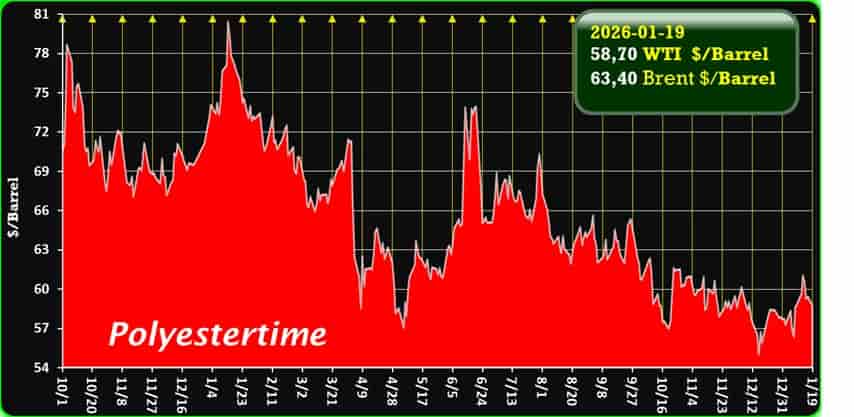
Oil markets opened the week with a softer tone, reflecting a shift in global sentiment as geopolitical tensions in Iran eased and traders reassessed supply risks. Brent crude is trading around $63.40 per barrel, while WTI sits near $58.70 per barrel, marking a modest pullback from recent highs. These movements align with broader market reporting showing Brent slipping below $64 and WTI hovering near $59 as tensions cooled. Bloomberg
At the same time, analysts note that WTI is testing key technical support levels around $59, with a potential bearish reversal pattern forming on short‑term charts. This combination of easing geopolitical risk and technical pressure is shaping today’s oil price narrative.
Current Brent and WTI Movements
Brent Crude (~$63.40/B)
-
Brent prices softened as fears of major supply disruptions from Iran faded.
-
Market reports confirm that traders reduced the geopolitical risk premium after protests in Iran lost momentum.
-
Brent briefly dipped below $64 earlier today, consistent with Bloomberg’s market update.
WTI Crude (~$58.70/B)
-
WTI is trading near the lower end of its recent range.
-
Technical analysis shows a potential head‑and‑shoulders pattern, signaling possible downward pressure if support breaks.
-
U.S. market sentiment remains cautious amid broader risk‑off behavior in global equities.
Key Factors Influencing Today’s Oil Price
1. Geopolitical Developments: Iran Tensions Ease
Recent protests in Iran had raised concerns about potential supply disruptions, but the situation has stabilized.
-
Traders now see a lower probability of immediate conflict or export interruptions.
-
Bloomberg confirms that tensions cooled over the weekend, reducing upward pressure on prices.
This easing of geopolitical risk is the primary reason oil prices are not spiking today.
2. OPEC+ Actions and Supply Expectations
While no major OPEC+ announcements were made today, the market continues to price in:
-
Steady production levels from core OPEC members
-
Potential adjustments later in Q1 if demand weakens
-
A cautious stance from Saudi Arabia and Russia as they monitor global inventories
The absence of new supply cuts contributes to the current sideways movement in the oil price.
3. Global Supply and Demand Dynamics
Demand signals remain mixed:
-
Positive: Gradual recovery in Asian refinery activity
-
Negative: Slower‑than‑expected industrial output in Europe and the U.S.
-
Neutral: Seasonal winter demand is stable but not exceptionally strong
Supply remains adequate, with no major outages reported.
4. Economic Data and Market Sentiment
Global markets are showing a mild risk‑off tone:
-
Investors are reacting to political uncertainty in the U.S., including President Trump’s renewed geopolitical posturing.
-
Economic data from Europe suggests sluggish manufacturing momentum.
-
U.S. consumer sentiment remains steady but not strong enough to boost energy demand expectations.
This cautious environment is weighing on the oil price.
Investor Sentiment: Cautious but Not Bearish
Investor sentiment today is best described as neutral‑to‑cautious:
-
Geopolitical risk premiums are shrinking.
-
Technical indicators show potential downside for WTI.
-
Traders are waiting for fresh economic data and OPEC+ signals before taking strong positions.
The market is not pricing in a major crash, but neither is it expecting a rapid rally.
Quick Comparison Table: Brent vs. WTI (January 19, 2026)
| Indicator | Brent Crude | WTI Crude |
|---|---|---|
| Price (approx.) | $63.40/B | $58.70/B |
| Recent Trend | Slight decline | Testing support |
| Key Driver | Easing Iran tensions | Technical pressure |
| Risk Premium | Lowering | Moderate |
| Short‑Term Bias | Neutral | Slightly bearish |
Sources: MarketInsiders, Bloomberg, FXDailyReport.
Short‑Term Outlook: Where Oil Prices May Head Next
1. Brent Outlook
Brent is likely to remain in the $62–65 range in the short term. Upside potential is limited unless:
-
Iran tensions flare again
-
OPEC+ signals new production cuts
-
Global demand data improves
2. WTI Outlook
WTI may face more volatility due to technical factors. If support near $59 breaks, prices could drift toward $57 as suggested by chart analysis.
3. Implications for the Global Economy
-
Energy Markets: Stable prices reduce inflationary pressure on importing nations.
-
Consumers: Lower fuel costs may support household spending.
-
Producers: U.S. shale operators may face tighter margins if WTI weakens further.
-
Investors: Expect continued volatility but no major structural shift unless geopolitical conditions change.
Conclusion
As of January 19, 2026, the oil price landscape reflects a market recalibrating after weeks of geopolitical tension. With Brent near $63.40 and WTI around $58.70, traders are shifting from fear‑driven buying to a more balanced, data‑driven approach. In the short term, prices are likely to remain range‑bound, with modest downside risk for WTI. For the global economy, today’s stability is a welcome sign—supporting energy affordability while keeping inflation pressures in check.