Oil Price Surge Above $100 Signals Market Tension but Stability Hopes Emerge as Supply Risks and Demand Adjustments Shape Outlook
Oil price trend overview – March 18, 2026
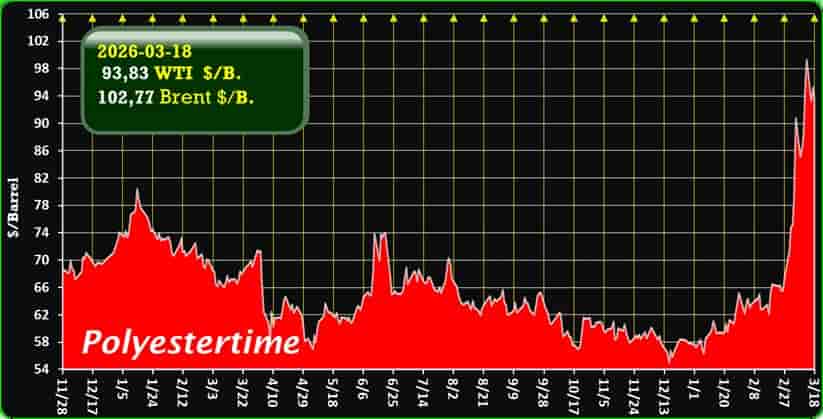
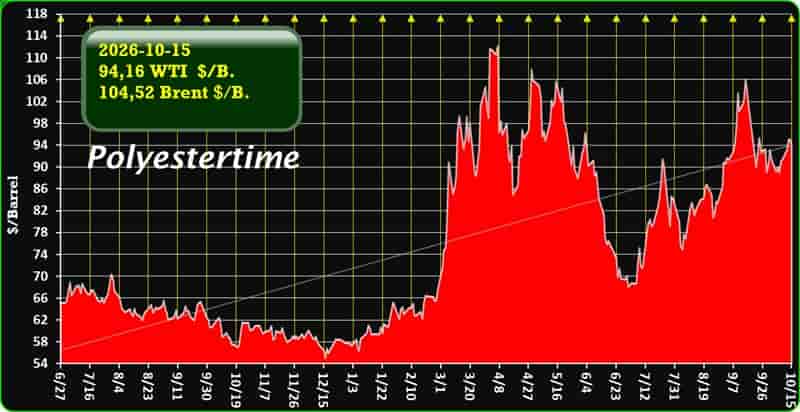
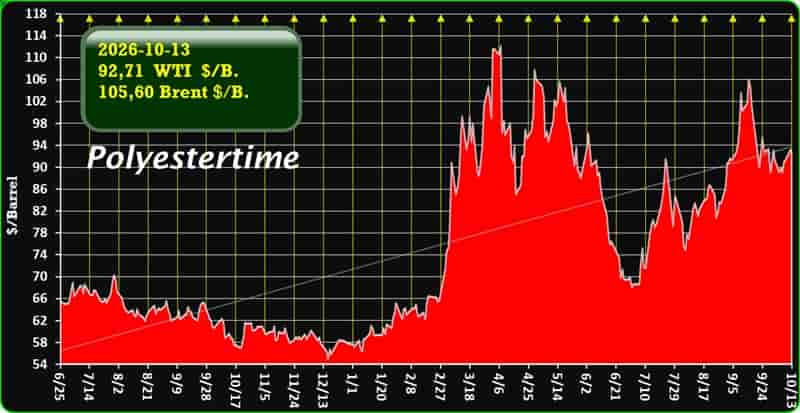
As of March 18, 2026, the oil price remains firmly elevated, with Brent crude trading between $100 and $110 per barrel and WTI hovering around $90–100 per barrel. Latest market data shows Brent near $102 per barrel, while WTI trades close to $94–96 after a slight pullback from recent highs.
This positioning reflects a market that is both tight and volatile, with prices rising sharply over recent weeks before stabilizing slightly amid mixed signals on supply risks.
Key oil price benchmarks
| Benchmark | Current Range (March 2026) | Latest Price संकेत |
|---|---|---|
| Brent Crude | $100 – $110 | ~$102 |
| WTI Crude | $90 – $100 | ~$94–96 |
Over the past month, the oil price has surged more than 40%, highlighting the intensity of current market pressures.
What is driving the oil price today?
1. Geopolitical tensions dominate supply outlook
The single most important driver of the current oil price is geopolitical risk, particularly in the Middle East.
-
Ongoing conflict involving Iran has disrupted key oil infrastructure and export routes
-
The Strait of Hormuz, responsible for roughly 20% of global oil flows, faces severe disruption
-
Attacks on production facilities and ports have reduced output in major exporting countries
These developments have created a structural supply shock, pushing the oil price above $100 and sustaining a geopolitical risk premium.
2. Supply disruptions vs emergency interventions
While supply risks are pushing prices higher, some counterbalancing forces are emerging:
-
The International Energy Agency (IEA) is releasing hundreds of millions of barrels from reserves
-
Alternative crude sources (e.g., Norway, Kazakhstan) are being rapidly deployed
-
Some physical crude grades have surged well above benchmark levels due to shortages
Despite these efforts, analysts agree that emergency stock releases cannot fully offset lost supply, keeping the oil price structurally elevated.
3. Demand signals remain resilient
Global demand for oil has remained relatively strong despite higher prices:
-
Seasonal demand (transport and industry) is increasing
-
Asian economies continue to require steady imports
-
Fuel consumption remains resilient even as prices rise
However, high prices are beginning to trigger demand-side adjustments, especially in emerging markets facing energy shortages and cost pressures.
4. OPEC+ strategy and production discipline
OPEC+ remains a critical factor in shaping the oil price:
-
Some producers have reduced output due to security risks
-
Others are cautious about increasing supply amid uncertainty
-
The group is effectively maintaining a tight supply environment
This reinforces the upward pressure on prices and limits downside risk.
5. Economic data and financial market sentiment
Macroeconomic signals are mixed:
-
Weak employment data in some regions raises concerns about growth
-
Inflationary pressure from energy costs remains elevated
-
Equity markets show resilience but sector divergence (e.g., airlines under pressure)
Investor sentiment around the oil price is therefore cautiously bullish, with markets pricing in both risk and resilience.
Oil price volatility: why prices pulled back slightly
Despite strong upward momentum, prices have recently eased slightly:
-
Brent slipped from above $103 to around $102
-
WTI declined toward $94–95
This reflects:
-
Short-term profit taking
-
Temporary easing of immediate supply fears
-
Market adjustment after rapid gains
However, the broader trend remains upward-biased.
Short-term oil price outlook
Base case (next weeks)
-
Brent likely to remain around $100–110
-
WTI expected to stay between $90–100
Forecast models even suggest Brent could move higher toward $103–115 in coming months if tensions persist.
Upside risks
-
Further escalation in the Middle East
-
Extended closure or disruption of key shipping routes
-
Additional production outages
Downside risks
-
Large-scale strategic reserve releases
-
Demand destruction due to high prices
-
Global economic slowdown
What this oil price means for the global economy
The current oil price environment has significant implications:
Inflation pressure
Higher energy costs feed directly into inflation, affecting transport, manufacturing, and food prices.
Economic growth risks
Sustained high oil prices could slow global growth, particularly in energy-importing economies.
Energy transition acceleration
Elevated prices may accelerate investment in renewables and alternative energy sources.
Sectoral impact
-
Negative: airlines, logistics, heavy industry
-
Positive: oil producers, energy companies
Final takeaway
The oil price in March 2026 reflects a market under stress but not yet in crisis equilibrium. Brent above $100 and WTI near $95 signal tight supply, strong demand, and elevated geopolitical risk.
In the short term, the oil price is likely to remain volatile but supported, with the balance of risks skewed to the upside unless meaningful supply relief or geopolitical de-escalation emerges.
Black Sea model offers 5 ways to ease dangerous Hormuz oil crisis
More…