Xinjiang Ethylene Project Expands PetroChina’s Western Hub
Xinjiang Ethylene Project Expands PetroChina’s Western Chemical Hub
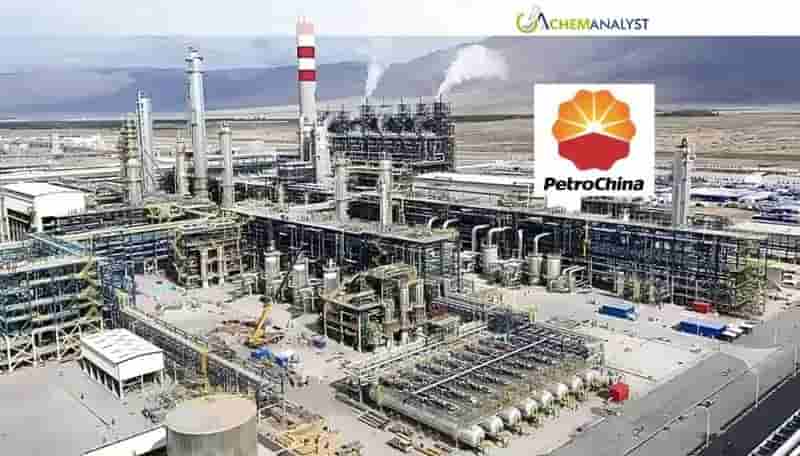
PetroChina has started operations at a major new ethylene installation in Xinjiang, adding 1.2 million metric tonnes of annual capacity to one of western China’s most important petrochemical complexes.
The Tarim Phase II facility is operated by Dushanzi Petrochemical, a subsidiary of China National Petroleum Corporation. Its launch raises the company’s combined ethylene capacity to more than 3 million tonnes per year, creating the only production base of this scale in central and western China.
The project is notable not only for its size. PetroChina is presenting it as China’s first full-chain green and low-carbon ethylene project, combining large-scale chemical production with renewable electricity, energy recycling and emissions-reduction systems.
Why the Xinjiang ethylene project matters
Ethylene is one of the foundations of the modern chemical industry. Manufacturers use it to produce polyethylene, synthetic rubber, packaging materials, automotive components, construction products and a wide range of industrial chemicals.
Because so many downstream industries depend on it, Chinese media sometimes describe ethylene as “industrial gold.”
China already has the world’s largest ethylene industry, but much of its production has historically been concentrated in eastern coastal provinces. Building additional capacity in Xinjiang brings production closer to western oil, natural gas and renewable-energy resources.
The new complex is located in Korla, in the Bayingolin Mongol Autonomous Prefecture. Its position near the Tarim Basin could improve access to feedstocks while supporting a broader petrochemical supply chain in western China.
This geographic shift may also reduce China’s dependence on transporting chemical raw materials over long distances from coastal industrial centres.
Capacity rises above 3 million tonnes
The newly commissioned installation can produce 1.2 million tonnes of ethylene annually. Recent industry reporting says the expansion takes Dushanzi Petrochemical’s total capacity above 3 million tonnes per year.
The plant is expected to supply raw materials for products including high-density polyethylene, polypropylene, ethylene-vinyl acetate and synthetic rubber.
These materials serve sectors ranging from renewable energy and electric vehicles to agriculture, infrastructure and consumer packaging.
The project therefore represents more than an increase in the supply of a single chemical. It creates additional capacity across several downstream manufacturing chains that Beijing considers strategically important.
What “full-chain green” means
PetroChina’s description of the plant as a full-chain green and low-carbon project should not be interpreted as meaning that ethylene production has become emissions-free.
Ethylene remains an energy-intensive petrochemical product. The environmental significance of the Xinjiang project instead depends on how much conventional energy it can replace, how efficiently it uses raw materials and whether its carbon-reduction systems perform as planned.
The facility is designed to use renewable electricity generated in the Tarim region. Published project information also refers to electrified equipment, carbon dioxide reuse, hydrogen recycling and improved energy integration.
According to figures attributed to the company, the broader production system is expected to consume roughly 1,000 gigawatt-hours of renewable electricity annually and reduce carbon emissions by approximately 1.37 million tonnes per year.
These are company-reported projections rather than independently verified operating results. The plant’s actual environmental performance will become clearer after sustained commercial operation and the publication of measurable energy and emissions data.
Domestic technology plays a larger role
The project also highlights China’s effort to reduce dependence on imported petrochemical technology.
Recent reporting indicates that domestically manufactured equipment accounts for about 99 percent of the complex, while most of its principal production units use Chinese technology.
That localisation strategy has both economic and industrial-policy implications. Producing more equipment and intellectual property domestically can lower exposure to international supply disruptions and strengthen Chinese engineering companies.
It could also make similar petrochemical projects easier to replicate in other inland regions.
Part of China’s industrial carbon-reduction programme
The opening comes as China applies stricter energy-efficiency requirements to carbon-intensive industries.
A three-year national programme announced in June 2026 covers nine major sectors, including steel, cement, oil refining and ethylene. The initiative calls for energy-saving upgrades and improved carbon efficiency through the end of 2028.
This policy background helps explain why PetroChina is emphasising the renewable-energy and recycling components of the Tarim project.
Large petrochemical developments increasingly have to meet two objectives at the same time: expanding industrial output and demonstrating lower energy or carbon intensity.
The Xinjiang complex will offer an important test of whether that balance can be achieved at commercial scale. Xinjiang ethylene project
A strategic move into western China
For PetroChina, the Xinjiang ethylene project strengthens an integrated production network close to major energy resources.
For China, it advances a wider strategy of developing inland industrial centres, improving the resilience of chemical supply chains and increasing domestic production of high-value materials.
The project could also attract downstream manufacturers to the Korla area, particularly companies producing plastics, advanced polymers, rubber products and specialised chemical materials.
Its long-term importance, however, will depend on more than headline capacity. Key indicators will include plant utilisation, production efficiency, demand for its downstream products and independently documented emissions reductions.
The wider significance
The new ethylene line illustrates the direction of China’s industrial policy: larger domestic production hubs, greater use of Chinese technology and closer integration between fossil-fuel processing and renewable electricity.
It also shows the limits of describing heavy industry with a single label such as “green.” Renewable power and recycling systems can reduce a facility’s carbon intensity, but they do not remove the environmental footprint of petrochemical production.
The most credible assessment will therefore require transparent operating data rather than relying solely on design targets.
For now, PetroChina’s new hub gives western China a substantially larger role in the national chemical industry. It also establishes a high-profile benchmark against which future low-carbon petrochemical projects are likely to be measured.
Sources and verification
This article draws on project reporting published on July 20, 2026, by Hydrocarbon Processing, Interesting Engineering and a China Daily report distributed through PR Newswire. Technical and policy context was cross-checked against CNPC project information and the Chinese government’s June 2026 industrial energy-efficiency programme.
Capacity, electricity-consumption and projected carbon-reduction figures remain based primarily on information released by PetroChina or Chinese state-linked sources. They should be updated when independently audited operating data becomes available.
More…