Oil price surge shocks markets as Brent nears $115 and WTI tops $100 amid Hormuz crisis and escalating geopolitical risks worldwide
Oil price trend analysis – March 30, 2026
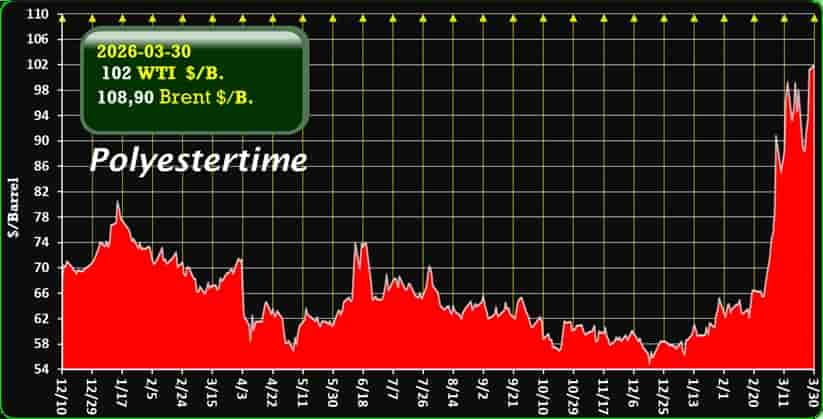
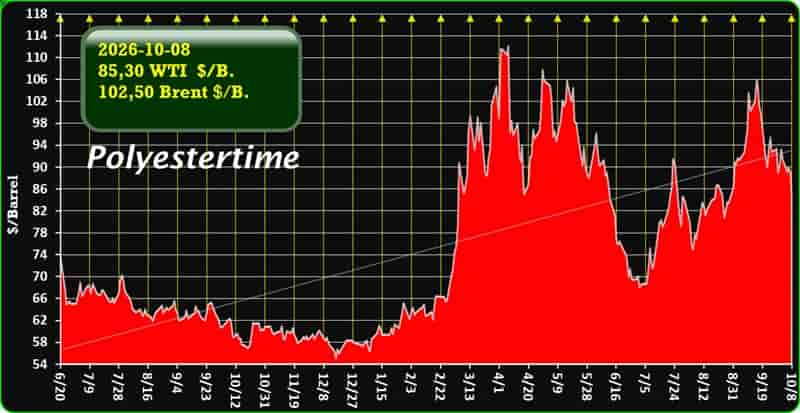
The oil price environment at the end of March 2026 is defined by extreme volatility and a strong upward trajectory. Brent crude is trading in the $105–115 per barrel range, while WTI is fluctuating between $100 and $110, reflecting a market under significant stress.
Recent trading sessions confirm that the oil price rally is not driven by a single factor but by a convergence of geopolitical risks, supply disruptions, and speculative positioning.
Current oil price movements
As of March 30, global benchmarks remain elevated:
| Benchmark | Price Range (USD/barrel) | Trend |
|---|---|---|
| Brent Crude | 105 – 115 | Strong upward pressure |
| WTI Crude | 100 – 110 | Rising with volatility |
Brent recently approached $116–120 per barrel, while WTI climbed above $100 amid escalating geopolitical tensions.
On a monthly basis, the oil price has surged dramatically, with Brent recording one of the largest gains on record, rising more than 50% since late February.
Key drivers shaping the oil price
1. Geopolitical risk and the Hormuz factor
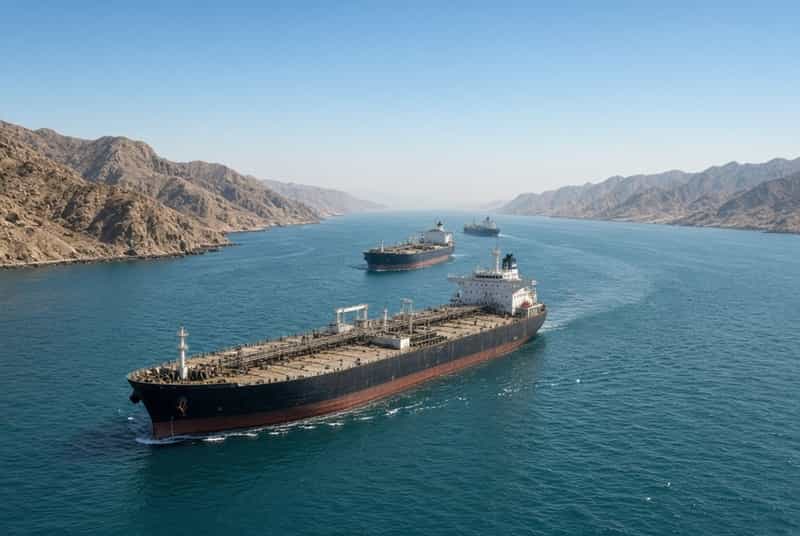
The dominant driver of the current oil price trend is the crisis in the Middle East, particularly the near-closure of the Strait of Hormuz.
- Around 20% of global oil supply flows through this chokepoint
- Military escalation involving Iran, the U.S., and regional actors has disrupted shipping
- Tanker traffic has dropped sharply, effectively tightening global supply
This situation has introduced a significant geopolitical risk premium, estimated at $14–18 per barrel.
The “Hormuz risk” is now the central theme shaping the oil price outlook, echoing concerns seen in historical supply shocks.
2. Global supply disruption
The oil market is currently facing one of the largest supply disruptions in decades:
- Up to 9–10 million barrels per day have been removed from the market
- Infrastructure damage and export constraints are compounding shortages
- Emergency reserves (≈400 million barrels) have been released but failed to stabilize prices
Even with OPEC+ signaling modest production increases, physical constraints and logistics bottlenecks limit the impact.
3. Demand resilience and macroeconomic signals
Despite rising prices, demand remains relatively resilient:
- Major economies continue to consume oil at stable levels
- However, higher oil price levels are feeding inflation expectations
- Energy costs are beginning to pressure consumers and industrial activity
Financial markets are reacting negatively, with equities declining and recession risks rising.
4. OPEC+ and market balancing
OPEC+ has attempted to respond with incremental supply adjustments, but:
- Some members are exempt from cuts or face production constraints
- Additional supply is insufficient to offset geopolitical losses
- Spare capacity remains limited and unevenly distributed
This reinforces the perception that the oil price is structurally supported above $100 in the near term.
5. Investor sentiment and speculation
Investor behavior is amplifying price movements:
- Hedge funds and trading houses are actively repositioning
- Speculative flows are increasing volatility
- Energy has become one of the few outperforming asset classes
The market is currently pricing in worst-case scenarios, including prolonged conflict and deeper supply disruptions.
Oil price volatility snapshot
| Factor | Impact on oil price | Direction |
|---|---|---|
| Hormuz disruption | Severe supply shock | Bullish |
| OPEC+ policy | Limited relief | Neutral/Bullish |
| Global demand | Stable but fragile | Neutral |
| Investor sentiment | Risk-driven buying | Bullish |
| Economic outlook | Inflation + slowdown risk | Mixed |
Short-term oil price outlook
Looking ahead to Q2 2026, the oil price trajectory will largely depend on geopolitical developments:
- Bullish scenario: Continued disruption in Hormuz could push Brent toward $120–130+
- Base case: Stabilization keeps Brent in the $100–115 range
- Bearish scenario: De-escalation could bring prices back below $90–95
Market consensus suggests that geopolitical risk will remain the dominant pricing factor in the short term.
Implications for the global economy and energy markets
The current oil price environment carries significant macroeconomic consequences:
- Inflation pressure: Higher energy costs feed into transport, food, and manufacturing
- Growth slowdown: Energy-importing economies face rising costs and weaker demand
- Energy security shift: Countries may accelerate diversification and strategic reserves
- Market restructuring: Increased focus on alternative routes and non-OPEC supply
For investors and policymakers, the key takeaway is clear: the oil market has entered a phase where geopolitics outweighs traditional supply-demand fundamentals.
Conclusion
As of March 30, 2026, the oil price reflects a market dominated by uncertainty, risk, and constrained supply. With Brent above $110 and WTI near $100, the balance of risks remains skewed to the upside.
Unless geopolitical tensions ease—particularly around the Strait of Hormuz—the oil market is likely to remain volatile, with elevated prices shaping global economic conditions in the months ahead.
Oil price volatility intensifies as geopolitical tensions and supply fears push Brent and WTI higher, raising global economic uncertainty and investor caution
More…