Recycling Technology – Continental Invests in New Recycling Technology to Recover Raw Materials from Waste Rubber Continental has taken a decisive step in advancing sustainable industry with a breakthrough in rubber recycling 09-08-2025
Recycling Technology
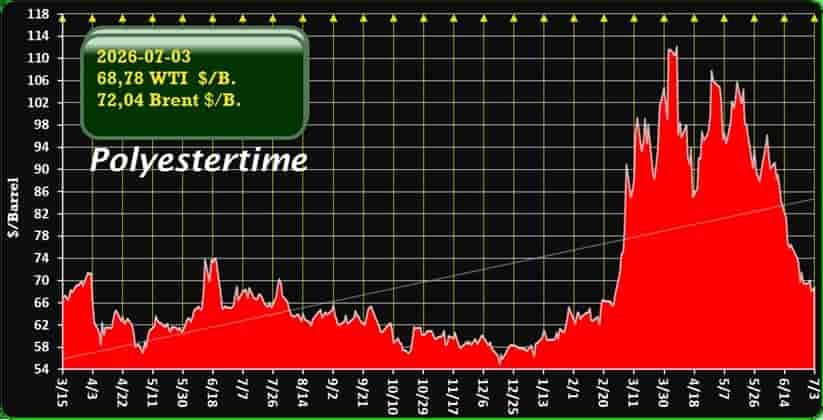
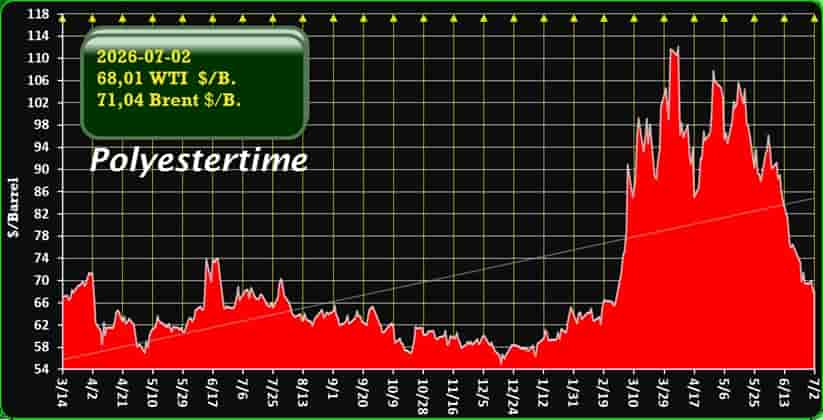
Crude Oil Prices Trend

LyondellBasell and partners launch bio-based film for Shiseido cosmetics
A new collaboration between LyondellBasell, Futamura Chemical, Iwatani Corporation and Shiseido integrates CirculenRenew bio-PP into outer film packaging for select items in the Clé de Peau Beauté range — delivering measurable C14 renewable content in a drop-in format.
Overview: what changed
LyondellBasell (LYB) announced a collaborative development with Futamura Chemical, Iwatani Corporation and Shiseido to produce a bio-based outer film for cosmetics packaging. The new film integrates LYB’s CirculenRenew polypropylene (bio-PP) in the outer film for selected items in Shiseido’s premium Clé de Peau Beauté line.
CirculenRenew has measurable, certified C14 renewable carbon content — a material attribute that supports sustainability claims and reporting.
Technology: CirculenRenew explained
CirculenRenew is part of LyondellBasell’s Circulen family. It provides verified renewable content via C14 certification and is engineered to be a drop-in replacement for conventional PP grades. Recycling Technology
Why C14 certification matters
C14 (radiocarbon) analysis quantifies biogenic carbon in a polymer feedstock. For brands and sustainability teams, C14 data provides an auditable metric to support product carbon footprint reporting and green claims.
Partners & motivations
Each partner brings a core capability: LYB supplies bio-PP technology; Futamura manufactures sustainable film under its SusFi® brand; Iwatani supports distribution and business development in Japan; Shiseido offers product integration and brand reach.
Shiseido’s corporate mission — “BEAUTY INNOVATIONS FOR A BETTER WORLD” — targets sustainability milestones by 2030, making this collaboration strategically aligned with long-term brand goals. Recycling Technology
Supply chain & scale
Futamura has expanded its SusFi® film family to include grades using CirculenRenew. Iwatani has publicly targeted handling 100,000 tonnes of bioplastics by FY2027, and is working with LYB to develop the bio-PP resin market in Japan.
| Partner | Role | Focus |
|---|---|---|
| LyondellBasell | Material supplier | CirculenRenew bio-PP (C14 certified) |
| Futamura Chemical | Film manufacturer | SusFi® films, production scaling |
| Iwatani Corporation | Distributor & partner | Market expansion in Japan |
| Shiseido | Brand & integrator | Clé de Peau Beauté packaging |
Environmental impact & claims
Using certified renewable content helps reduce the fossil carbon share of packaging and can lower a product’s reported product carbon footprint when combined with robust lifecycle assessment (LCA) practices. Recycling Technology
Brands should still pair materials claims with transparent reporting and third-party verification to avoid greenwashing risks.
Implementation: drop-in benefits
The CirculenRenew grades are formulated to process on existing film lines without changes to equipment or major process revalidation. This reduces capital expenditure and shortens time-to-market for brands testing bio-based options.
For packaging engineers, that means fast trials, fewer tooling changes, and predictable process windows.
Key takeaway
This collaboration demonstrates a practical route for premium beauty brands to adopt bio-based polymers without disrupting existing manufacturing. CirculenRenew’s certified renewable carbon and drop-in compatibility make it attractive for brands seeking measurable sustainability progress. Recycling Technology
Why it matters: verified renewable content + low implementation friction = faster progress toward corporate sustainability goals.
Continental Invests in New Recycling Technology to Recover Raw Materials from Waste Rubber
September 9, 2025
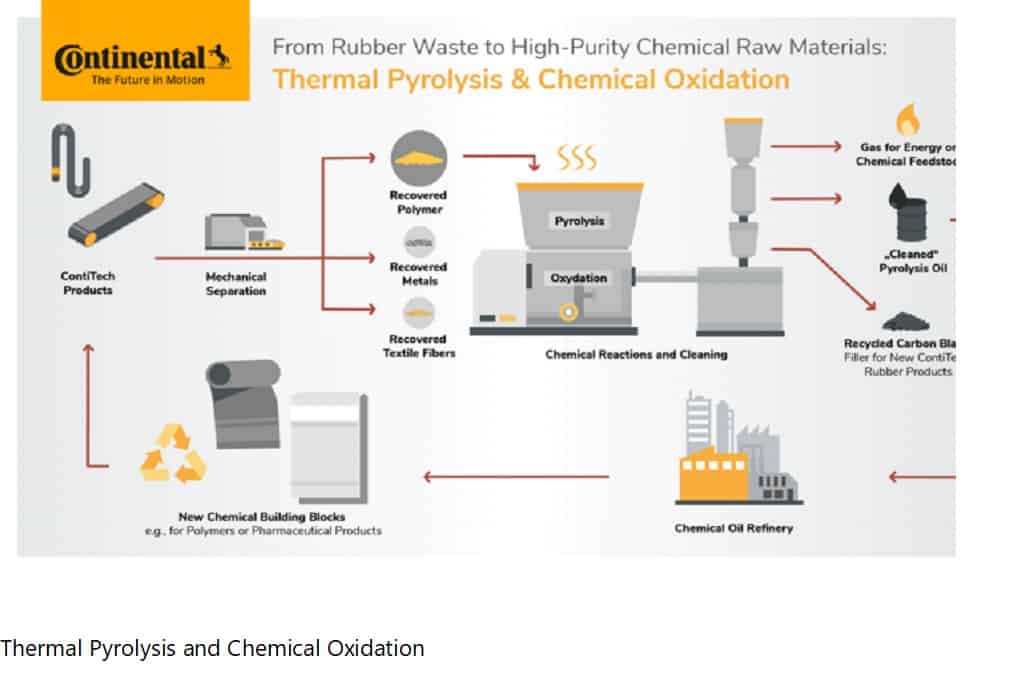
Continental has taken a decisive step in advancing sustainable industry with a breakthrough in rubber recycling. Its ContiTech division has secured exclusive patent rights for a purification process that enables the recovery of high-quality raw materials from waste rubber, paving the way for large-scale circular economy solutions.
Pyrolysis Breakthrough in Rubber Recycling
At the heart of this innovation lies pyrolysis technology, a thermal process in which rubber is decomposed into its basic chemical components under controlled heating and low-oxygen conditions. The result includes valuable byproducts such as:
- A high-quality oil comparable to fossil crude oil
- Recovered carbon black
- A gaseous energy source
The purified oil is particularly noteworthy, as it meets industrial quality standards and can be reused in the production of rubber and plastics. This development represents a significant milestone because pyrolysis has historically been limited by cost and quality challenges. Recycling Technology
Closing a Crucial Gap in the Circular Economy
“We’re able to recover high-quality raw materials from rubber waste, which we can then feed back into the chemical material cycle to create new products without relying on crude oil.” — Dr. Michael Hofmann, CTO, ContiTech
Dr. Hofmann highlights how this technology enables a shift from waste disposal to true circular reuse. By transforming waste rubber into usable raw materials, Continental is helping industries cut down on fossil resource dependence while reducing environmental impact. Recycling Technology
New Possibilities for Hard-to-Recycle Products
Recycling rubber has long been a major challenge. Once vulcanized, rubber undergoes irreversible chemical changes that make it difficult to separate into its original components. Traditional recycling methods—mechanical or chemical—often fail to recover materials at a usable quality.
Pyrolysis overcomes this barrier, offering a route to reclaim materials even from complex rubber products such as:
- Food-grade hoses
- Rubber-metal composites
- Components with multiple additives Recycling Technology
The ability to reintroduce these materials into the production cycle not only reduces waste but also expands the scope of recycling beyond simple products.
Patents and Innovation Leadership
By acquiring the exclusive patent family behind this purification process, Continental is positioning itself as a leader in sustainable innovation. The company’s research and development activities are extensive: in the past year alone, ContiTech filed more than 150 patent applications and was granted around 250 patents.
This focus on intellectual property underscores the company’s commitment to sustainability and long-term competitive advantage. Beyond pyrolysis, Continental is pursuing parallel initiatives such as developing recyclable materials for automotive interiors and recovering hydrocarbons from used rubber products. Recycling Technology
The Future Potential of Pyrolysis Oil
Purified pyrolysis oil represents a new industrial resource with wide applications. Because it mirrors the chemical composition of crude oil, it can be reintegrated into chemical supply chains to produce rubber, plastics, and other petrochemical products—without tapping into fossil reserves.
Scaling this technology could transform rubber recycling from a costly niche process into a viable industrial practice. For industries ranging from automotive to construction, the environmental and economic benefits could be profound. Recycling Technology
Conclusion
Continental’s investment in pyrolysis-based recycling marks a pivotal moment in sustainable materials management. By securing patents, commissioning a purification facility, and demonstrating the industrial feasibility of this approach, the company is reshaping how we think about rubber waste.
The breakthrough not only advances circular economy principles but also creates a pathway to reduce global reliance on fossil resources. As the technology scales, it may well redefine what’s possible in recycling—and set a precedent for other industries to follow.
LNJ GreenPET and Sumitomo Corporation sign pact to create robust r-PET value chain in India
What the agreement covers
LNJ GreenPET, part of the LNJ Bhilwara Group, has signed a memorandum of understanding (MoU) with Japan-based Sumitomo Corporation to lay the groundwork for a strategic r-PET (recycled polyethylene terephthalate) value chain in India.
The MoU establishes a multi-pronged framework for cooperation across commercial development, raw material procurement, marketing and potential joint investments. In short: it’s designed to move India from fragmented recycling streams toward a more integrated, investible r-PET industry.
Why this matters for India’s packaging sector
India is seeing rising consumer demand for sustainable packaging and increasing regulatory focus on packaging waste. Yet collection, sorting and high-quality recycling capacity remain limited. A partnership that combines local manufacturing scale (LNJ GreenPET) with global trading and investment reach (Sumitomo) can accelerate both supply and demand for high-quality r-PET. Recycling Technology
For consumer brands and converters, access to consistent r-PET feedstock is critical to meet recycled content commitments without compromising product performance or cost predictability.
How the collaboration will work
The MoU is intentionally broad: it covers commercial development (creating routes to market for r-PET), raw material sourcing (securing consistent PCR—post-consumer recycled—streams), marketing the finished product, and evaluating investment options for upcoming projects. Recycling Technology
Operationally, this can include joint purchase agreements for feedstock, co-development of purification and washing lines, and shared offtake contracts with beverage or packaging companies. Sumitomo’s global procurement network and project finance expertise complement LNJ GreenPET’s domestic manufacturing footprint.
Market and regulatory drivers
Three forces are converging that make this pact timely:
- Corporate commitments: Brands increasingly pledge recycled content targets, pushing demand for verified r-PET.
- Policy pressure: Extended producer responsibility and packaging waste rules put compliance obligations on manufacturers.
- Investor interest: ESG-linked capital is flowing toward supply-chain decarbonization and circular-economy projects. Recycling Technology
Combined, these trends create both a market pull and an economic rationale for building integrated r-PET supply chains in India.
Impact for stakeholders
For recyclers: More reliable offtake and price stability as LNJ and Sumitomo scale procurement and purification.
For brands and converters: Improved access to higher-quality r-PET that reduces reliance on virgin resin while supporting recycled-content claims.
For investors: Clearer project economics when procurement, marketing and potential financing are aligned across partners.
A coordinated value chain reduces leakage, improves quality and shortens time to market for circular packaging solutions.
What comes next
The MoU is a first step — a framework rather than a binding project agreement. Next phases are likely to include detailed feasibility work, pilot procurement programs, site selection for processing or manufacturing capacity and evaluation of capital partners for investment funding. Recycling Technology
Practical milestones to watch for include confirmed offtake agreements with beverage or packaging companies, commissioning of pilot r-PET lines, and announcements of capital commitments or joint venture vehicles between the partners.
If executed well, this collaboration could become a replicable model for other markets: combine local production knowledge with global procurement and financing capabilities to scale circular solutions faster.
Bottom line
The LNJ GreenPET–Sumitomo MoU signals a pragmatic, market-oriented approach to building India’s r-PET ecosystem. By aligning procurement, commercialisation and potential investment under a single collaboration framework, both firms are positioning themselves to meet rising policy and brand demands for recycled content while helping to professionalize the country’s recycling value chain.
For industry observers and potential partners, the deal is worth tracking as it moves from intention to tangible projects that could expand India’s capacity to process and reuse PET at scale. Recycling Technology
K2025 Preview: OMG and Thermapet Showcase Heat-Resistant PET Trays
Date: September 9, 2025
Introduction
The demand for sustainable and high-performance food packaging continues to grow. As consumers seek convenience without compromising environmental responsibility, packaging innovators are racing to provide better alternatives. At K2025, Italian thermoforming leader OMG and Asian technology pioneer Thermapet will present their latest breakthrough: heat-resistant PET trays designed for use in both traditional ovens and microwaves.
This new solution could redefine what’s possible with PET packaging by offering superior resistance to high temperatures, while still being fully recyclable and safe for repeated use in circular systems.
OMG and Thermapet: A Strategic Collaboration
Based in Turin, OMG has decades of expertise in thermoforming equipment and has built a reputation for pushing the limits of packaging technology. For this project, OMG has partnered with Thermapet, owner of the patented TPET technology, which enables the production of amorphous PET with outstanding thermal resistance. Recycling Technology
Together, the two companies aim to bring next-generation food trays to market. While the thermoforming machine designed to mass-produce these trays is still in prototype phase and not yet ready for exhibition, a working unit is already in operation at Thermapet’s facility in Thailand, showcasing the system’s potential.
The TPET Technology Explained
At the heart of this innovation lies the TPET process. Unlike conventional PET production, TPET crystallizes polyester through mechanical orientation instead of chemical treatments. This allows the trays to retain their full recyclability while gaining exceptional thermal resistance.
- Temperature resistance: Withstands up to 220°C without distortion.
- Material flexibility: Compatible with both virgin and recycled PET.
- No additives: Achieves strength without nucleating agents, ensuring material purity. Recycling Technology
- Tray-to-tray recyclability: Designed for closed-loop recycling systems.
The result is a PET product that bridges the gap between convenience, safety, and sustainability—a rare combination in today’s packaging landscape.
Performance and Heat Resistance
Performance testing has demonstrated that these trays can withstand extreme conditions. During trials, trays were filled with boiling oil at 190°C without losing shape or functionality. To highlight these capabilities, OMG and Thermapet will present a video demonstration at K2025, offering attendees a clear look at the durability and stability of TPET trays.
This makes them ideal for ready-meal packaging, take-out containers, and industrial foodservice applications where both heat resistance and recyclability are critical.
Sustainability and Recycling Benefits
Beyond performance, the real game-changer lies in sustainability. Because TPET trays can be produced from recycled PET and maintain their quality through multiple cycles, they align perfectly with circular economy principles. Recycling Technology
Key sustainability benefits include:
- High purity recycling: No additives means cleaner material streams.
- Reduced carbon footprint: Enables substitution of virgin plastic with recycled PET.
- Closed-loop potential: Designed to be collected, recycled, and reprocessed back into trays.
By avoiding chemical treatments, TPET also minimizes potential contamination risks, ensuring that recycled trays meet strict safety and quality standards.
What to Expect at K2025
Visitors to K2025 will find OMG at their booth, where examples of the new trays will be displayed. Although the prototype thermoforming machine itself won’t be present, OMG and Thermapet will showcase physical samples and an in-depth video of the trays being tested under extreme conditions. Recycling Technology
Alongside the TPET trays, OMG will also highlight advancements in thermoforming with CPET, CPLA, and dry paper—demonstrating the company’s wide-ranging commitment to more sustainable packaging alternatives.
The Future of Thermoforming Innovation
The introduction of TPET trays is only the beginning. By leveraging mechanical crystallization, the packaging industry gains a pathway to high-performance, fully recyclable products that could replace less sustainable materials in heat-intensive applications. Recycling Technology
With regulations tightening and consumer expectations rising, innovations like TPET will be crucial to helping brands maintain compliance, reduce environmental impacts, and continue offering convenient packaging formats that align with modern lifestyles.
Conclusion
The collaboration between OMG and Thermapet is a powerful example of how global partnerships can accelerate packaging innovation. Their TPET-based trays offer a scalable, heat-resistant, and recyclable solution that could set new standards for the food packaging industry.
As K2025 approaches, the spotlight will be on these trays—not only for their technical performance but also for the way they represent the next step toward a circular packaging economy. For manufacturers, food brands, and sustainability leaders, this is an innovation worth watching closely. Recycling Technology

From Waste Stream to Valuable Material: The Future of Polymer Sorting
The Limits of Classical Recycling Techniques
For decades, recyclers relied on flotation, gravity separation, and electrostatics. Each method had value: flotation leveraged density differences, electrostatics separated materials by charge, and water-based systems determined which particles floated or sank.
While effective, these methods struggled with complex waste streams, contamination, and precision challenges. Recycling Technology
They provided a foundation but not the flexibility needed for modern recycling demands.
The Rise of Optical Sorting
Enter optical sorting—an enhancement, not a replacement, for traditional methods. Unlike flotation or electrostatics, optical systems see deeper: they detect color, identify polymer types, and even recognize characteristic bottle features.
Today, every polymer particle carries economic and environmental weight. Optical sorting makes the difference between turning waste into value or letting it become a downstream problem.
Modern optical sorting systems operate less like machines and more like intelligent ecosystems.
In practice, this involves layering technologies into an integrated process. Detection accuracy and speed have advanced dramatically, driven by three pillars: image detection, intelligent classification, and precise separation. Recycling Technology
Object Sorting: From Waste to Data
Object sorting goes beyond visual differences. Algorithms analyze color, structure, and polymer type, grouping objects with remarkable precision. Built-in AI can even identify specific brands of bottles or cans.
Each object is not just sorted—it’s logged, counted, and documented. This transforms waste management into intelligent identification, where every item carries measurable value.
Polymer Sorting: Revealing Invisible Signatures
At the polymer stage, plastic flakes reveal unique identities. Infrared cameras analyze material structures, detecting subtle light bands invisible to the human eye.
This technology distinguishes HDPE from PP, or PET from PVC, even when flakes look identical. Recycling Technology
By reducing cross-contamination, polymer sorting ensures higher-quality recovered materials.
Color Sorting: When Shades Become Data
Color sorting is more than aesthetics—it directly affects recycling value. Machines equipped with UHD cameras analyze full light spectrums, differentiating shades like “light blue” from “turquoise” with mathematical precision.
Each flake undergoes strict classification, producing clean fractions ready for reuse. What once looked like indistinguishable waste becomes organized, valuable material.
Flake Analyzer & Master 4.0
The synergy of object, polymer, and color sorting shines with tools like the Flake Analyzer and Master 4.0.
Together, they provide real-time insight into material streams, composition, and machine performance. Recycling Technology
Operators can monitor and adjust the entire process directly from a computer or smartphone, enabling smarter, faster decision-making.
Intelligent Separation in Practice
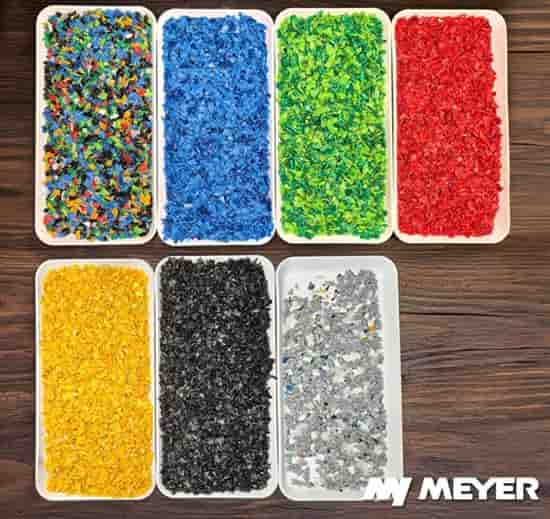
In one client’s facility, implementation began with object sorting via a MEYER KC series sorter, ensuring contaminants were removed early. The stream then moved through shredding and polymer sorting, where HDPE and PP were separated to 98.5–99.5% purity.
Next came color separation. Options included creating monochromatic fractions, extracting white and natural HDPE, or removing black flakes before dividing the remainder into warm and cool tones. Recycling Technology
The client selected a strategy that balanced value with operational simplicity. The result was a reliable supply of high-quality fractions ready for reuse.
A New Era of Sorting
Polymer sorting is entering an era of full integration. UHD cameras, Maglev ejectors, and AI systems are no longer standalone tools—they form a unified ecosystem.
Recycling is shifting from basic separation to intelligent interpretation. Every fraction gains defined value, ensuring waste streams are treated not as problems, but as resources.
The real difference lies in coordination: technologies, engineering expertise, and data-driven insights working together to transform waste into value. Recycling Technology
Drinktec 2025: Eastman and Doloop Partner to Unveil 100% rPET Beverage Bottle
Date: September 9, 2025
Introduction
The beverage industry is entering a transformative era where sustainability and circular economy principles are no longer optional—they’re essential. At Drinktec 2025, two leaders in sustainable packaging, Eastman and Doloop, will showcase a groundbreaking innovation: a 100% rPET beverage bottle with no compromises in clarity, strength, or quality.
This milestone represents more than just a new product launch. It’s a replicable model for how packaging suppliers, resin producers, and beverage companies can collaborate to achieve ambitious environmental goals without sacrificing consumer expectations.
The Future of Sustainable Beverage Packaging
Consumers are demanding eco-friendly options, regulators are raising the bar for recycled content, and brands are eager to reduce their carbon footprints. The result? A surge in innovation around post-consumer recycled (PCR) materials, especially rPET (recycled polyethylene terephthalate). Recycling Technology
Unlike traditional mechanical recycling, Eastman’s chemical recycling technology breaks down plastic waste to its molecular level, producing resin that performs just like virgin material. This makes it possible to deliver bottles that are both 100% recycled and indistinguishable in look and feel from conventional plastic.
Eastman and Doloop: A Strategic Partnership
Eastman, known for its innovative circular economy platform, supplies the high-performance Eastar™ Renew EN031 resin. Doloop, with decades of expertise in preform and PET bottle manufacturing, converts this resin into finished beverage bottles.
“Doloop has long been a pioneer in regenerative PET packaging,” said Dovydas Stulpinas, CEO of Doloop. “Partnering with Eastman enables us to offer the beverage industry a solution that meets the highest sustainability and quality standards.” Recycling Technology
This partnership is more than a business agreement—it’s a demonstration of how collaboration accelerates systemic change. By combining innovation and production know-how, Eastman and Doloop are building a scalable pathway toward circular packaging.
The Technology Behind 100% rPET
The new beverage bottle is produced using Eastar™ Renew EN031, a chemically recycled PET resin. The process ensures:
- Virgin-like performance: Clarity and purity that match traditional PET bottles.
- Scalability: The ability to integrate recycled resin into existing production systems.
- Compliance: Meeting current and future regulations for recycled content.
Unlike standard recycled bottles, these rPET containers maintain the premium look and feel consumers expect—while enabling brands to hit 100% recycled content targets.
Market Readiness and Opportunities
Europe’s beverage industry is uniquely positioned to adopt 100% rPET packaging, especially in regions with deposit-return systems (DRS) that ensure high-quality material recovery. Recycling Technology
Countries in the Nordics, for example, have created strong demand for recycled packaging through robust collection and recycling infrastructures.
“Innovation has positioned Eastman to lead, but collaboration is essential for plastic packaging to become circular,” said Eric Dehouck, Managing Director of Eastman’s Circular Economy Platform.
As consumer awareness grows and legislation tightens, the partnership provides beverage producers with a future-proof packaging solution that not only satisfies today’s requirements but anticipates tomorrow’s demands. Recycling Technology
What to Expect at Drinktec 2025
Attendees of Drinktec 2025 will be able to see and feel the new rPET bottles firsthand. Eastman and Doloop’s joint stand will showcase not only the product itself but also the business case for adopting circular PET solutions across Europe and beyond.
Location: Doloop @ Drinktec — Stand 242, Hall C6
Conclusion
The unveiling of Eastman and Doloop’s 100% rPET beverage bottle at Drinktec 2025 marks a pivotal step forward for the circular economy. It demonstrates how strategic partnerships, advanced recycling technologies, and market readiness can converge to deliver packaging solutions that align with both sustainability targets and consumer expectations. Recycling Technology
For brands, suppliers, and sustainability leaders, this innovation is more than a bottle—it’s a vision of what the future of beverage packaging can look like: circular, scalable, and uncompromising in quality.
More…