US-China Trade War Escalates as Beijing Condemns New Tariffs, Warning of Global Economic Fallout and Renewed Market Instability Across Strategic Sectors 23-02-2026
US-China Trade War Enters a New Phase After Fresh US Tariffs
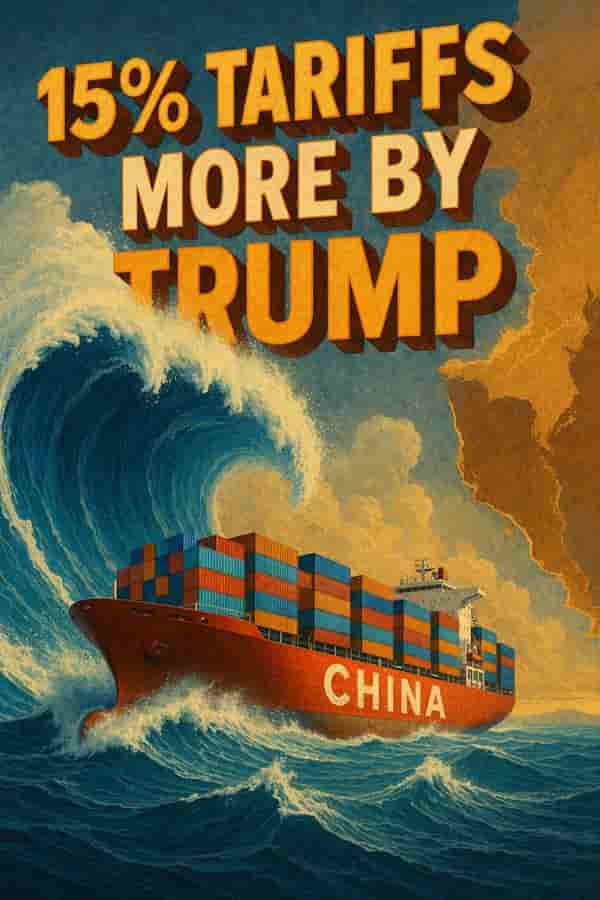
The US-China trade war has entered another volatile chapter following Washington’s decision to introduce new global tariffs of 15 percent, set to remain in effect for 150 days. The move comes after the US Supreme Court overturned most of the tariffs previously imposed during Donald Trump’s earlier administration, prompting a rapid policy recalibration from the White House.
Beijing has reacted firmly, urging the United States to revoke what it describes as unilateral trade measures. Chinese authorities emphasized that protectionism offers no viable solution to global economic challenges and reiterated their intention to safeguard national economic interests. The renewed escalation underscores how fragile the current truce remains in the ongoing US-China trade war.
Beijing’s Official Response to the Tariff Measures
China’s Ministry of Commerce issued a clear statement calling on Washington to rescind the new tariff regime. Officials confirmed that a comprehensive assessment of the US court ruling and its economic implications is underway.
According to Beijing, there are no winners in a trade war. The Chinese government framed the decision as a unilateral step that could destabilize international supply chains and undermine global trade stability.
While China did not immediately announce retaliatory tariffs, analysts expect that countermeasures remain under consideration. The US-China trade war has historically involved reciprocal tariff increases, technology restrictions, export controls, and investment scrutiny. Markets are therefore closely monitoring Beijing’s next move.
Background: The Escalation of the US-China Trade War
The US-China trade war has defined much of the economic relationship between the world’s two largest economies over the past decade. Since January 2025, following Donald Trump’s return to the White House, tariff pressure on Chinese exports has intensified significantly.
Earlier rounds of tariffs targeted sectors such as semiconductors, electric vehicles, steel, aluminum, and advanced manufacturing components. China responded with duties on US agricultural goods, energy products, and key industrial inputs.
Although Presidents Trump and Xi Jinping agreed to a temporary truce in October, experts repeatedly warned that the agreement lacked structural guarantees. The latest tariff announcement confirms those concerns, signaling that the US-China trade war remains deeply embedded in broader strategic rivalry.
Economic Implications for Global Markets
The renewed US-China trade war could have widespread consequences for global markets. Both economies serve as critical nodes in international supply chains, particularly in electronics, automotive production, pharmaceuticals, and clean energy technologies.
A 15 percent global tariff framework may increase costs for multinational corporations operating across borders. Higher import duties can translate into elevated consumer prices, reduced trade volumes, and slower economic growth.
Financial markets reacted cautiously to the announcement, with investors seeking clarity on sectoral exemptions and potential retaliatory measures. Economists warn that prolonged uncertainty surrounding the US-China trade war may discourage foreign direct investment and delay corporate expansion plans.
Strategic Sectors Under Pressure
Certain sectors are particularly exposed to renewed tensions in the US-China trade war:
-
Advanced semiconductors and chip manufacturing
-
Electric vehicles and battery technologies
-
Renewable energy infrastructure
-
Agricultural commodities
-
Critical minerals and rare earth elements
These industries are central to long-term technological competitiveness and national security strategies. Tariff escalation in these areas could accelerate supply chain diversification efforts, with companies shifting production to Southeast Asia, India, or Mexico to mitigate risk.
Geopolitical Dimensions of the Trade Conflict
Beyond economics, the US-China trade war reflects broader geopolitical competition. Trade policy has increasingly become intertwined with technology leadership, national security frameworks, and global influence.
Washington’s approach signals a willingness to use tariffs as leverage in strategic negotiations. Meanwhile, Beijing continues to position itself as a defender of multilateral trade norms, even as it strengthens domestic industrial policy and self-reliance initiatives.
The fragility of the October truce illustrates how quickly diplomatic progress can unravel. Experts suggest that without a comprehensive structural agreement addressing market access, intellectual property, and industrial subsidies, the US-China trade war will likely persist in cycles of escalation and temporary détente.
Impact on Businesses and Supply Chains
For global businesses, predictability remains the primary concern. The US-China trade war has already prompted many corporations to reconfigure sourcing strategies, diversify supplier bases, and increase inventory buffers.
Small and medium-sized enterprises are especially vulnerable. Unlike multinational firms, they often lack the capital flexibility to absorb tariff-induced cost increases.
Logistics networks may also face renewed strain. Companies reliant on trans-Pacific shipping routes must now reassess pricing structures and contract terms. Insurance costs and currency volatility could further compound operational uncertainty.
What Comes Next?
China has indicated it will monitor Washington’s latest actions closely. While no immediate retaliation has been announced, the language from Beijing suggests readiness to defend national interests decisively.
Observers are watching three key developments:
-
Whether the US expands the tariff framework beyond the 150-day window
-
Whether China introduces symmetrical countermeasures
-
Whether diplomatic negotiations resume at senior leadership levels
The trajectory of the US-China trade war will depend heavily on domestic political pressures in both countries. With elections, industrial policy agendas, and national security concerns influencing decision-making, trade tensions may remain a structural feature of bilateral relations.
A Fragile Balance in the Global Economy
The global economy stands at a sensitive juncture. Slowing growth, inflationary pressures, and supply chain adjustments have already tested resilience across multiple regions.
A prolonged escalation of the US-China trade war risks amplifying these challenges. As the world’s second-largest economy and one of the United States’ most significant trading partners, China plays an indispensable role in global commerce.
Whether the current dispute leads to renewed negotiations or deeper fragmentation will shape international trade architecture for years to come. For now, uncertainty prevails — and markets are bracing for potential turbulence.
More…