US-Iran Oil Prices Steady Near $92 as Sanctions Raise Hormuz Supply Risks
US-Iran Oil Prices Steady Near $92 as Sanctions Raise Hormuz Supply Risks
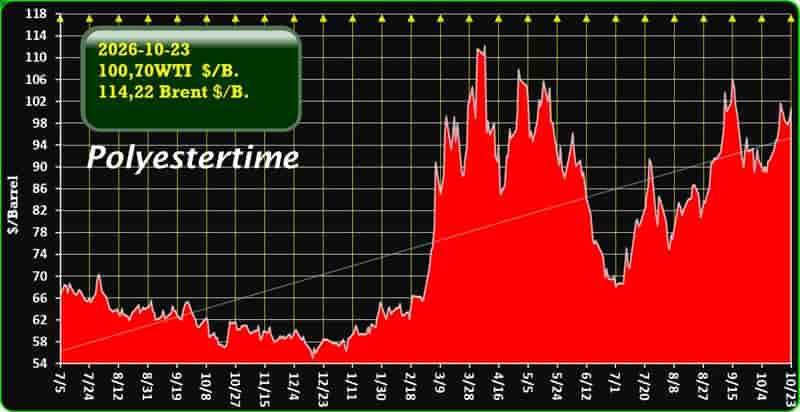
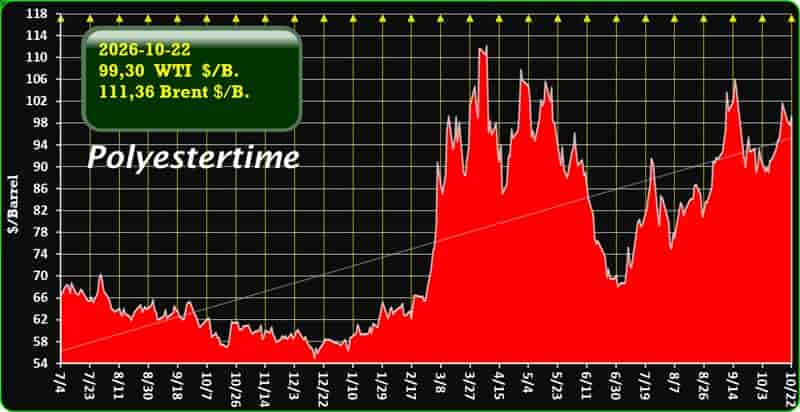
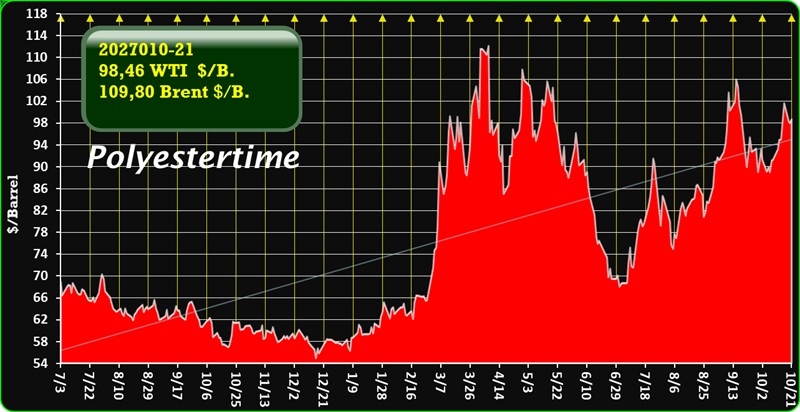
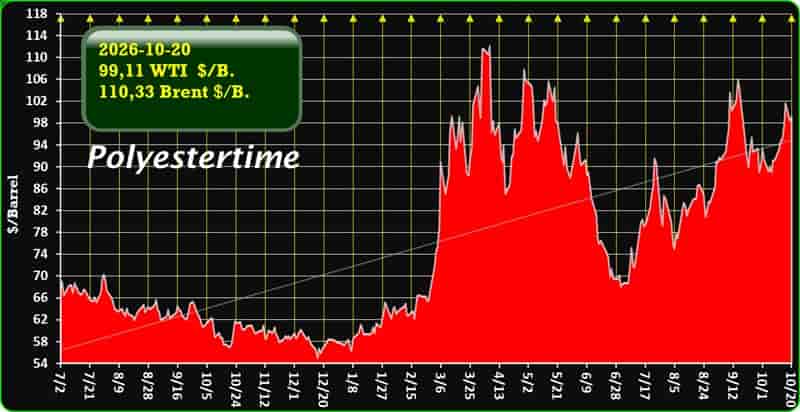
US-Iran oil prices remain elevated, but the market’s immediate response to Washington’s latest sanctions package has been more restrained than many traders expected. Brent crude was trading at $92.44 per barrel and West Texas Intermediate (WTI) at $85.38 per barrel at 03:30 UTC on Tuesday, following a fall of more than 2% in the previous session.reuters
The key message for oil buyers, petrochemical producers and logistics managers is that the market is still pricing a sizeable geopolitical risk premium. However, it is not yet pricing a complete and sustained removal of Persian Gulf supply.
Oil market snapshot
Brent is the international benchmark most relevant for European refiners, chemical producers and import-dependent buyers. At $92.44/b, it was up $0.27, or 0.3%, in early Tuesday trading.
WTI, the principal US benchmark, was $85.38/b, up $0.37, or 0.4%. The roughly $7/b discount to Brent reflects the higher risk attached to seaborne crude availability and Middle East export routes.reuters
The previous session’s decline shows that the market is separating political headlines from immediate physical losses. Traders took profits after the recent rally and assessed that the new economic measures did not, by themselves, create an instant interruption to global oil supply.
What Washington changed
On 24 August, the US Treasury launched “Operation Economic Outcast,” expanding the threat of secondary sanctions for parties doing business with Iran. The package targets Iranian revenue and supply networks, including shipping, oil trading, petroleum products and petrochemicals. It also sanctioned nearly 60 entities, individuals and vessels.treasury
The announcement matters because it increases compliance risk well beyond Iran’s borders. Traders, ship managers, insurers, banks, bunker suppliers and intermediaries may reassess exposure to Iranian-linked cargoes and vessels even before any additional enforcement action occurs.
However, the United States did not immediately identify the countries that could face the most severe restrictions or specify a final compliance deadline. Reuters reported that the administration intends to give countries time to reduce Iran-related activity rather than impose the broadest penalties immediately.reuters
That distinction helps explain the muted oil-price reaction. Markets see economic pressure as less immediately disruptive to crude supply than direct military escalation or a fully effective closure of the Strait of Hormuz. US-Iran oil prices
Strait of Hormuz remains decisive
The military and shipping situation remains the largest upside risk for US-Iran oil prices. Before the conflict, the Strait of Hormuz carried roughly one-fifth of global crude oil and liquefied natural gas flows. Reuters reported that only two commodity vessels transited the chokepoint on Monday, the lowest daily total since early May.reuters
The security risk is tangible rather than theoretical. Reuters also reported that a tanker was struck by an unidentified projectile and disabled northeast of Oman on Tuesday. Iran has threatened action against tankers that it says violate its transit rules, while Iranian officials have warned that US economic pressure could trigger retaliation against energy chokepoints.reuters+1
This creates a market with two competing forces:
-
Current supply is constrained and shipping is difficult, but barrels are still reaching the market.
-
Any confirmed, durable interruption to tanker traffic could rapidly lift freight costs, insurance premiums and regional crude differentials.
-
New sanctions may reduce Iranian export channels gradually, rather than creating an immediate global supply shock.
-
Diplomatic progress remains uncertain. Pakistan said it had made significant progress in talks focused on de-escalation and reopening Hormuz, but no durable political settlement has been confirmed.reuters
Why oil did not surge
The latest US-Iran oil prices signal caution, not complacency. Brent near $92 is well above a low-risk market level, yet it is far below the type of price that would normally imply a prolonged loss of most Gulf exports.
The explanation is straightforward: traders still expect some crude to move, and they are waiting for clearer evidence on enforcement, shipping access and military escalation. The sanctions package is a material commercial risk, especially for opaque trading structures and shadow-fleet logistics, but it has not yet translated into a verified, large-scale removal of global supply.
For European petrochemical and polymer value chains, Brent is only the first input signal. Procurement teams should also track naphtha differentials, LPG availability, freight, marine insurance and lead times. A stable outright crude price can still coexist with sharply higher delivered feedstock costs if shipping conditions worsen.
The more relevant commercial question is therefore not simply whether Brent trades above or below $90/b. It is whether physical cargo availability, transport reliability and financial compliance conditions deteriorate at the same time.
What to watch next
The next market move will depend on four developments:
-
Whether the US publishes specific enforcement deadlines or names additional jurisdictions, banks, traders or shipping companies.
-
Whether tanker movements through the Strait of Hormuz recover or remain severely restricted.
-
Whether new attacks affect tankers, ports, loading facilities or regional energy infrastructure.
-
Whether talks produce a credible mechanism for de-escalation and safer commercial passage through Hormuz.
For now, US-Iran oil prices should be treated as event-driven. The base case is continued volatility, with Brent supported by geopolitical and shipping risk but capped by the absence of a confirmed, sustained loss of major Gulf export volumes.
Editorial note: This analysis distinguishes verified developments from market interpretation. It does not present a crude-price forecast or investment advice.
US – Iran Tensions and Oil Prices: Brent Holds Near $91-$93 and WTI Near $85-$86
More…