Recycled Plastics – Argonne and UT Dallas Unite to Accelerate Battery Innovation & Secure Supply Chains Argonne National Laboratory and The University of Texas at Dallas (UT Dallas) have launched a strategic partnership aimed at accelerating breakthroughs in battery technology and shoring up the U.S. supply of critical materials 05-08-2025
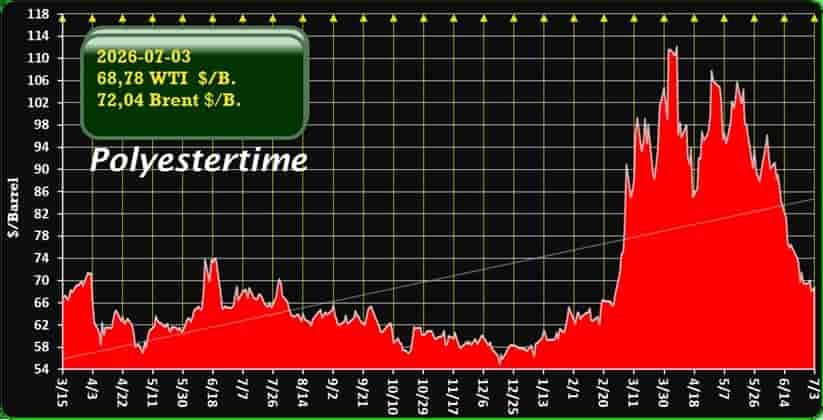
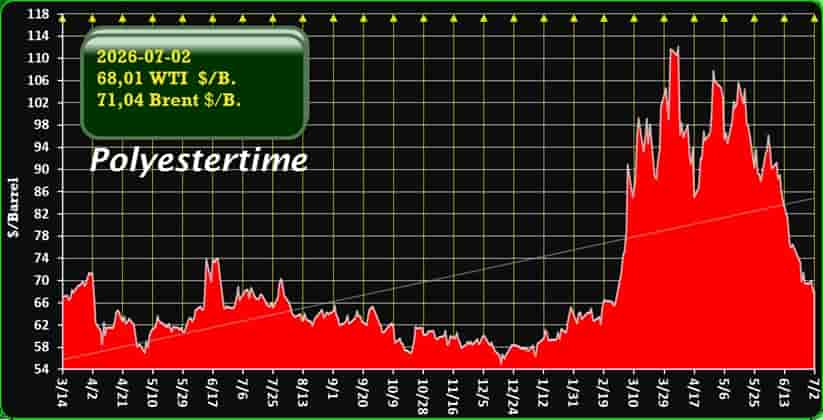
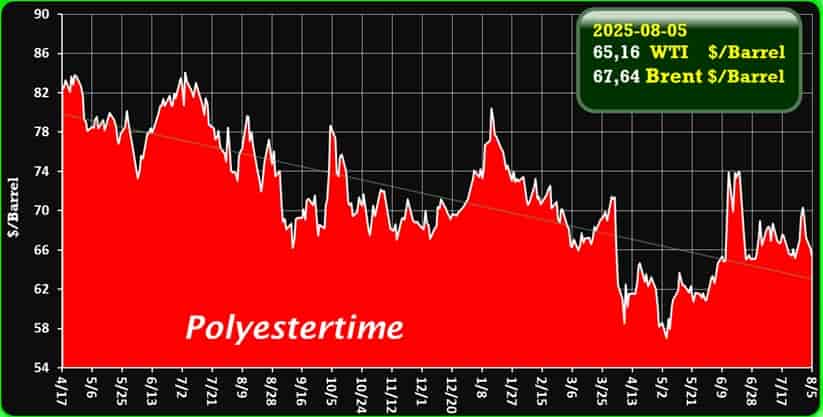
Crude Oil Prices Trend
Argonne and UT Dallas Unite to Accelerate Battery Innovation & Secure Supply Chains
Argonne National Laboratory and The University of Texas at Dallas (UT Dallas) have launched a strategic partnership aimed at accelerating breakthroughs in battery technology and shoring up the U.S. supply of critical materials. This landmark collaboration aligns with national priorities to secure energy independence, bolster manufacturing resilience, and develop the next generation of skilled professionals in the energy sector.
A Groundbreaking MOU: Bridging Innovation and Industry
In July 2025, a Memorandum of Understanding (MOU) was officially signed by Argonne Director Paul Kearns and UT Dallas Vice President for Research and Innovation, Dr. Joseph J. Pancrazio. The signing took place at Argonne’s Materials Engineering Research Facility (MERF), a state-of-the-art center dedicated to scaling materials science discoveries from benchtop prototypes to industrial production. Recycled Plastics
The MOU marks the start of a dynamic, long-term collaboration between two powerhouses in energy research. The MERF will serve as a hub for active cooperation, enabling researchers to turn laboratory insights into viable commercial solutions.
Focus on Battery Innovation & Critical Materials
The partnership brings together Argonne’s Advanced Energy Technologies (AET) directorate with UT Dallas’s newly established BEACONS Center—short for Batteries and Energy to Advance Commercialization and National Security.
Founded in 2023 with a $30 million award from the U.S. Department of Defense, BEACONS focuses on energy storage systems that support both national defense and commercial industries. The collaboration aims to close urgent technology gaps, enhance domestic manufacturing capabilities, and ensure a steady supply of critical materials essential to next-gen batteries and clean energy systems.
Securing America’s Energy Future
The U.S. energy sector faces increasing challenges from global supply chain disruptions, foreign dependencies, and technological lag. Recycled Plastics
This partnership directly addresses those concerns by:
- Accelerating the development and commercialization of battery technologies.
- Supporting the domestic production of critical materials such as lithium, cobalt, and nickel.
- Strengthening U.S. energy security and industrial competitiveness.
- Creating new R&D and workforce training pipelines across academia and national labs.
Empowering the Next Generation of Energy Leaders
Beyond technology development, the partnership places a strong emphasis on cultivating talent. Argonne will actively engage UT Dallas students in professional development, internships, and research fellowships focused on energy storage and critical materials science. Recycled Plastics
This initiative not only fills a growing workforce gap in energy technology but also provides real-world training and mentorship from nationally recognized experts.
Why This Matters: National Impact and Global Competitiveness
With electric vehicles (EVs), grid-scale batteries, and renewable energy systems on the rise, the global demand for high-performance batteries is skyrocketing. Yet much of the world’s supply chain—especially for materials like lithium and rare earths—remains concentrated outside U.S. borders.
By combining UT Dallas’s academic innovation with Argonne’s deep expertise in applied science and manufacturing scale-up, the collaboration serves as a critical catalyst for reshoring these essential capabilities. Recycled Plastics
About Argonne National Laboratory
Argonne, located near Chicago, is a leading U.S. Department of Energy laboratory recognized for pioneering discoveries in materials science, clean energy, and supercomputing. Through its Advanced Energy Technologies division and the MERF, Argonne helps bridge the innovation gap between fundamental research and real-world application.
About the University of Texas at Dallas (UT Dallas)
UT Dallas is a Tier 1 research institution known for cutting-edge engineering and science programs. Its BEACONS Center serves as a national model for energy storage research with a mission to accelerate commercialization, support defense applications, and secure critical energy infrastructures. Recycled Plastics
Conclusion: A Model for Research-Industry Synergy
The Argonne-UT Dallas partnership represents a bold step forward for U.S. energy leadership. By fostering research, education, and real-world impact, the alliance will help shape the future of battery innovation, industrial security, and sustainable technology in America.
As this collaboration unfolds, it promises to deliver long-term benefits—not just for researchers and students, but for every American who depends on clean, resilient, and secure energy systems. Recycled Plastics
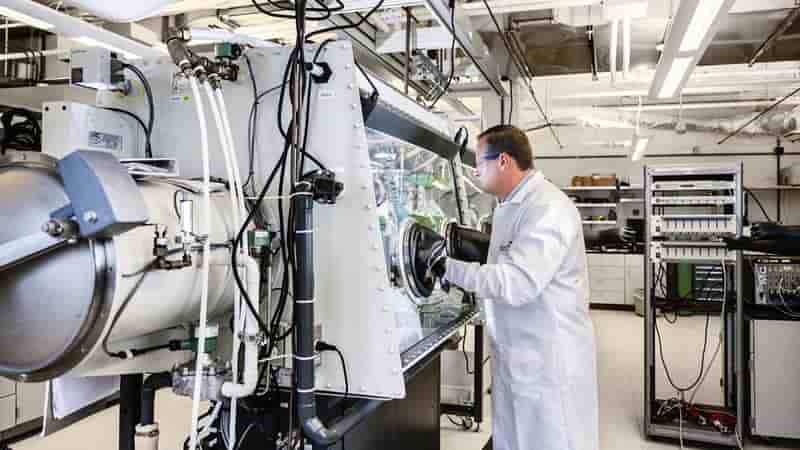
Sustainable Carbon Fiber Production from Microalgae: A Breakthrough for Aviation and Industry
Published: August 5, 2025 | Source: Technical University of Munich
Turning Microalgae Into Industrial Gold
Carbon fibers are prized for their lightweight, strength, and durability. They’re commonly found in airplanes, wind turbines, cars, and bicycles, where performance and weight savings are crucial. These fibers are typically manufactured using acrylonitrile, a petroleum-derived compound.
The TUM-led research group has pioneered a method to derive acrylonitrile from a renewable source—glycerol extracted from photosynthetically active microalgae. This approach closes a critical gap in carbon fiber production by eliminating reliance on fossil fuels. Recycled Plastics
Inside the GreenCarbon Project
This initiative, known as GreenCarbon, brings together leading institutions and companies, including:
- Technical University of Munich (TUM) – Leading research and coordination
- Fraunhofer Institute for Interfacial Engineering and Biotechnology (IGB) – Biochemical process development
- SGL Carbon – Industrial production and scalability
- Airbus – Application in aerospace and sustainability assessment
Supported by the German Federal Ministry of Research, Technology, and Space (BMFTR), the GreenCarbon project represents a powerful public-private alliance.
From Algae to Acrylonitrile: The Science Explained Recycled Plastics
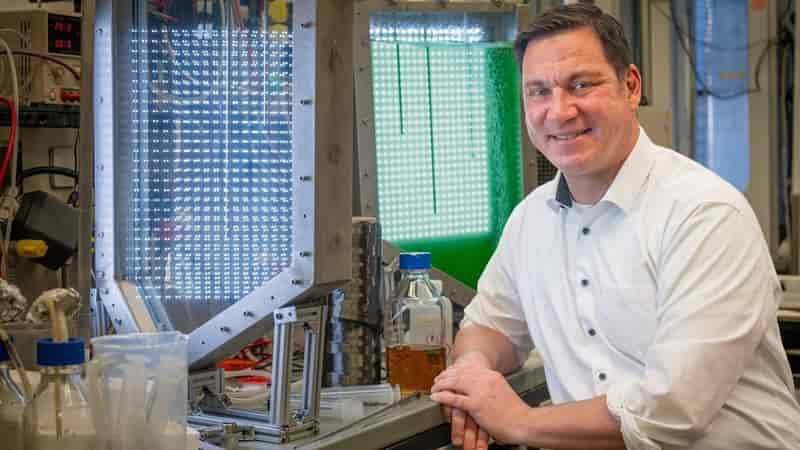
Under the leadership of Prof. Thomas Brück, TUM scientists extracted oils from microalgae, which capture CO2 via photosynthesis. From these oils, the team derived glycerol—a versatile organic compound. Using catalytic chemistry, glycerol was then converted into acrylonitrile, the key building block for carbon fibers.
Fraunhofer IGB scaled this process at its Straubing research facility, making it suitable for industrial development. “We now have a sustainable pathway to manufacture carbon fibers with the same properties as those made from fossil materials,” said Dr. Arne Roth, department head at Fraunhofer IGB.
Scaling the Innovation: SGL Carbon’s Role Recycled Plastics
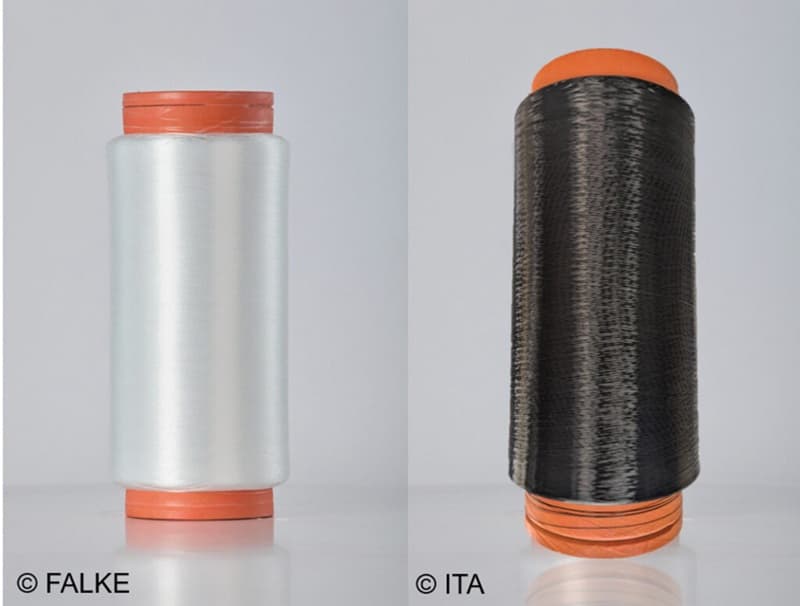
SGL Carbon, a world leader in carbon-based products, played a central role in converting the bio-based acrylonitrile into usable carbon fibers. They focused on creating 50k heavy-tow fibers—bundles containing 50,000 individual filaments. These fibers meet established performance standards for commercial and industrial applications.
The resulting product was used to create carbon fiber-reinforced composites, crucial for industries requiring strength, durability, and low weight.
Airbus: Testing the Skies
Airbus joined the GreenCarbon project as an associate partner, exploring how renewable carbon fibers could revolutionize aerospace materials. The company conducted rigorous technology screening and life-cycle assessments to evaluate environmental impact and performance viability.
The results were so promising that Airbus built and flew a research helicopter in 2024, constructed in part with carbon fibers made from algae-derived glycerol. This was a landmark demonstration of bio-based materials in flight. Recycled Plastics
Looking Ahead: Broader Applications and Industrial Scaling
Encouraged by these results, the GreenCarbon consortium is now focusing on scaling the technology for mass production. According to TUM’s Prof. Brück, this process could also be adapted to produce acrylic acid, a base chemical for polymers currently made from fossil fuels.
“We are opening the door to a raw materials revolution in the chemical industry,” says Brück. The consortium is seeking further funding from the BMFTR to launch a follow-up initiative to broaden the application of this breakthrough technology.
Why This Matters for Sustainability
Carbon fiber production is currently responsible for high levels of CO2 emissions due to its dependence on fossil fuels. By integrating renewable feedstocks like algae oils and transforming them into high-performance materials, this new method drastically reduces environmental impact. Recycled Plastics
It aligns with global goals for climate-neutral manufacturing and the circular economy, positioning Germany and the EU as leaders in sustainable industrial innovation.
Scientists unveil bioplastic that degrades at room temperature, and outperforms petroplastics
Plastic pollution is a mounting global issue, but scientists at Washington University in St. Louis have taken a bold step forward by creating a new bioplastic inspired by the structure of leaves. Their innovation, LEAFF, enhances strength, functionality, and biodegradability by utilizing cellulose nanofibers, outperforming even traditional plastics. It degrades at room temperature, can be printed on, and resists air and water, offering a game-changing solution for sustainable packaging. Recycled Plastics
Society has long struggled with petroleum-derived plastic pollution, and awareness of microplastics’ detrimental effects on food and water supplies adds further pressure.
In response, researchers have been developing biodegradable versions of traditional plastics, or “bioplastics.” However, current bioplastics face challenges as well: Current versions are not as strong as petrochemical-based plastics and they only degrade through a high-temperature composting system.
Enter researchers at Washington University in St. Louis, who have solved both problems with inspiration from the humble leaf. Long before plastic, humans wrapped their food in leaves, which easily biodegrade due to an underlying structure of cellulose-rich cell walls. WashU’s chemical engineers decided to introduce cellulose nanofibers to the design of bioplastics. Recycled Plastics
“We created this multilayer structure where cellulose is in the middle and the bioplastics are on two sides,” said Joshua Yuan, the Lucy and Stanley Lopata Professor and chair of energy, environmental and chemical engineering at the McKelvey School of Engineering. Yuan is also director for the National Science Foundation-funded Carbon Utilization Redesign for Biomanufacturing (CURB) Engineering Research Center. “In this way, we created a material that is very strong and that offers multifunctionality,” he added.
The technology emerged from working with two of the highest production bioplastics today. In a study published in Green Chemistry earlier this year, Yuan and colleagues used a variation of their leaf-inspired cellulose nanofiber structure to improve the strength and biodegradability of polyhydroxybutrate (PHB), a starch-derived plastic; they further refined their technique for polylactic acid (PLA), as detailed in a new paper just published in Nature Communications. Recycled Plastics
The plastic packaging market is a $23.5 billion industry dominated by polyethylene and polypropylene, polymers made from petroleum that break down into harmful microplastics. The researchers’ optimized bioplastic, called Layered, Ecological, Advanced and multi-Functional Film (LEAFF), turned PLA into a packaging material that is biodegradable at room temperature. Additionally, the structure allows for other critical properties, such as low air or water permeability, helping keep food stable, and a surface that is printable. This improves bioplastics’ affordability since it saves manufacturers from printing separate labels for packaging.
“On top of all of this, the LEAFF’s underlying cellulose structure gives it a higher tensile strength than even petrochemical plastics like polyethylene and polypropylene,” explained Puneet Dhatt, a PhD student in Yuan’s lab and first author on the article. Recycled Plastics

ReMA & APR Update Recycled Plastics Specifications: A New Era for Recyclability and Safety
Date: August 5, 2025
By the Institute of Scrap Recycling Industries (ISRI), Association of Plastic Recyclers (APR)
Collaboration Powers Industry-Wide Standards
The Institute of Scrap Recycling Industries (ISRI) and The Association of Plastic Recyclers (APR) have jointly announced a major update to the ISRI Scrap Specifications Circular and APR Model Bale Specifications. These updates aim to reflect the current realities of the recycled plastics market while standardizing quality benchmarks across the entire recycling chain.
Approved by both organizations’ boards—ReMA (formerly ISRI) on July 14, 2022, and APR on August 2, 2022—this update reflects two years of collaborative work from plastics and nonferrous recycling experts, backed by insights from frontline recyclers and packaging stakeholders. Recycled Plastics
Technology & Innovation: Driving Better Sorting
Modern recycling operations now rely on innovations such as AI-driven robotics, advanced optical sorters, and machine learning-powered waste detection. These breakthroughs allow recyclers to process plastics with greater accuracy and speed than ever before.
However, with the rise of complex packaging materials and non-traditional waste streams—especially after the COVID-19 pandemic—the need for clear, updated standards has never been greater. Recycled Plastics
Pandemic Fallout & Contamination Risks
The pandemic introduced unforeseen complications into the recycling stream. Disposable face masks, gloves, and other medical-related waste, while essential for public health, became a significant source of contamination.
To address this, the updated specifications explicitly list such items as non-recyclables, ensuring they are kept out of the plastics stream.
Similarly, the surge in lithium-ion battery use—especially in consumer electronics—has created hazardous conditions at recycling facilities. These batteries are now classified as “disallowed contaminants” in all plastics bale specifications, highlighting a critical safety improvement. Recycled Plastics
What the Updated Specifications Include
The revised ISRI and APR specifications reflect both the complexity of today’s packaging and the opportunities available through innovation. These updates provide:
- Standardized bale content guidelines across material recovery facilities (MRFs)
- Clarity on accepted vs. disallowed materials, improving safety and efficiency
- Recommendations for packaging design aligned with recycling capabilities
- Market-ready documentation to harmonize the value chain from producer to processor
According to Steve Alexander, APR President & CEO:
“These model bale specifications facilitate greater understanding of the packaging/products commonly accepted by reclaimers for recycling, and also provide insight for the broader marketplace and value chain.” Recycled Plastics
Key Functions of the Updated Bale Standards
The APR Plastic Model Bale Specifications now serve as a foundational framework for:
- Benchmarking bale quality for producers like MRFs and commercial generators
- Facilitating communication between sellers and reclaimers
- Helping reclaimers yield higher-quality recycled resin
- Guiding packaging designers in creating recycling-compatible products
- Educating policymakers and investors on material acceptability
Boosting Your Sustainability Goals
For businesses, governments, and product manufacturers, adhering to these standards helps align operations with ESG goals and circular economy initiatives. From clearer labeling to improved facility safety, the updates empower every segment of the value chain. Recycled Plastics
FAQs: Updated Plastic Recycling Specifications
Are these new specifications legally binding?
No, they are industry guidelines—but widely followed across North America and increasingly internationally.
Can local MRFs choose different bale content rules?
Yes. The APR model specs provide a foundation, but local facilities may have stricter or more lenient requirements based on their capabilities. Recycled Plastics
What is the role of packaging designers?
These specifications help packaging designers create more recyclable and less contaminating products, directly affecting recycling success rates.

LEAFF Bioplastic: A Sustainable Leap Beyond Polyethylene
What Is LEAFF Bioplastic?
LEAFF stands for Layered, Ecological, Advanced, and Multifunctional Film. Inspired by the natural structure of leaves, this new bioplastic uses cellulose nanofibers as a central reinforcement layer. These nanofibers are embedded between two common bioplastics—polylactic acid (PLA) and polyhydroxybutyrate (PHB).
The result? A multilayered film with exceptional durability, flexibility, and environmental compatibility. Unlike conventional plastic, LEAFF degrades under normal conditions without needing industrial composting—one of the biggest limitations of current bioplastics.
How It Works: Biomimicry Meets Engineering Recycled Plastics
The engineering team, led by Joshua Yuan, turned to nature for inspiration. Just like a leaf uses layers to manage strength, moisture, and airflow, LEAFF’s design incorporates a cellulose middle layer that drastically improves mechanical performance and sustainability.
This innovative architecture enhances:
- Tensile strength – surpassing both polyethylene and polypropylene
- Barrier properties – blocks air and moisture, perfect for food packaging
- Printability – allows direct printing, reducing ink and label waste
From Corn to Compost: Fully Circular Recycled Plastics
Both PLA and PHB are derived from renewable agricultural sources like corn starch. This gives LEAFF a strong foundation in the bioeconomy. Even better, the added cellulose is often produced from plant waste, making this film not just biodegradable—but also part of a closed-loop system.
Did you know? LEAFF doesn’t require special composting facilities. It breaks down under normal environmental conditions—meaning it’s closer to true zero-waste packaging than anything currently on store shelves.
LEAFF vs Traditional Plastics: A Quick Comparison Recycled Plastics
| Property | Polyethylene | LEAFF Bioplastic |
|---|---|---|
| Tensile Strength | Medium | High |
| Degradability | Non-biodegradable | Room-temp compostable |
| Barrier Properties | Moderate | Excellent |
| Eco Impact | High | Low |
Why the U.S. Is Positioned to Lead
Thanks to its vast agricultural sector, the United States has a unique opportunity to become a leader in the bioplastics industry. LEAFF can be produced domestically using existing feedstocks like corn and cellulose waste, reducing dependency on fossil fuels and foreign materials.
Joshua Yuan is currently seeking commercial partners to help scale production, noting the competitive interest from Asia and Europe. With strategic investment, the U.S. could own the future of sustainable packaging. Recycled Plastics
Conclusion: Redefining Plastics from Plant Science
LEAFF bioplastic represents a turning point in the packaging industry—where high performance meets environmental responsibility. As brands, consumers, and regulators demand better solutions, innovations like LEAFF are paving the way for a truly sustainable future.
Whether you’re a retailer, manufacturer, or policymaker, the message is clear: the time to invest in circular, nature-inspired materials is now.
OPEC+ Boosts Crude Output Above Forecasts: What It Means for Oil Markets and Global Politics
OPEC+ Agrees on Bigger-than-Expected Production Hike
On Saturday, OPEC+ members surprised analysts by agreeing to increase crude oil production by 548,000 barrels per day in August. This exceeds the previously expected rise of 411,000 barrels per day—consistent with May through July’s pace—and could exert downward pressure on global oil prices.
The move comes at a pivotal geopolitical moment, as diplomatic talks resume between Israel and Hamas, increasing the likelihood of a ceasefire and further affecting oil market stability.
Why OPEC+ Shifted Gears in 2025
Historically, the OPEC+ coalition—responsible for about 50% of global oil output—cut production to support prices. But with changing geopolitical dynamics and energy diplomacy, 2025 marks a reversal. Recycled Plastics
The group is now increasing output to regain market share, particularly as the U.S. pressures for lower gasoline prices in a critical political year.
This production hike caters to both market competition and domestic fiscal needs. Countries like Saudi Arabia, facing budget shortfalls, see increased sales volume as a path to revenue despite potential price drops.
Saudi Arabia’s Strategy: Volume Over Price
To balance its budget, Saudi Arabia requires oil to sell at around $90 per barrel. That became unfeasible following the de-escalation of the Iran-Israel conflict. Instead, Riyadh appears to be doubling down on boosting exports—even if it means lower prices—to undermine higher-cost competitors like U.S. shale producers. Recycled Plastics
If crude prices fall to the $60–$63 range, many shale operations become economically unviable. Already, U.S. rig counts have dropped to 425 in mid-2025 from a peak of 627 in December 2022.
Who Benefits From Lower Oil Prices?
Falling prices offer advantages to major oil importers like China, Japan, Korea, and Europe. For the United States, the scenario is mixed: cheap gasoline improves public satisfaction but hurts domestic producers operating on tighter margins.
Impact on Russia: Triple Economic Pressure
For the Russian Federation, the OPEC+ decision carries significant consequences:
- Price Decline: Russian Urals crude already trades at a $11–$13/barrel discount to Brent. A Brent drop below $68 could push Urals below $50/barrel—well under the $60 sanctions cap. This strengthens the EU and UK’s push to lower the price cap to $45. Recycled Plastics
- Market Oversupply: More global supply lowers the urgency to bypass sanctions, enabling stricter monitoring of Russia’s “shadow fleet.”
- Budget Crisis: Russia’s fiscal health is deteriorating. With declining oil revenue and rising military costs, this production shift could tip the scales toward severe economic instability—especially heading into winter.
Israel-Hamas Talks Could Stabilize the Region
In parallel with market developments, Israel has agreed to resume ceasefire negotiations with Hamas. A meeting between Prime Minister Netanyahu and U.S. President Trump is expected to be decisive. Should a truce be reached, it would ease geopolitical tensions in the Middle East—further pressuring oil prices.
In a surprising diplomatic move, five prominent sheikhs from Hebron submitted a letter to the Palestinian Authority supporting the Abraham Accords and advocating for peace with Israel—raising internal pressure on Hamas and signaling a shift within Palestinian politics. Recycled Plastics
Strategic Takeaways for Oil Traders and Analysts
- Watch Brent and Urals spreads to assess geopolitical and sanctions-based trade decisions.
- Follow U.S. rig count data to monitor the domestic shale industry’s response to pricing pressure.
- Track ceasefire developments between Israel and Hamas for indirect effects on market risk premiums. Recycled Plastics