PET Recycler – Kisuma Helps the Plastics Recycling Industry Boost the Performance of Recycled Plastics Kisuma Chemicals, a global leader in magnesium-based additives, is empowering the plastics recycling industry with innovative solutions that upgrade the performance of recycled plastics 24-09-2025
PET Recycler
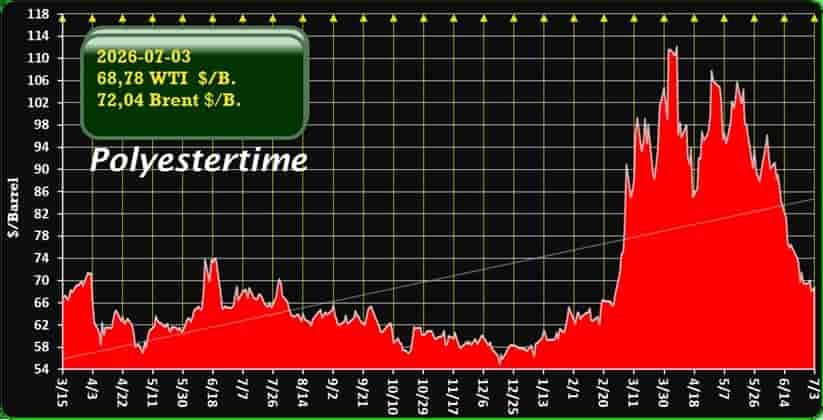
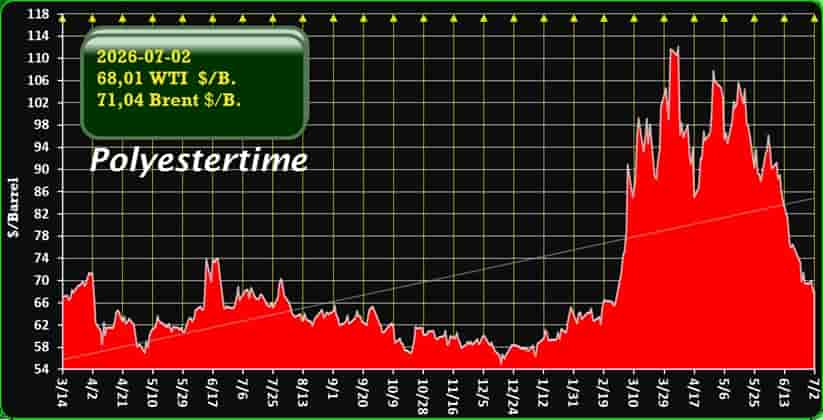
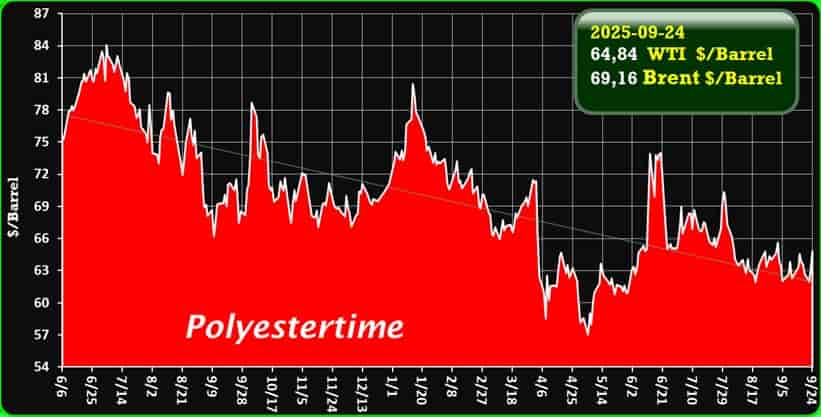
Crude Oil Prices Trend
India’s Recycled PET Market Faces Collapse After Legislative Changes
By APR Bharat — September 23, 2025
Demand Collapse in India’s rPET Market
The Indian Association of PET Recyclers (APR Bharat) has raised a red flag over the country’s recycled PET (rPET) industry.
According to the association, demand for rPET has plummeted following recent regulatory changes, leading to sharp price declines.
Recycling plants across India are sitting idle, and the livelihoods of thousands of waste pickers are now at risk. PET Recycler
Legislation Driving Uncertainty
As of April 1, 2025, India’s Plastic Waste Management Rules required 30% rPET use in rigid packaging, such as beverage bottles. Just before that, the Food Safety and Standards Authority of India (FSSAI) authorized the use of recycled PET in food-contact applications — a move celebrated by recyclers.
However, on June 3, amendments were introduced that allowed brand owners to carry forward any shortfalls in meeting the 30% rPET target for 2025–26 across the following three years.
This flexibility has weakened compliance pressure and discouraged immediate purchases of recycled PET. PET Recycler
“This delay is harming the livelihood of rag picker communities, rendering recycling capacities idle, and damaging investor confidence — all of which undermine India’s circular economy goals,” APR Bharat stated.
Impact on Investments and Industry
The initial 30% rPET mandate triggered massive investments in recycling capacity worth between INR 7,500 and 8,000 crore (approximately €800 million).
India’s rPET industry had planned an annual capacity of 400,000 tonnes, with 150,000 tonnes already operational and FSSAI-certified.
Another 150,000 tonnes were awaiting regulatory approval. PET Recycler
But the recent legislative leeway has left many investors hesitant.
Some brand owners now anticipate further rollbacks, causing a ripple effect of delays in rPET purchases.
This has sent what APR Bharat describes as a “wrong signal” to MSMEs and larger investors who trusted government commitments before making long-term capital investments.
“It weakens India’s credibility as a country that offers regulatory certainty and policy continuity,” said Goutham Jain, Director General of APR Bharat.
Waste Pickers and Livelihood Concerns
Beyond business and industry, the setback directly affects the human side of India’s recycling chain:
the waste picker community. Before the amendments, the PET recycling industry was estimated to have created 10,000 new jobs and supported more than two million rag pickers nationwide.
These workers form the backbone of India’s informal waste collection system.
Reduced demand for rPET means lower income opportunities for these communities,
pushing many into greater economic precarity. PET Recycler
Jain emphasized that stabilizing the rPET market is not just about industrial sustainability.
It is also about welfare support and recognition for waste workers who are critical to India’s waste management ecosystem.
The Future of India’s rPET Industry
Prior to the amendments, India’s recycling capacity was on track to nearly double to
750,000 tonnes per year by 2027 and further grow to 1.1 million tonnes per year by 2030.
Those projections are now uncertain.
Industry experts warn that policy delays may undo years of progress and jeopardize India’s commitments to climate action and sustainability.
Restoring confidence requires regulatory stability and a stronger focus on safeguarding both industrial investment and the livelihoods of informal workers. PET Recycler
If corrective steps are not taken soon, India risks undermining its
stated goals of a circular economy and its standing in the global sustainability landscape.
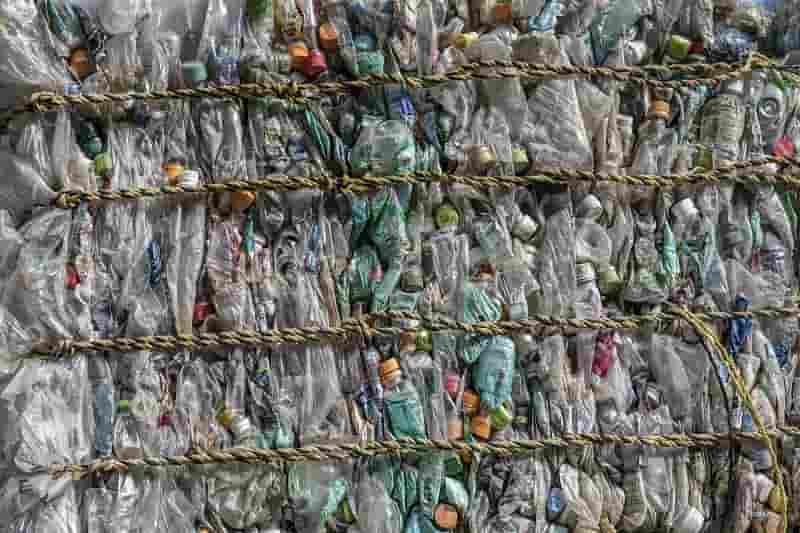
RCS Group Acquires Stake in Croatian PET Recycler Rekis
Introduction
The Germany-based waste management company RCS Group has taken a strategic step into the European PET recycling sector by acquiring a stake in Croatian PET recycler Rekis. The acquisition will take effect this autumn, with retroactive application to the beginning of the year. While the financial details remain undisclosed, the move underscores RCS Group’s commitment to expanding its circular economy footprint and food-grade rPET production capacity.
RCS Group: From Waste Management to rPET Leader
Over the past decade, RCS Group has transformed from a traditional waste disposal company into a specialist in plastics recycling. PET Recycler
Since 2012, the company has been producing recycled PET (rPET) at its headquarters in Werne, Germany. Its operations focus on supplying both food- and non-food-grade rPET to global beverage manufacturers.
In 2022, RCS commissioned its second Vacunite bottle-to-bottle system from Erema, a move that increased its annual rPET output to over 70,000 tons. The company is already planning to establish a third production site in Nordkirchen, further expanding its capacity and influence within the European recycling sector.
Rekis: A High-Quality PET Recycling Facility
Rekis, located in Donja Dubrava, Croatia, is a joint venture between Austrian beverage producer Steinrieser and Austrian-Croatian firm KIS Pica.
The facility combines advanced sorting technology from Sesotec, washing and drying systems from Lindner Washtech, and a dedicated in-house laboratory to ensure consistent rPET quality. PET Recycler
The production process at Rekis includes:
- Sorting PET waste streams to remove contaminants.
- Shredding PET into flakes for efficient processing.
- Hot washing to eliminate residual impurities.
- Pelletising using Erema’s Vacunite system to produce high-quality rPET pellets.
Rekis produces approximately 15,000 tons of rPET pellets annually, primarily for preforms and bottle manufacturing, ensuring that the end products meet strict food-grade requirements. PET Recycler
Strategic Importance of the Acquisition
The acquisition strengthens RCS Group’s European network and enhances its technical expertise in bottle-to-bottle recycling. By combining the operational capacity of Rekis with its own production systems, RCS can better meet the growing demand for high-quality, food-grade rPET across Europe.
According to Franz Steinrieser, Managing Director of Getränkewerke Steinrieser and Rekis, “For us as a beverage manufacturer, access to high-quality, food-grade rPET is of key importance. With Rekis and the involvement of the RCS Group, we are combining our strengths and making an important contribution to the implementation of the circular economy in the European beverage industry.” PET Recycler
Enhancing Circular Economy Initiatives
Both RCS Group and Rekis share a strong commitment to sustainability and the circular economy. By focusing on material purity, product safety, and efficient recycling technology, the partnership ensures that high-quality rPET can be reused in food-grade applications without compromising regulatory compliance or consumer safety.
Alexander Rimmer, one of RCS Group’s managing directors, adds: “Rekis pursues the same quality standards and sustainability goals as we do: the highest material purity, certified product safety, and a consistently implemented circular economy. This alignment makes the partnership so valuable for both sides.” PET Recycler
RCS’s Growth in Bottle-to-Bottle Recycling
RCS Group’s commitment to bottle-to-bottle recycling is central to its long-term strategy. The company’s investment in advanced Vacunite systems allows PET bottles to be recycled back into food-grade containers, reducing reliance on virgin plastics and minimizing carbon footprint.
With the acquisition of Rekis, RCS strengthens its ability to deliver high-quality rPET to international beverage producers, helping the sector meet increasing sustainability targets. The expansion also allows RCS to scale operations efficiently, leveraging shared knowledge, technology, and best practices between its sites in Germany and Croatia.
Technology and Quality Assurance
Rekis combines cutting-edge technology with rigorous quality control to ensure every batch of rPET meets food-grade specifications. PET Recycler
The facility’s workflow emphasizes:
- Automated sorting to maximize material recovery.
- State-of-the-art washing and drying systems.
- Laboratory analysis for consistent polymer quality.
- Vacunite pelletising for high-performance, food-safe rPET.
These technological investments highlight how the company maintains a balance between operational efficiency, material quality, and sustainability standards. PET Recycler
Market Implications and Industry Impact
The acquisition is significant for Europe’s beverage and packaging industries, which increasingly demand food-grade recycled plastics. By enhancing supply chain security and improving rPET quality, the partnership between RCS and Rekis offers a scalable model for circularity.
High-quality rPET reduces the environmental footprint of beverage production, lowers dependence on virgin plastics, and supports regulatory compliance in both European and global markets. This transaction strengthens RCS Group’s position as a key player in sustainable plastics and circular economy initiatives. PET Recycler
Future Outlook
With the Rekis acquisition, RCS Group is well-positioned to expand its European rPET network, improve bottle-to-bottle recycling rates, and meet rising sustainability targets. The company plans to continue investing in technological innovation, site expansion, and process optimization to meet the evolving needs of the beverage and packaging industries.
As demand for sustainable and food-grade rPET grows, RCS Group’s combined expertise with Rekis provides a competitive edge, demonstrating how strategic acquisitions can drive both environmental and economic benefits. PET Recycler
Conclusion
RCS Group’s acquisition of a stake in Rekis reflects the growing importance of collaboration and technology in the circular economy. By aligning operational expertise, sustainability goals, and advanced recycling technology, the partnership ensures a reliable supply of high-quality, food-grade rPET for Europe’s beverage sector.
This strategic move not only expands RCS Group’s production capacity and technical know-how but also reinforces the company’s position as a leader in sustainable plastics recycling, driving the industry toward a more circular and environmentally responsible future.
SK On Completes Pilot Plant for All-Solid-State Batteries
Completion Ceremony
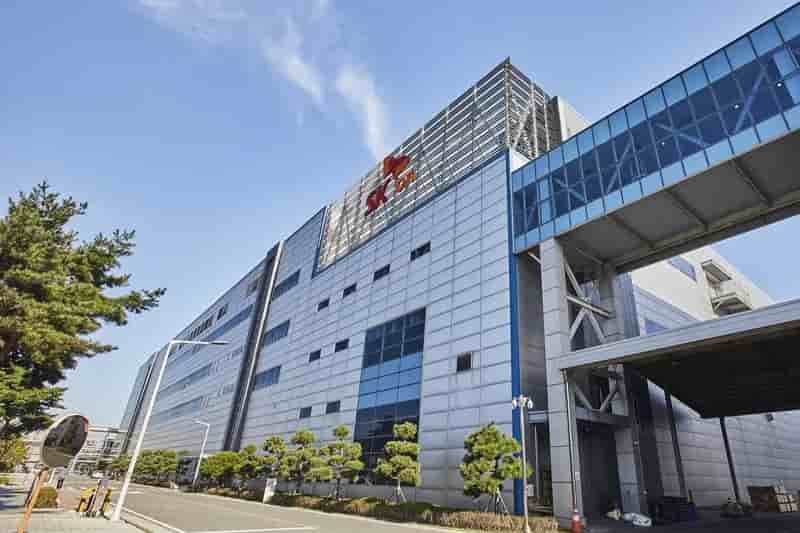
SK On, a leading battery manufacturer and part of South Korea’s SK Group, announced the completion of its pilot plant for all-solid-state batteries (ASSBs) in Daejeon, about 150 kilometers south of Seoul. The milestone was marked with a ceremony on September 15, attended by CEO & President Seok-hee Lee, Head of the Institute of Future Technology Ki-soo Park, and Andrea Maier, head of Solid Power Korea. PET Recycler
“This pilot plant will serve as a cornerstone for SK to leap forward as a strong and resilient company in addressing any changes in business environment,” said Lee. “We aim to remain at the forefront of commercializing all-solid-state batteries to accelerate electrification.”
What is a Pilot Plant?
A pilot plant serves as a facility where prototypes are produced and tested for performance before mass production. It allows companies to refine processes, validate quality, and scale new technologies safely. PET Recycler
SK On’s new facility spans 4,600 square meters (50,000 sq. ft.) and focuses primarily on developing sulfide-based ASSBs. Some lines are also dedicated to lithium-metal batteries.
Technology Breakthroughs
The pilot plant incorporates SK On’s proprietary “Warm Isostatic Press (WIP)-free” technology, making it the first in South Korea to apply such a process for ASSBs. Traditional WIP techniques apply uniform pressure to electrodes at elevated temperatures to improve density and performance, but they face challenges in continuous, automated production lines. PET Recycler
By avoiding WIP, SK On has developed a unique approach that optimizes electrode mixing, bonding, and pressing conditions. This reduces internal and interfacial resistance, resulting in:
- Less heat generation
- More efficient ion transport
- Greater stability during charging and discharging
- Extended cycle life for batteries
Production and Productivity
To balance performance and productivity, SK On focused on optimizing its cell design and pressing methods. Improvements in material mixing and electrode composition helped reduce resistance, while better bonding between electrodes and solid electrolytes lowered interfacial resistance. PET Recycler
These refinements bring ASSBs closer to scalable manufacturing.
| Target | Energy Density (Wh/L) | Timeline |
|---|---|---|
| Initial Commercialization | 800 Wh/L | By 2029 |
| Long-Term Goal | 1,000 Wh/L | Beyond 2029 |
Research and Partnerships
Beyond in-house R&D, SK On is strengthening its innovation ecosystem through strategic partnerships. Since 2024, it has collaborated with Solid Power, a U.S.-based leader in solid-state battery research.
In May 2025, SK On and South Korea’s Hanyang University announced a breakthrough: a threefold increase in cycle life for sulfide-based ASSBs. This was achieved by applying a protective-film technology to lithium-metal anodes. Patent applications for these technologies have been filed in multiple regions. PET Recycler
Future Roadmap
SK On has accelerated its commercialization timeline, aiming to launch its first ASSBs by 2029—one year earlier than originally planned. The company’s dual focus on internal innovation and external partnerships positions it as a frontrunner in the global race for next-generation batteries.
As the demand for electrification grows, ASSBs promise improved energy density, faster charging, and enhanced safety, making them a critical enabler of sustainable mobility.
Treofan Germany Restarts BOPP Production at Neunkirchen — Administrators Seek Investors
Neunkirchen, Germany — Treofan (Jindal Group)
Summary
Treofan Germany — part of the Indian Jindal Group — has restarted production of biaxially oriented polypropylene (BOPP) film at its Neunkirchen plant after entering insolvency earlier this month. Special administrators from the law firm handling the restructuring have resumed operations and are actively seeking new investors through an open, multi-stage bidding process. PET Recycler
What happened (quick timeline)
At the beginning of the month Treofan Germany entered insolvency proceedings. To protect machinery from potential harm during a threatened power disruption, production was temporarily halted as a precaution. After discussions with the energy supplier and confirmation of uninterrupted electricity, the special administrators reactivated the plant’s production lines.
The goal: stabilize day-to-day operations swiftly while preserving value for any future investor or buyer.
Employees and payroll
Treofan’s 500 employees in Neunkirchen have been covered: wages and salaries were ensured via the Federal Employment Agency’s insolvency fund. That guaranteed payroll bridge is a crucial step to maintain workforce stability and operational continuity during a restructuring. PET Recycler
The power / supplier issue
Production was paused to avoid equipment damage if a power cutoff occurred. The special administrators report the feared outage did not happen — after negotiations and confirmation from the energy supplier, reliable electricity supply was secured and production restarted.
Investor search: process and openness
The administrators, led by Anna Katharina Wilke and Lucas F. Flöther, have begun a structured search for new investors. Jindal is supporting the process.
Bids will be collected in a multi-stage procedure and the process is described as openly accessible: any genuinely interested party with a credible acquisition plan can submit a proposal. PET Recycler
That openness is designed to maximize competitive bids and preserve the plant’s long-term prospects.
Business context & figures
Treofan’s Neunkirchen facility produces BOPP film and employs roughly 500 people. Reported revenue for the German operation is around €150 million. BOPP film is widely used in packaging and labeling — resilient demand in certain sectors can make a stable production asset attractive to investors, provided supply chain, energy and operating costs are well controlled. PET Recycler
Kisuma Helps the Plastics Recycling Industry Boost the Performance of Recycled Plastics
Introduction
Kisuma Chemicals, a global leader in magnesium-based additives, is empowering the plastics recycling industry with innovative solutions that upgrade the performance of recycled plastics. By addressing common challenges such as odor, melt flow consistency, and color stability, Kisuma is helping compounders and converters create higher-quality products with improved sustainability profiles. PET Recycler
Key Benefits of Magnesium-Based Additives
Recycled plastics often suffer from issues that limit their performance compared to virgin materials. Kisuma’s suite of magnesium-based additives directly tackles these issues, providing measurable improvements such as:
- Odor Scavenging & Reduction: Eliminates unpleasant smells often associated with recycled plastics.
- Melt Flow Index Retention: Maintains processing stability and efficiency.
- Color and Yellowing Index Retention: Helps products retain bright, consistent colors.
- Gel Reduction: Minimizes defects, improving surface quality and consistency.
These benefits result in recycled plastics with more reliable, “virgin-like” properties, opening opportunities for broader applications across industries. PET Recycler
Innovation and Customer Collaboration
According to Zachary Hoffman, Business Development Lead for Europe, Middle East & Africa at Kisuma, innovation is central to their strategy:
“Beyond a diversified suite of magnesium-based additives already available for this market, we are actively developing the next generation of these unique products. This includes tailor-made solutions engineered to boost the performance, efficiency and sustainability of recycled plastics.”
By working closely with customers, Kisuma ensures that its additives are aligned with real-world needs, enabling companies to produce consistent, high-performance materials and accelerate the transition towards a circular plastics economy. PET Recycler
Sustainability and EU Compliance
The European Union is driving aggressive targets for recycled content in industries like packaging (PPWR), automotive (ELV), and building & construction. Kisuma’s magnesium-based solutions are designed to help manufacturers meet these requirements without compromising product quality.
Additional sustainability advantages include:
- Carbon Footprint Reduction: Additives contribute to lowering product emissions.
- Non-toxic HSE Profile: Safe and compliant with strict regulations.
- Regulatory Readiness: Provides an alternative to additives likely to face restrictions in global markets.
Through these attributes, Kisuma supports customers in creating safer, greener, and regulation-ready products. PET Recycler
K 2025 Invitation
Kisuma will be showcasing its innovative magnesium-based additive solutions at K 2025, the leading plastics and rubber trade fair. Visitors are encouraged to stop by the Kisuma booth H31 in Hall 8B to explore product benefits, discuss tailored solutions, and see how Kisuma is shaping the future of recycled plastics.
About Kisuma
Kisuma Chemicals is the world’s largest producer of synthetic hydrotalcite and a leading developer of magnesium-based solutions. The company’s technologies have applications across diverse sectors, including plastics, medical & pharmaceutical, agriculture, coatings, adhesives, sealants, elastomers, and catalysts. PET Recycler
By continuously innovating, Kisuma empowers customers to achieve breakthroughs in performance, sustainability, and efficiency, driving progress in industries worldwide.
Learn more at www.kisuma.com.
Media Contact
| Kisuma | Mathijs Preenen Preenen@kisuma.com Tel: +31 598 666 766 |
| EMG | Vera Kiseleva vkiseleva@emg-marcom.com Tel: +31 6 45 09 27 35 |
Press materials and photography are available at PressReleaseFinder.com. For high-resolution images, please contact Vera Kiseleva directly.

Braskem at K2025: Showcasing Green Innovations
Introduction
The Brazilian petrochemical giant Braskem is set to highlight its latest sustainable solutions at K2025 in Düsseldorf. The company will present innovations from its I’m green and Wenew series, central components of the Braskem Transforms strategy. These initiatives underline Braskem’s commitment to sustainability, circular economy principles, and carbon reduction in the plastics sector.
Braskem Transforms: A Strategy for the Future
“K2025 is the ideal platform to showcase how Braskem’s transformative strategy is generating concrete progress: for our operations, for our partners, and for the planet,” explains Roberto Ramos, CEO of Braskem. The strategy emphasizes a shift toward renewable energy sources, including gas, and expands the use of sustainable materials in production. PET Recycler
Braskem’s approach is not just reactive. By adopting renewable energy and sustainable feedstocks, the company positions itself as a leader in creating a resilient, lower-carbon future for the plastics industry. This shift supports both environmental and economic sustainability, fostering innovation across multiple product lines.
Innovative Biobased Polyolefins
At K2025, Braskem will showcase its extensive portfolio of biobased and recycled polyolefin materials. These products are marketed under the I’m green and Wenew brands. The I’m green series focuses on biobased polyethylene derived from sugarcane, while Wenew represents recycled polyolefins, emphasizing circularity in the plastics lifecycle. PET Recycler
Among the new product lines are:
- Medicol Series: Biobased low-density polyethylene (LDPE) designed for blow-fill-seal applications in compliance with pharmaceutical regulations.
- Green Polyethylene for MDO Extrusion: Optimized for machine direction-oriented (MDO) processes, expanding sustainable options for packaging and industrial applications.
- Biobased HDPE Grades: Suitable for nonwovens in hygiene products such as diapers, combining sustainability with performance. PET Recycler
- EVA from Biomass: Featuring 21% vinyl acetate, providing improved softness and flexibility for footwear, packaging, and other consumer applications.
Collaborations and Partnerships
Braskem’s showcase at K2025 goes beyond its product portfolio, highlighting strategic partnerships that accelerate sustainable innovation:
- Veja: Collaboration on developing enhanced EVA grades, aiming to improve performance while reducing environmental impact.
- Bottle Up: Partnership in biobased polyethylene applications, including footwear, packaging, and cosmetics.
These collaborations demonstrate Braskem’s commitment to co-creating solutions with partners that combine high performance and sustainability.
They also underline the company’s focus on advancing circular economy principles across multiple industries. PET Recycler
Life Cycle Assessment and Carbon Footprint
One of the key highlights at K2025 will be the presentation of a new Life Cycle Assessment (LCA) study on biobased EVA. The study demonstrates that the material can achieve a negative carbon footprint under certain conditions. This emphasizes Braskem’s ongoing effort to quantify and communicate the environmental impact of its products, providing transparency and credibility to both clients and stakeholders.
By integrating LCAs into product development, Braskem ensures that its sustainable materials are backed by robust scientific data, reinforcing trust and adoption in global markets. PET Recycler
Driving Industry Transformation
Braskem’s presence at K2025 is not just about individual products but reflects a broader vision for the industry. By promoting biobased and recycled polyolefins, Braskem encourages the adoption of sustainable plastics across packaging, consumer goods, healthcare, and industrial applications.
The company’s proactive stance in renewable feedstocks and circular economy initiatives positions it as a benchmark for peers seeking to reduce carbon emissions and environmental impact. PET Recycler
By showcasing both innovations and practical applications, Braskem illustrates that sustainable plastics can be both high-performing and economically viable.
Conclusion
Braskem’s participation in K2025 reinforces its role as a global leader in sustainable plastics solutions. From the I’m green and Wenew series to strategic collaborations and carbon footprint innovations, the company demonstrates a holistic approach to environmental responsibility. PET Recycler
With a commitment to renewable feedstocks, recycled materials, and performance-driven innovation, Braskem continues to lead the transformation of the plastics industry toward a lower-carbon, more sustainable future.