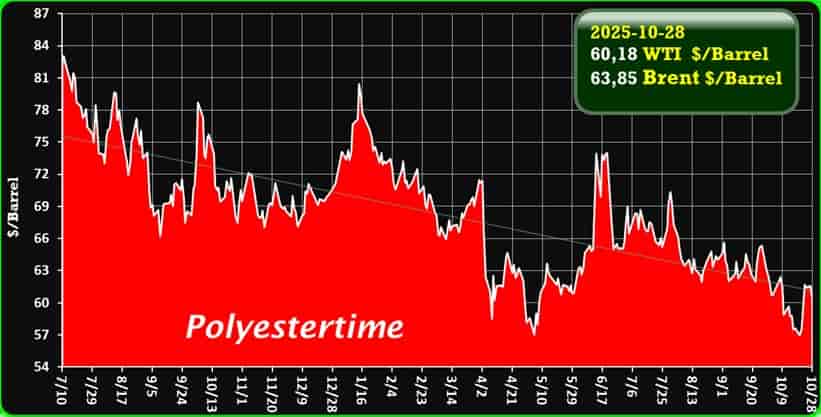
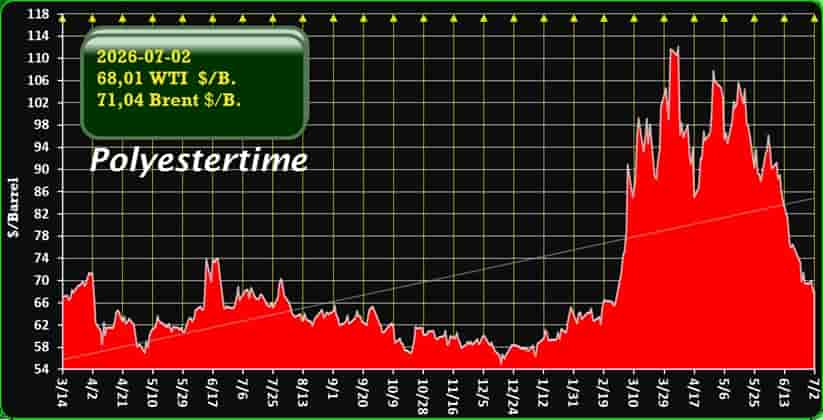
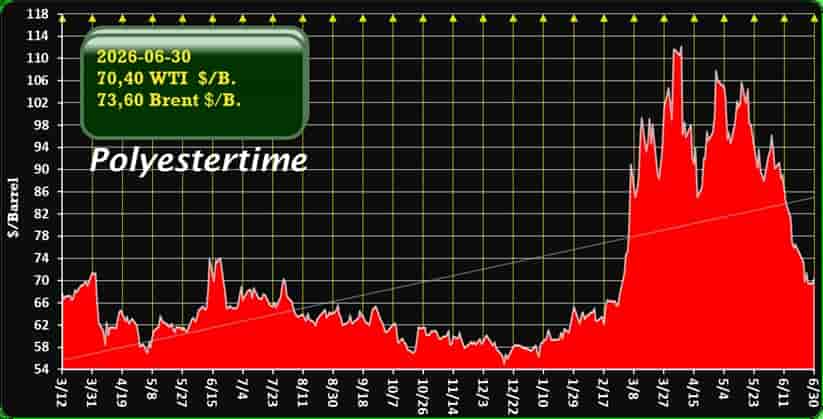
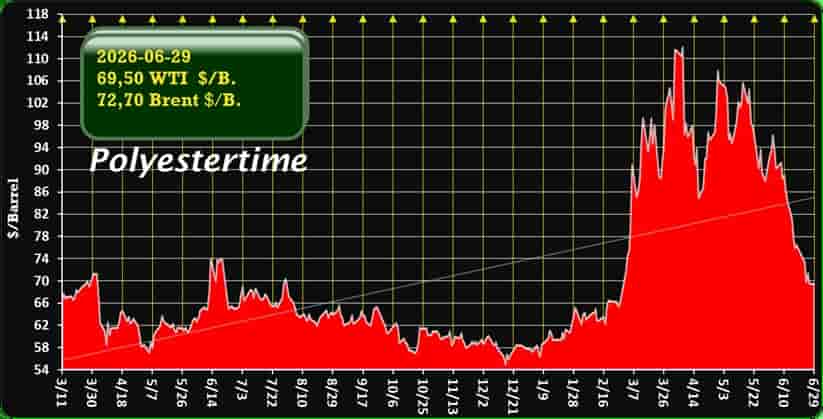
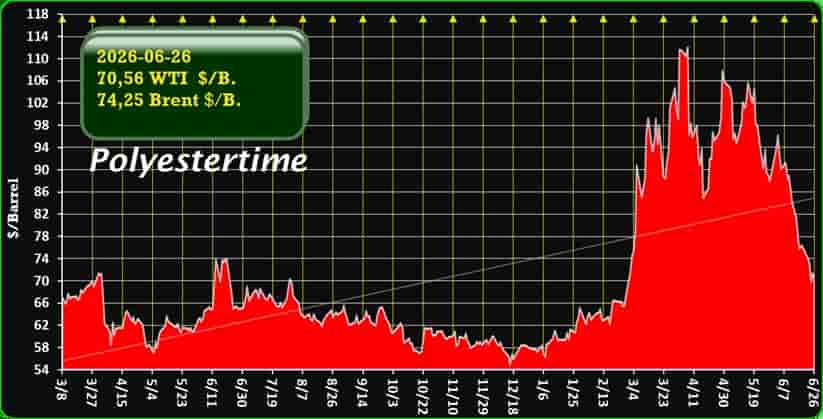
Global Oil Price Steadies as Brent Holds at $63.55 and WTI at $59.99 — Markets Balance OPEC+ Output Hopes with Trade-Deal Optimism 28-10-2025
Oil Price Snapshot – 28 October 2025
| Benchmark | Price (USD per barrel) |
|---|---|
| Brent | 63.55 $/B |
| WTI | 59.99 $/B |
Note: These figures reflect market conditions as of 28 October 2025.
1. What’s going on with the oil price today?
On 28 October 2025, the global crude price landscape shows the benchmarks for crude: Brent at 63.55 $/B and WTI at 59.99 $/B. These figures are slightly lower than some reported recent levels, but they reflect the current market dynamics. Markets are reacting to a mix of supply-side and demand-side signals. For example, the International Energy Agency (IEA) notes that while sanctions on Russia could push prices higher, their impact is limited by surplus capacity in other regions.
At the same time, optimism around a possible trade deal between the United States and the People’s Republic of China is supporting demand expectations, which usually lifts the oil price. On the flip side, the Organization of the Petroleum Exporting Countries + (allies) (OPEC+) is signalling a potential increase in output starting December, which adds downward pressure.

2. Key drivers behind today’s crude price
• Supply concerns vs. oversupply risks
Sanctions targeting major Russian producers such as Rosneft PJSC and Lukoil Oil Company lifted the market briefly but surplus capacity elsewhere limits the upside. Meanwhile, OPEC+ appears ready to raise output, which increases supply and dampens the oil price.
• Demand outlook shaped by trade developments
Progress in U.S.–China trade talks is seen as bullish for demand—which tends to boost oil prices. Reuters+1 However, strong supply expectations weigh on the market.
• Market sentiment and profit-taking
After recent gains, traders are taking profits and shifting focus to whether demand recovery will sustain. This can lead to sideways or slightly lower oil price movement. Investing.com+1
3. Why the difference between Brent and WTI?
Brent (63.55 $/B) is trading at a premium compared to WTI (59.99 $/B). This spread reflects:
-
Geopolitical risk exposure: Brent covers more globally-exported crude, so it reacts to international supply issues.
-
Transport and regional supply constraints affecting WTI.
-
Differing demand drivers in Europe/Asia vs. U.S. domestic markets.
4. What to watch in the coming weeks
| Indicator | Why it matters |
|---|---|
| OPEC+ production decisions | A surprise increase could push the oil price lower. |
| U.S.–China trade deal progress | A strong deal boosts demand expectations and may support higher oil price. |
| Global crude inventories & “oil on water” (oil in transit) | Rising inventories signal oversupply, which tends to suppress the oil price. IEA |
| Sanctions enforcement & Russian export flows | If sanctions bite harder, supply tightness can push the oil price up. |
5. Bottom line
Today’s contemporary oil price readings—Brent at 63.55 $/B and WTI at 59.99 $/B—reflect a market balancing optimism on demand with caution about supply expansion. The “oil price” remains under pressure from surplus worries, but remains supported by structural tensions and trade-talk optimism.
For website visitors on mobile: ensure paragraphs are short, headings clear, table responsive (use a scrollable container if needed). To help search engines and large-language-models (LLMs) understand the content, use structured headings (H1 → H2 → H3), include semantic keywords (oil price, crude benchmarks, supply & demand, OPEC+), and keep user experience high (fast load, readable on small screens).
Feel free to ask if you’d like a deeper dive (e.g., historic trend of the oil price, regional breakdowns, impact on fuel costs).