New Science Confirms Bio-Based PLA Plastic Does Not Contaminate PET Recycling Streams Even With Rapid Future Market Growth 04-03-2026
PLA does not affect PET sorting
The Breakthrough in Bioplastic Integration
Scientific research from the Prosper Bioplastics project has officially debunked fears regarding the contamination of traditional plastic recycling by biodegradable materials. Coordinated by Ghent University, the study provides much-needed clarity for a circular economy by demonstrating that polylactic acid, commonly known as PLA, does not disrupt the recovery of polyethylene terephthalate or PET bottles.
For years, the recycling industry worried that bio-based plastics might accidentally enter PET streams, ruining the quality of recycled resin. However, this new data shows that modern European sorting facilities are more than capable of handling these distinct materials without compromising the purity of the waste stream.
Real-World Simulations in European Sorting Facilities
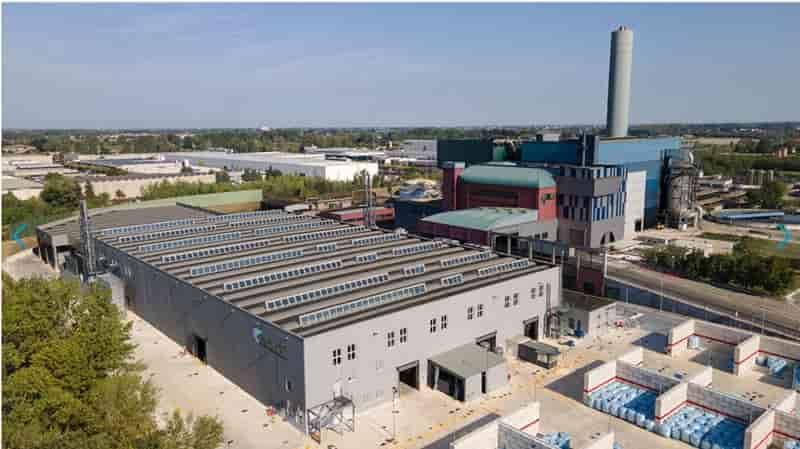
The researchers conducted their experiments at a high-capacity European sorting plant. This facility utilized advanced near-infrared (NIR) detectors, which are the industry standard for identifying different polymer types by their unique light-reflection patterns. PLA does not affect PET sorting
The primary goal was to see if the NIR sensors could accurately tell the difference between a PET bottle and a PLA package during high-speed processing. The results were remarkably consistent: PLA contamination in the PET stream remains negligible. Even with the current market presence of bio-based packaging at 0.12%, the systems effectively isolated the materials. PLA does not affect PET sorting
Mathematical Models Predict Future Stability
Beyond current data, the team published a sophisticated mathematical model in the journal Resources, Conservation and Recycling. This model looks forward to scenarios where bioplastics become far more common in our grocery stores and homes.
The key findings from the model include:
-
Current Reality: The predicted presence of PLA in the PET stream is only 7.8 ppm (parts per million).
-
Industrial Safety Threshold: The industry-accepted limit for non-degradation of recycled PET is 1,000 ppm.
-
High-Growth Scenario: Even if PLA market penetration increases significantly, the model predicts levels will only reach 200 ppm, which is still five times lower than the danger zone.
These figures suggest that even if we see a massive shift toward sustainable packaging, our current recycling infrastructure is safe from bio-based interference. PLA does not affect PET sorting
The Economic Logic of Enhanced Sorting
One of the most interesting aspects of the Ghent University study involves the break-even point for investing in dedicated PLA sorting technology. Currently, the cost to sort a single ton of PLA is roughly €906, mainly because the volumes are so low that fixed costs are high.
However, the study highlights a clear path toward profitability:
-
As post-consumer PLA volumes reach 1% of the total waste stream, sorting costs drop drastically to €170 per ton.
-
The financial break-even point occurs when PLA reaches a 2.4% market share.
By spreading the fixed costs of NIR detectors across larger volumes, the “Green Premium” for sorting bioplastics effectively disappears. This makes investing in advanced detection not just an environmental win, but a sound financial strategy for waste management companies. PLA does not affect PET sorting
Why NIR Technology is the Key
The study noted that while they used a conservative assumption of 88% accuracy for PLA detection, the real-world performance of NIR sensors can reach up to 99%. This high level of precision ensures that bio-based and fossil-based plastics stay in their respective lanes.
Because PLA and PET have fundamentally different chemical signatures, light-based sorting is highly effective. The researchers conclude that the presence of PLA in modern treatment plants does not pose a significant technical problem. Instead, the focus should remain on scaling these technologies to meet the growth of the sustainable packaging market. PLA does not affect PET sorting
Building a Truly Circular Future
The implications of the Prosper Bioplastics research are far-reaching. By reducing the perceived risk of material contamination, this study opens the door for brands to adopt bio-based alternatives without fear of damaging existing recycling systems.
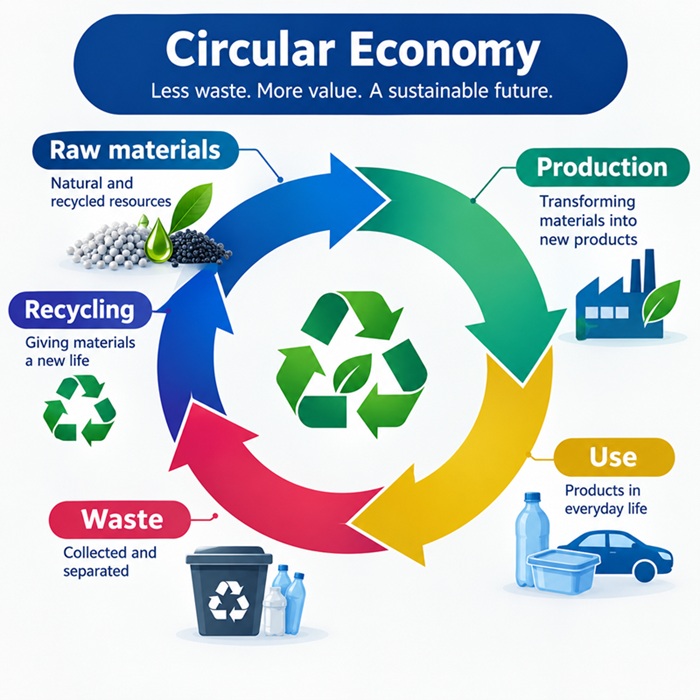
As we move toward a more sustainable future, the synergy between innovative materials and advanced sorting technology will be the backbone of the global circular economy. PLA does not affect PET sorting
More…