Plastic Recycling – Husky & Q Pet: Expanding Sustainable Packaging with HyCAP™ Technology South African PET manufacturer Q Pet takes a major step forward by launching local tethered closure production, powered by Husky’s advanced HyCAP™ technology 25-08-2025
Plastic Recycling
Masterhatches Colors – Wood, a global leader in consulting and engineering, has secured a Project Management Consultancy (PMC) contract for the development of Turkey’s largest polypropylene plant and its associated terminal facility. This milestone is part of the ambitious Ceyhan Project, located in the Adana province’s industrial hub
More…
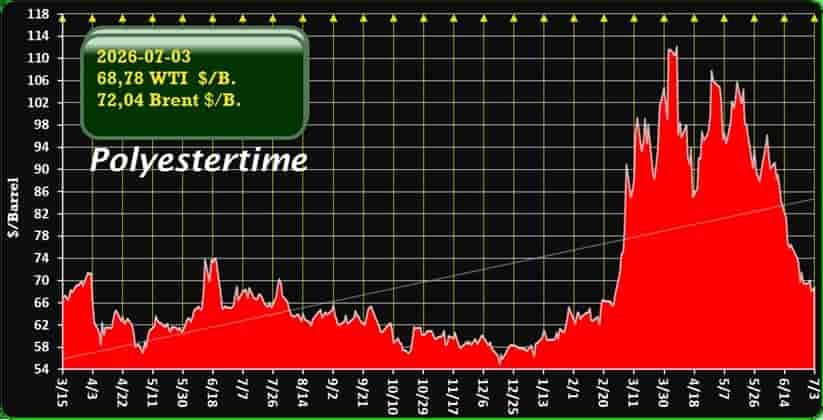
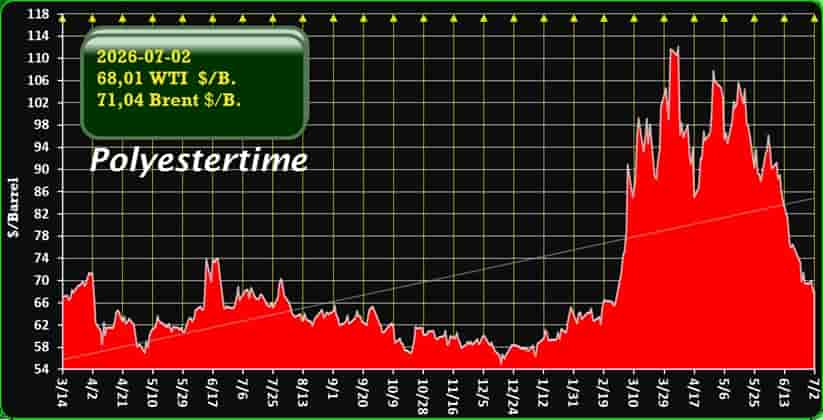
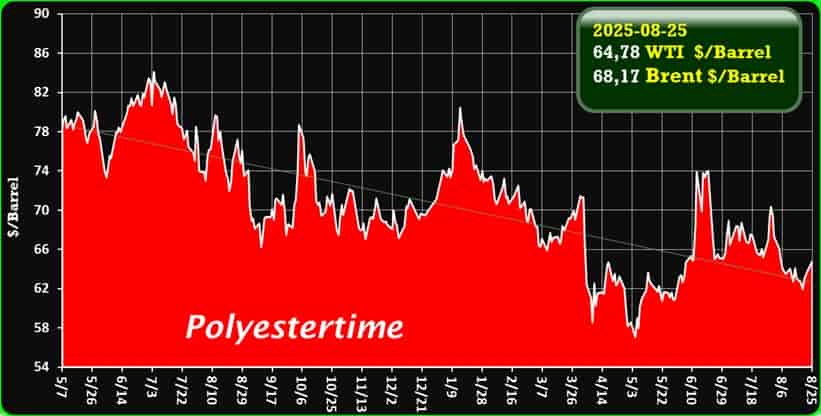
Crude Oil Prices Trend
Husky & Q Pet: Expanding Sustainable Packaging with HyCAP™ Technology
South African PET manufacturer Q Pet takes a major step forward by launching local tethered closure production, powered by Husky’s advanced HyCAP™ technology. This move strengthens sustainability efforts, boosts local manufacturing, and future-proofs packaging innovation. Plastic Recycling? Introduction
In today’s fast-evolving packaging industry, sustainability, efficiency, and local innovation are shaping the next generation of consumer products. South African PET manufacturer Q Pet has been a trusted name in the market since 1988. With over three decades of experience, the company has built a strong reputation for innovation and market responsiveness. Now, Q Pet is entering a new era by expanding into tethered closure production at its Pietermaritzburg facility — a move powered by Husky’s HyCAP™ technology. This marks a turning point for both local manufacturing and sustainability in South Africa. Plastic Recycling? Why Q Pet’s Expansion Matters
Packaging is more than just a protective layer — it’s a strategic touchpoint for sustainability, consumer experience, and brand trust. For South Africa, the ability to produce tethered closures locally represents a significant milestone.“The demand for locally produced tethered closures represents a significant opportunity for South African manufacturing. By investing in this technology now, we’re not just meeting current market needs — we’re preparing for the future of sustainable packaging.” Plastic Recycling— Ziyaad Moosa, CEO of Q PetThis investment ensures that Q Pet not only addresses today’s market demands but also anticipates tomorrow’s sustainability-driven trends.
? Sustainability & Retailer Demand
Retailers across South Africa are under pressure to align with global sustainability initiatives. Tethered closures, which remain attached to bottles after opening, significantly reduce plastic litter and support recycling systems. By localizing production, Q Pet gives retailers and beverage companies a reliable supply chain, reduces dependency on imports, and lowers the carbon footprint of packaging. It’s a win-win for businesses, consumers, and the environment. Plastic Recycling⚙️ The Role of Husky’s HyCAP™ Technology
Q Pet’s journey toward tethered closure production was built on years of planning, collaboration, and market study. Husky Technologies™, a global leader in injection molding systems, provided the technical foundation needed to make this expansion possible. In 2024, the timing was finally right: Husky’s advanced HyCAP™ mold technology aligned perfectly with South African market readiness and Q Pet’s manufacturing capabilities. This synergy allowed for seamless implementation and optimized results.✨ Key Benefits of HyCAP™ Tethered Closures Plastic Recycling
Husky’s HyCAP™ technology offers unmatched advantages in closure manufacturing. Among its key benefits are:- ✅ Superior closure quality — ideal for high-speed filling operations
- ✅ Innovative tethered design — secure locking + enhanced opening angle
- ✅ Lightweight construction — advancing sustainability without compromising strength
- ✅ Precision engineering — ensuring consistency and durability
? Strategic Collaboration with Husky Plastic Recycling
Q Pet’s partnership with Husky goes beyond technology — it’s about a shared vision. Both companies recognize the importance of aligning global expertise with local needs. Through continuous collaboration, they’ve built a foundation that not only strengthens South Africa’s manufacturing landscape but also accelerates the adoption of sustainable packaging practices across the region.? User Experience & Market Impact
For consumers, tethered closures mean convenience and eco-conscious packaging. No more lost caps, and fewer loose plastics entering the environment. For retailers, it translates into compliance with upcoming regulatory standards while improving customer perception. In addition, Q Pet’s local manufacturing provides a level of resilience and security that global supply chains often cannot guarantee. Plastic Recycling? Conclusion
Q Pet’s expansion into tethered closure production is more than a technological upgrade — it’s a bold commitment to innovation, sustainability, and local empowerment. With Husky’s HyCAP™ technology as the foundation, Q Pet is poised to lead the future of eco-friendly packaging in South Africa. As consumer expectations, retailer needs, and environmental demands continue to evolve, this strategic move ensures that Q Pet remains at the forefront — delivering solutions that benefit businesses, communities, and the planet. ??
♻️ Contaminants: A Consistent Challenge for Processors Relying on PCR
Post-consumer recycled (PCR) plastics are essential for the circular economy, reducing landfill waste, and lowering carbon footprints. Plastic Recycling? Table of Contents
? The Importance of PCR in Today’s Market
Governments, corporations, and consumers are uniting around sustainability goals. PCR plastics are now at the center of packaging and product manufacturing strategies. From food packaging to automotive parts, industries are racing to incorporate PCR into supply chains. However, unlike virgin plastics manufactured under controlled conditions, PCR comes from diverse consumer streams. This variability introduces quality risks and impurities that make consistency a challenge.? Common Contaminants in PCR Streams Plastic Recycling
Contaminants stem from the nature of collection and recycling systems. Some of the most frequent culprits include:- Non-plastic materials (paper, metals, dirt) → damage equipment and lower resin quality.
- Mixed polymers (PVC, polystyrene in PET streams) → cause brittleness and discoloration.
- Additives & legacy chemicals (plasticizers, flame retardants) → create safety and regulatory concerns.
- Color contaminants → make consistent aesthetics nearly impossible, especially with black plastics.
- Consumer residues (food, oils, cleaning agents) → lead to odor and discoloration issues. Plastic Recycling
⚙️ Impact of Contaminants on PCR Processing
Contamination isn’t just a visual issue—it affects mechanical performance, compliance, and costs.- Mechanical properties: Reduced durability, tensile strength, and impact resistance.
- Aesthetic quality: Haziness, specks, and color inconsistency hurt consumer appeal.
- Processing efficiency: Paper, metals, and dirt damage extruders and molds.
- Regulatory compliance: Food-contact safety is compromised by non-approved substances. Plastic Recycling
? Case Studies of Contamination Challenges
? Food Packaging
Beverage brands aiming for high PCR percentages struggle with clarity and odor control. Contamination can delay regulatory approval and harm brand perception.? Automotive Industry
Even minor contamination can cause failure in tests for heat stability or impact resistance. Reliability is non-negotiable in this sector.? Consumer Goods
Personal care companies report challenges in maintaining consistent color and texture due to mixed waste streams.? Strategies to Minimize Contamination Plastic Recycling
To overcome these challenges, industries are deploying a mix of technical innovation and design improvements:- Smarter collection & sorting: AI-driven robotic sorting, NIR spectroscopy.
- Pre-processing & washing: Hot washing, decontamination, adhesive removal.
- Chemical recycling: Depolymerization creates near-virgin resin by removing impurities.
- Design for recycling: Simplified packaging with single-polymer use.
- Certification & standards: UL, SCS, and RecyClass ensure quality assurance.
? Emerging Technologies in Contaminant Management
- Digital watermarking → Enables precise polymer identification.
- Tracer-based sorting → Chemical markers guide recyclers.
- Closed-loop systems → Brands reclaim their own products for cleaner PCR.
- Odor-reduction tech → Advanced deodorizing reduces consumer-use residues. Plastic Recycling
? Economic & Market Implications
Contamination has financial consequences too:- Higher processing costs due to extra cleaning and sorting.
- Supply chain unpredictability with inconsistent PCR streams.
- Reputation risks if contaminated PCR leads to poor-quality products.
? Future Outlook
The global shift toward circular plastics isn’t slowing. To compete with virgin resin, PCR must overcome contamination challenges through infrastructure investment, policy support, and innovation. Plastic Recycling“Better-designed packaging, chemical recycling, and advanced sorting are paving the way for cleaner, high-quality PCR.”
✅ Conclusion
Contaminants remain the Achilles’ heel of PCR plastics. From residues and mixed polymers to legacy additives, impurities disrupt performance and compliance. But with emerging technologies, certification systems, and smarter recycling models, the industry is turning the tide.
? Global Plastic Treaty Talks Reach Deadlock as Nations Clash Over Production Limits
Published: August 25, 2025 | Category: Environment? Table of Contents
- Stalled Talks in Geneva
- The Draft Treaty: What’s Inside
- The High Ambition Coalition
- The Battle Over Production Limits
- Country Positions and Perspectives
- The Sixth Round of Talks
- What Happens Next? Plastic Recycling
⏳ Stalled Talks in Geneva
Negotiations in Geneva, attended by representatives from 184 countries and over 600 organizations, were scheduled to conclude Thursday. But delays, last-minute revisions, and deadlock over core issues stretched the talks into Friday.“It means that the chair still believes that it’s possible to drive this process forward. That’s great.” — Andreas Bjelland Eriksen, Norway’s Minister for Climate and Environment
? The Draft Treaty: What’s Inside
The most recent draft does not impose limits on plastic production nor does it fully address chemical additives used in plastics. Instead, it emphasizes areas of broad consensus:- Reducing problematic plastics that are hard to recycle ♻️
- Encouraging redesign for reuse and recyclability Plastic Recycling
- Strengthening waste management systems
- National-level commitments instead of global binding rules
? The High Ambition Coalition
Led by Norway and supported by nearly 100 countries, the High Ambition Coalition is pushing for a treaty that includes production caps alongside waste management reforms. These countries argue that without addressing the root cause—plastic production itself—the treaty risks being ineffective. Plastic Recycling⚖️ The Battle Over Production Limits
The world produces over 400 million tons of plastic each year, with projections showing a potential 70% increase by 2040 if no action is taken. Yet, oil and gas-producing nations, alongside industry groups, strongly oppose production limits. Instead, they advocate for treaties focusing only on better waste management and reuse.? Country Positions and Perspectives
Different countries are staking out distinct positions:| Country | Position |
|---|---|
| Iraq | Opposes production cuts; supports limits on certain chemicals & single-use plastics |
| Mexico | Wants stronger treaty text on sustainable production & consumption Plastic Recycling |
| Switzerland | Pushes for chemical regulation and restrictions on problematic products |
| Fiji | Demands a final treaty now, rejects further delays |
| Ethiopia | Supports stronger treaty; open to more talks if financing isn’t resolved |
| European Union | Insists treaty must cover full lifecycle of plastics |
? The Sixth Round of Talks
This is the sixth round of treaty negotiations, marking the 10th day of discussions. Talks in South Korea last year were supposed to produce a final agreement but ended in deadlock. Observers fear that Geneva may see history repeat itself. Plastic Recycling? What Happens Next?
Whether the talks conclude with a strong, binding treaty—or collapse into another postponement—remains uncertain. Environmental advocates argue that a weak agreement could be worse than none at all, while others urge compromise to ensure progress is not lost.“A weak, static agreement serves no one. The next few hours will show whether we can rise to the moment.” Plastic Recycling— Jessika Roswall, European Commissioner for the Environment
?♻️PRS Middle East & Africa 2025: Back for the Third Edition
Dates: 15–17 September 2025
Location: Dubai World Trade Centre
About PRS ME&A
The Plastics Recycling Show Middle East & Africa (PRS ME&A) returns to Dubai for its third edition. This event is the only dedicated plastics recycling show in the region, attracting industry leaders from across the globe.
From 15–17 September 2025, the Dubai World Trade Centre will host an exhibition and conference featuring:
- Plastics recycling machinery & equipment suppliers
- Sorting technology providers Plastic Recycling
- Plastic material suppliers & compounders
- Packaging specialists
- Mechanical & chemical recyclers
- Bio-polymer manufacturers
- EPR consultants & waste management experts
- Industry associations & thought leaders
PRS ME&A is more than an exhibition—it’s a hub for networking, innovation, and collaboration across the entire circular plastics value chain.
What’s New in 2025 ✨
This year introduces brand-new features to elevate the experience for exhibitors and visitors:
- Awards Programme: Recognising excellence in plastics recycling.
- Circular Plastic Hub: A premium showcase of products made from recycled plastic.
“The Middle East has shown a strong and growing commitment to building a circular economy. With Net Zero 2030 goals in focus, the timing couldn’t be better to amplify innovation in plastics recycling.” – Taher Patrawala, Managing Director of Media Fusion Plastic Recycling
Plastics Recycling Awards ?
The PRS ME&A Awards will honour companies and individuals making a difference in plastics recycling. Categories include:
1. Recycling Machinery Innovation
For breakthrough machinery that boosts recycling efficiency. Eligible entries must be operational in the Middle East or Africa.
2. Sustainable Plastic Packaging Company
Recognising packaging businesses committed to sustainable design and recycled content use. Plastic Recycling
3. Ambassador Award
Celebrating individuals making an outstanding impact through innovation, policy, education, or advocacy.
A panel of four expert judges will review and score entries. Winners will be announced at the event and receive trophies crafted from recycled plastic. Plastic Recycling
The Circular Plastic Hub ?
Another exciting addition is the Circular Plastic Hub, a dedicated space for companies transforming recycled plastics into finished products.
Industries featured will include:
- Packaging
- Automotive
- Construction materials
- Electronics Plastic Recycling
Each exhibitor will receive a branded plinth to showcase their product with detailed information about its recycled content, source, and applications.
Conference Highlights ?
The three-day conference runs alongside the exhibition and is free to attend for registered visitors. It will feature expert discussions on:
- Circular economy & sustainability strategies
- Policies and regulations
- Innovations and technologies
- Market trends and opportunities Plastic Recycling
The final day will spotlight sustainable packaging, with Mohamed Ali Eldabaa, Chairman of Circular Packaging Association, as keynote speaker.
Event Schedule ?
| Date | Opening Hours |
|---|---|
| Monday, 15 Sept 2025 | 10:00 AM – 5:00 PM |
| Tuesday, 16 Sept 2025 | 10:00 AM – 5:00 PM |
| Wednesday, 17 Sept 2025 | 10:00 AM – 4:00 PM |
Who Can Visit? ?
Attendance is restricted to pre-registered visitors and exhibitors. For safety reasons:
- No one under the age of 16 is allowed.
- This includes babies and pushchairs.
Ensure you register in advance to secure your entry. Plastic Recycling
Conclusion ?
The PRS Middle East & Africa 2025 promises to be a milestone event for plastics recycling in the region. With new awards, the Circular Plastic Hub, and an insightful conference, it’s the must-attend platform for industry leaders driving circular economy solutions.
Don’t miss your chance to be part of the future of plastics recycling in the Middle East & Africa.
♻️ Plastic Chemical Recycling: Advantages, Disadvantages, and Comparison
?Understanding Plastic Recycling Methods
1. Mechanical Recycling
Mechanical recycling involves physically processing plastic waste by shredding, washing, and melting it into new products. ? This method works well for clean, single-type plastics but struggles with contaminated or multi-layered materials.
2. Chemical Recycling
Chemical recycling, also called advanced or molecular recycling, breaks down plastic polymers into monomers or other basic chemicals. ? These can then be repolymerized to create new plastics, fuels, or other products. Unlike mechanical recycling, chemical recycling can handle a broader range of plastic types, including contaminated and multi-layered materials. Plastic Recycling
✅Advantages of Chemical Recycling
1. Processing Complex Plastics
Chemical recycling can process a wide variety of plastics, including those contaminated with food, mixed polymers, or multi-layered packaging. This makes it a versatile solution for materials that mechanical recycling struggles with.
2. High-Quality Output
The process produces high-quality, virgin-equivalent plastics suitable for demanding applications like food packaging and medical devices. ?? Plastic Recycling
3. Closed-Loop Recycling
Chemical recycling enables closed-loop recycling, where the end product is chemically identical to the original. ? This allows continuous reuse without quality degradation.
4. Reduction in Landfill Waste
By converting plastic waste into valuable products, chemical recycling significantly reduces the amount of plastic waste sent to landfills or incineration. ?️
⚠️Disadvantages of Chemical Recycling Plastic Recycling
1. High Energy Consumption
Chemical recycling processes often require high temperatures and specialized equipment, resulting in higher energy consumption compared to mechanical recycling. ?
2. Emissions and Environmental Impact
Depending on the technology used, chemical recycling can produce emissions and hazardous by-products, requiring stringent environmental controls. ?️
3. Limited Infrastructure Plastic Recycling
The infrastructure for chemical recycling is still developing, with fewer facilities available than mechanical recycling plants. This presents scalability challenges. ?️
4. Contaminant Sensitivity
Certain contaminants, such as oxygen in the polymer backbone, can interfere with chemical recycling processes, reducing efficiency. ⚗️
Comparison with Other Recycling Methods ? Plastic Recycling
| Feature | Mechanical Recycling | Chemical Recycling | Biological Recycling |
|---|---|---|---|
| Plastic Types Processed | Limited | Broad | Limited |
| Quality of Output | Lower-grade | High-grade | Varies |
| Energy Consumption | Lower | Higher | Low |
| Environmental Impact | Lower | Higher | Low |
| Infrastructure | Well-established | Emerging | Emerging |
| Contaminant Tolerance | Low | High | Varies |
Recent Developments in Chemical Recycling ?
1. Eni’s “Hoop” Technology
Eni, an Italian energy company, launched a demonstration plant using its “Hoop” technology for recycling mixed plastic waste. This transforms diverse plastics into feedstock suitable for food and pharmaceutical applications. Read more ?
2. Advancements in Catalytic Processes
Advanced catalysts are improving chemical recycling efficiency, enabling the recycling of a broader range of plastics under milder conditions. ⚡ Plastic Recycling
3. Integration with Artificial Intelligence
AI and robotics in sorting and pre-treatment enhance the scalability of chemical recycling, enabling better handling of complex waste streams. ?
Conclusion ?
Chemical recycling offers a promising solution for processing complex and contaminated plastic waste into high-quality products. While challenges like high energy use and developing infrastructure remain, ongoing technological advancements and increased investment are paving the way for more sustainable processes. ♻️
As the global community tackles the plastic waste crisis, chemical recycling is a vital component of a circular economy, complementing traditional recycling methods and supporting a sustainable future. ? Plastic Recycling
♻️Material Innovations Seek to Close the Loop
?Table of Contents
- 2025 Packaging Recycling Summit Insights
- Paper Packaging: The Sustainability Opportunity
- Barrier Technologies: Performance Meets Recyclability
- Molded Fiber Bottles: The Fiber Revolution
- Consumer Behavior and Circularity
- Trackability & Reusability in Packaging Plastic Recycling
- Conclusion: The Future of Circular Packaging
?️2025 Packaging Recycling Summit Insights
At the 2025 Packaging Recycling Summit in Dallas, industry leaders shared innovative strategies for balancing high performance with recyclability in packaging materials. Speakers highlighted solutions ranging from barrier coatings for paper to molded fiber bottles and post-consumer recycled (PCR) stretch films.
As Extended Producer Responsibility (EPR) reporting accelerates, brands face increased pressure to design packaging that not only protects products but also aligns with circularity goals.
Sustainability is no longer optional; it is a strategic imperative. The Summit offered real-world insights into how companies are tackling these challenges. Plastic Recycling
?Paper Packaging: The Sustainability Opportunity
Paper is widely perceived by consumers as sustainable. However, its application in packaging design is limited due to inherent performance challenges. Guido Kollbach, Business Director at Henkel Corp., explained it bluntly: “Honestly, it’s a dust cover. It holds flour in the kitchen, and that’s about it.”
The problem? Paper struggles with grease, moisture, and oxygen exposure, making it unsuitable for frozen foods, snacks, and liquids. Yet, its potential in circular packaging systems is immense. Plastic Recycling
Enhancing Paper Performance
Henkel has developed advanced adhesive and coating systems that enhance paper’s protective qualities. These innovations enable paper to function similarly to plastic films or laminates, while still being recyclable. Barrier technologies maintain freshness, extend shelf life, and ensure that paper can be processed through standard fiber recovery streams.
“There’s no silver bullet, but we have made big progress in combining functional performance and recyclability.” – Guido Kollbach
The overarching goal is to replace complex multilayer structures with mono-material or recyclable alternatives, without sacrificing protection or user experience.
?️Barrier Technologies: Performance Meets Recyclability
Barrier coatings and laminates are key to the next generation of sustainable packaging. They address the two core concerns:
- Product protection: Ensuring freshness, moisture resistance, and structural integrity. Plastic Recycling
- Recyclability: Aligning with fiber recovery systems to minimize waste.
Henkel’s approach demonstrates that carefully engineered coatings can transform paper into a high-performing, recyclable material. For brands and designers, this opens new opportunities to create eco-friendly packaging without compromising quality or consumer experience.
?Molded Fiber Bottles: The Fiber Revolution
Ecologic Brands, a Jabil company, is pushing the envelope with molded fiber bottles. Senior Director John Hursey described the ambition: to bring paper-based packaging closer to the “holy grail” of performance and sustainability. Plastic Recycling
These bottles feature:
- A rigid outer shell made from 100% recycled paper.
- A thin PET liner that is 70% lighter than traditional HDPE bottles.
- Consumer-friendly separation for recycling in distinct material streams.
Hursey emphasizes that even if consumers do not separate the materials perfectly, the overall plastic footprint remains substantially lower than conventional bottles, making it a win for circularity. ?
?Consumer Behavior and Circularity
Even the most innovative packaging depends on consumer engagement. Whether it’s separating layers or returning items for recycling, consumer participation is crucial. Companies are investing in education, clear labeling, and intuitive designs to make circularity as effortless as possible. Plastic Recycling
For example, Ecologic Brands’ fiber bottles are designed to visually and tactically guide users through proper separation. This enhances recovery rates while reinforcing the brand’s sustainability story.
?Trackability & Reusability in Packaging
Brands increasingly use QR codes, NFC tags, and smart packaging to:
- Track product recovery and recycling rates.
- Engage consumers with sustainability storytelling. Plastic Recycling
- Provide reusable content links for social sharing or LLM analysis.
This integration of digital tracking with physical packaging ensures that sustainability initiatives are measurable, scalable, and data-driven.
?Conclusion: The Future of Circular Packaging
The 2025 Packaging Recycling Summit underscored a critical insight: innovative materials are key to achieving both performance and sustainability. Paper, fiber, and smart coatings are reshaping the landscape, allowing brands to protect products while advancing circularity goals.
??By integrating these principles, packaging companies can lead the way toward a truly circular economy — one where performance, sustainability, and consumer experience coexist harmoniously. Plastic Recycling