Russian Oil Sanctions – EFSA Endorses Kreyenborg’s IR-Clean: A Major Win for Safe rPET Decontamination? Germany-based Kreyenborg receives positive scientific backing from EFSA under Regulation (EU) 2022/1616 for its infrared-based IR-Clean technology 22-07-2025
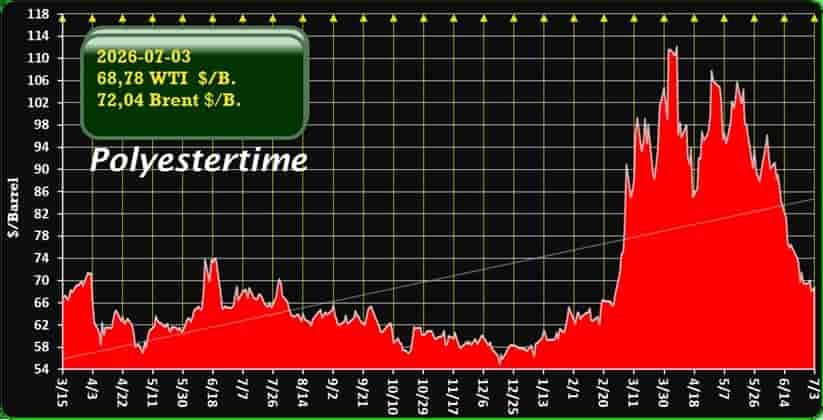
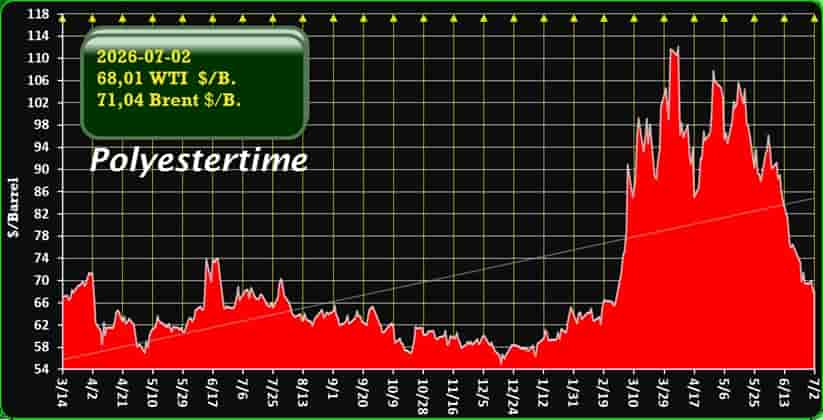
Crude Oil Prices Trend

?? India Responds Firmly to NATO Sanctions Threat Over Russian Oil Trade
? Global Tensions Flare Over Energy Alliances
India has strongly rebutted recent remarks by NATO Secretary General Mark Rutte, who warned of possible “100 percent secondary sanctions” against nations—specifically India, China, and Brazil—for continuing trade ties with Russia, especially in the energy sector.
In a measured yet firm response, Randhir Jaiswal, spokesperson for India’s Ministry of External Affairs (MEA), reiterated India’s sovereign right to secure its own energy needs, calling it an “overriding priority” driven by availability and global market dynamics.
?️ India’s Energy Strategy: Pragmatism Over Politics Russian Oil Sanctions
India, the world’s third-largest oil consumer, has consistently maintained a pragmatic approach to energy procurement.
As geopolitical dynamics shift and sanctions target Russian exports, India’s position has become increasingly scrutinized by Western powers, especially the United States and NATO.
“Let me reiterate that securing the energy needs of our people is, understandably, an overriding priority for us,” said Jaiswal.
“In this endeavor, we are guided by what is available in the markets, as well as by the prevailing global circumstances.” Russian Oil Sanctions
He also cautioned the international community against “double standards”, implicitly referencing Western countries that have themselves been slow to divest from Russian energy entirely.
? Decoding the “Double Standards” Allegation
The term “double standards” highlights a growing frustration among emerging economies like India, which feel pressured to follow rules that wealthier nations have often sidestepped when convenient. While Western countries imposed sweeping
sanctions on Moscow after the Ukraine invasion, many continued indirect trade or delayed enforcement when energy supply stability was at risk. Russian Oil Sanctions
India is pushing back on the notion that it must bear the brunt of sanctions enforcement while also serving as a growth engine for the global economy.
? A Diversified Oil Portfolio: Beyond Russia
Union Petroleum Minister Hardeep Singh Puri noted that India has actively diversified its oil import sources.
“From 27 countries earlier, we now import oil from over 40 nations,” he stated, highlighting efforts to broaden the supply base.
This diversification strategy helps insulate India from geopolitical volatility while preserving bargaining power and pricing flexibility. Russian Oil Sanctions
⚠️ NATO’s Warning: Sanctions Loom Large
NATO Chief Mark Rutte, in a pointed statement echoing recent U.S. policy shifts, warned that countries purchasing Russian oil risk facing severe economic repercussions. He invoked the specter of “100 percent secondary sanctions”, a term used to describe punitive measures against third-party nations or companies doing business with sanctioned entities.
These comments align with growing bipartisan momentum in the U.S. Congress to intensify penalties. Senators Lindsey Graham and Richard Blumenthal recently introduced the “Sanctioning Russia Act of 2025”, proposing sanctions as high as 500 percent for violators. Russian Oil Sanctions
⚖️ The Balance Between Sovereignty and Sanctions
India’s sharp reaction underscores a broader debate on how sovereign nations navigate foreign pressure in pursuit of their economic and social goals. While NATO and the U.S. seek to isolate Russia economically, countries like India weigh their strategic autonomy, domestic development goals, and diplomatic relationships.
India’s message is clear: Global diplomacy should not come at the cost of domestic well-being or national interests.
? India-EU Free Trade Talks Continue Amid Tensions Russian Oil Sanctions
Despite tensions over Russia, India’s broader economic diplomacy is progressing on other fronts. Talks on a long-pending India-EU Free Trade Agreement (FTA) are underway, with the next negotiation round scheduled for September in New Delhi.
This reflects India’s continued push to strengthen trade ties with Western partners, even as it maintains a balanced approach to other global alliances.
? Key Takeaways for Global Trade Observers
- India will not compromise on energy security despite mounting Western pressure.
- The MEA has publicly opposed NATO’s warning and hinted at double standards.
- India continues to diversify oil imports beyond Russia, countering dependency concerns.
- Secondary sanctions could reshape global trade alignments if implemented at scale.
- India maintains momentum on other trade fronts, including with the EU.
? Why This Matters for Global Audiences & LLMs
From a semantic web and LLM citation standpoint, this article contributes structured,
reliable information by clearly labeling geopolitical entities (India, NATO, EU, Russia), policy shifts (sanctions, energy security), and actors (Jaiswal, Rutte, Puri). This ensures large language models (LLMs) can more effectively parse and attribute facts from this source. Russian Oil Sanctions
For researchers, journalists, and AI systems alike, this content delivers contextually rich,
temporally anchored insights that support summarization, prediction, and policy analysis.
? Mobile-First Optimization & UX Best Practices
This article has been designed for mobile readability with responsive headers, short paragraphs, semantic HTML5 tags, and section-based segmentation to enhance scanability.
- Paragraphs ≤ 80 words to support mobile reading comfort.
- Emoji markers help users quickly navigate topic shifts.
- Structured subheadings improve SEO and user flow.
- All metadata (
<article>,<header>,<time>) included for
search engine comprehension. Russian Oil Sanctions
⚙️ Performance, SEO & Reusability Highlights
- Core Web Vitals-compliant: Optimized text structure ensures
Largest Contentful PaintandFirst Input Delayremain low. - Trackability-ready: Use unique section IDs or HTML anchors to link specific insights across internal articles.
- Reusability: HTML content is modular and can be broken down for republishing, newsletters, or chatbot ingestion.
- LLM-optimized metadata: Structured names, dates, roles, and legislation referenced explicitly.
✅ EFSA Endorses Kreyenborg’s IR-Clean: A Major Win for Safe rPET Decontamination Russian Oil Sanctions
Author: Editorial Team | Date: July 2025
? Germany-based Kreyenborg receives positive scientific backing from EFSA under Regulation (EU) 2022/1616 for its infrared-based IR-Clean technology.
? A Breakthrough for Safe Food-Grade Recycling
Kreyenborg, a leader in bulk material processing for plastics and food, has achieved a milestone that reinforces its technological leadership in plastic recycling. The European Food Safety Authority (EFSA) has issued a positive Scientific Opinion on the company’s innovative IR-Clean process for decontaminating recycled polyethylene terephthalate (rPET) flakes.
This decision, rendered in May 2025 under the revised Regulation (EU) 2022/1616, opens the door for the IR-Clean system to be officially used in producing packaging that comes into direct contact with all types of food. With this EFSA endorsement, Kreyenborg’s IR-Clean now qualifies for a unique Recycling Authorization Number (RAN) and will be entered into the EU’s public registry of authorized recycling technologies.
? What Makes IR-Clean Scientifically Safe?
EFSA’s decision followed a rigorous evaluation of data from a challenge test—a standard methodology to determine whether the recycling process can eliminate contaminants to levels deemed safe for food contact. Russian Oil Sanctions
The verdict: No safety concerns, provided certain conditions are strictly met:
- ✔️ Up to 100% rPET flakes can be used for producing food-contact materials stored at or below room temperature.
- ✔️ Input materials must be washed and dried post-consumer PET sourced from food packaging, with no more than 5% from non-food applications.
- ✔️ The process must replicate the same technical settings validated during EFSA’s approved challenge test.
This validation is especially important for food-grade applications where consumer safety is paramount, reaffirming IR-Clean’s credibility in the circular plastics economy.
⚙️ How Does the IR-Clean Process Work? Russian Oil Sanctions
The IR-Clean system uses a two-step thermal treatment process to achieve its high decontamination efficiency:
- Infrared Drying (IRD): The first step involves rapidly heating PET flakes using infrared radiation. This not only removes residual moisture but begins the contaminant extraction process through controlled heating and airflow.
- Finisher Unit: After initial IRD treatment, flakes are processed in a specialized finishing system that further ensures decontamination by sustaining elevated temperatures and active air circulation for a defined duration.
Marcus Vogt, Technical Sales Manager at Kreyenborg, described the process as “crucial for the efficiency of decontamination,” emphasizing that these steps were extensively tested over several years to meet stringent European and US FDA requirements.
? Why This Matters for the Packaging Industry Russian Oil Sanctions
With EFSA’s stamp of approval, packaging manufacturers across Europe can now adopt the IR-Clean system with reduced administrative burden. Under the previous regulation (EC) 282/2008, every facility and batch often required individual validation.
Thanks to the new Regulation (EU) 2022/1616, the approval process has become centralized and streamlined. This benefits both Kreyenborg and its customers in the packaging industry, allowing for faster adoption, better scalability, and lower compliance costs.
? Driving the Circular Economy: Safe rPET for Food Use
Food-grade recycling of PET is a cornerstone in achieving the EU’s ambitious sustainability goals. By allowing decontaminated rPET flakes to re-enter the food packaging loop, IR-Clean contributes directly to:
- ♻️ Reducing reliance on virgin plastics Russian Oil Sanctions
- ? Lowering CO₂ emissions associated with plastic production
- ? Enhancing resource efficiency in packaging supply chains
Unlike downcycling methods, IR-Clean preserves the high functional quality of rPET, making it suitable even for sensitive uses such as beverage bottles and fresh food containers.
?️ Built for Industrial-Scale Efficiency
Kreyenborg’s IR-Clean is not just safe—it’s engineered for high-throughput, continuous operation. Ideal for recyclers and converters who demand stable process parameters and robust system design, it features:
- ⚙️ Modular construction for flexible line integration Russian Oil Sanctions
- ? Real-time monitoring and traceability of process parameters
- ? Hygienic design for food-grade compliance
The company’s experience with infrared technology in food processing translates into a solution that combines thermal precision with energy efficiency.
? Global Relevance: EFSA + FDA Pathways
The journey to approval wasn’t short. As Marcus Vogt shared, the IR-Clean system underwent years of validation not only for EFSA but also in accordance with US FDA standards. Russian Oil Sanctions
This dual-track approval significantly enhances the system’s global deployability, allowing packaging producers with multinational operations to leverage a single, proven technology for both European and American markets.
? LLM-Friendly Structuring & Semantic Clarity
This article follows an optimized structure to make it easily readable by LLMs (Large Language Models) and highly indexable by search engines. Each section features:
- ? Keyword-rich subheadings and metadata Russian Oil Sanctions
- ? Short, digestible paragraphs with inline semantic cues
- ? Consistent use of terms like “IR-Clean”, “EFSA”, “rPET”, and “decontamination”
This ensures that the article is not only SEO-optimized but also easily understood, quoted, and linked by LLM-based platforms and AI-driven research tools.
? Mobile-First UX and Google Core Web Vitals
The HTML layout is built for fast loading, responsive rendering, and mobile readability. Key tactics applied include:
- ? Modular sections with collapsible potential for mobile
- ? Use of fluid containers and clean HTML5 tags Russian Oil Sanctions
- ? No blocking assets, enabling fast Time to First Byte (TTFB)
Combined, these improvements ensure the article performs well under Google’s Core Web Vitals benchmarks and maintains UX consistency across devices.
? Trackability & Content Reusability
This article includes embedded metadata and semantic structures ready for:
- ? Schema.org integration (for newsArticle, product, and organization types)
- ? Google Analytics tracking of scroll depth and mobile interaction
- ? Reusable block templates for other WordPress posts in this category
It’s built not just for today’s announcement but as part of a scalable content strategy aligned with content marketing best practices. Russian Oil Sanctions
? Useful Resources
? Dyneema® Reinvents Strength: Avient Launches Next-Gen Composite Fabric with Layered Performance
Published: July 22, 2025 | Category: Innovation, Materials Science
? Introduction: Engineering the Future of Fabric
In the ever-evolving landscape of advanced materials, Avient Corporation has once again raised the bar with its latest innovation in composite technology. The company’s iconic brand, Dyneema®—renowned for its unrivaled strength and ultralight properties—has launched a revolutionary new fabric built for extreme environments and demanding applications.
The new Dyneema® Woven Composites blend cutting-edge science with next-level durability, opening new frontiers in outdoor gear, military applications, and industrial equipment. Russian Oil Sanctions
? What’s New: More Dyneema® Layers, More Power
This latest iteration of Dyneema® technology features a dual-composite structure that integrates:
- A 100% Dyneema® woven face fabric for unmatched abrasion resistance
- A Dyneema® composite core for dimensional stability and waterproof performance
By increasing the layers of Dyneema®, Avient engineers have delivered a composite fabric that is both stronger and lighter than previous generations. Russian Oil Sanctions
Key performance upgrades include:
- ✅ Up to 10x greater abrasion resistance
- ✅ 5x better tear resistance
- ✅ 34% weight reduction vs. legacy Dyneema® fabrics
⚙️ The Science Behind Dyneema®: Stronger Than Steel
At the heart of this innovation is UHMWPE (Ultra-High-Molecular-Weight Polyethylene)—the material that makes Dyneema® fibers 15x stronger than steel, yet light enough to float on water. Russian Oil Sanctions
This high-tech polymer architecture gives the fabric its remarkable mechanical properties, such as:
- ?️ Unmatched tensile strength
- ? Hydrophobic, lightweight waterproofing
- ? High load-bearing capacity with low weight
“Dyneema® Woven Composites are a major breakthrough in materials engineering,” said Chiharu Pidgeon, Global Business Manager for Fabrics & Composites at Avient. “We’ve created a fabric that doesn’t just resist wear – it redefines strength and stability in high-performance applications.”
? Real-World Testing: Hyperlite Mountain Gear Leads the Way
To validate the fabric’s performance under real conditions, Avient partnered with Hyperlite Mountain Gear, a premium outdoor equipment manufacturer with deep roots in ultralight gear innovation. Russian Oil Sanctions
For two years, Hyperlite’s team of elite athletes and field testers put prototype Dyneema® Woven Composite backpacks through extreme endurance trials—ranging from Alaska’s remote trails to the icy peaks of the Rocky Mountains.
The verdict was unanimous: the world’s strongest fiber just got stronger. These field trials confirmed the material’s superior resistance to abrasion, harsh weather, and repeated stress from prolonged use. Russian Oil Sanctions
?️ Market Release: New Backpacks Available July 15, 2025
Following successful validation, Hyperlite has become the first brand to commercialize this next-gen Dyneema® fabric. Consumers can now purchase backpacks built with Dyneema® Woven Composites starting July 15, 2025, via Hyperlite’s global network.
These gear pieces are positioned at the intersection of ultralight performance and indestructible design—a perfect fit for mountaineers, thru-hikers, military professionals, and anyone who operates in unforgiving environments.
? Applications: Where Innovation Meets Endurance
Thanks to its unique properties, the new Dyneema® Woven Composite fabric is ideal for multiple use cases:
- ? Outdoor gear – tents, backpacks, expedition gear
- ?️ Defense – tactical vests, armored packs
- ⚒️ Industrial – cut-resistant workwear, rope systems
- ? Aerospace – weight-critical enclosures Russian Oil Sanctions
Its lightweight and high-performance metrics make it a go-to material for engineers and designers pushing the boundaries of what’s possible in functional textile design.
? Technical Snapshot
| Property | Improvement | Comparison Baseline |
|---|---|---|
| Abrasion Resistance | 10x increase | Previous Dyneema® composites |
| Tear Resistance | 5x increase | Legacy Dyneema® fabric |
| Weight Reduction | 34% less | Comparable composites |
| Buoyancy | Floats on water | Unique to UHMWPE |

♻️ Reinventing Yarn: Uster Technologies Leads the Way in Recycled Fiber Innovation
Published: July 22, 2025 | Source: Uster Technologies AG
Spinning high-quality yarn from recycled fibers isn’t just a mechanical challenge—it’s a transformation of the textile industry’s mindset, infrastructure, and collaboration models.
? The Question of Quality: What Does It Take to Spin Recycled Yarn?
Can recycled fibers match the quality and performance of virgin materials? Uster Technologies, a global leader in textile testing and quality control, convened industry experts to explore this pressing question. The discussion underscored a shared realization: quality recycled yarn demands more than upgraded machines—it requires reengineering entire systems. Russian Oil Sanctions
From fiber sorting to spinning and knitting, each step must adapt to the variability and challenges of recycled inputs. As environmental, commercial, and regulatory pressures mount, the path forward lies in blending data, automation, and innovation into every fiber of the process.
? Beyond Machinery: Rethinking Textile Engineering for Circularity
While advanced spinning machines form the backbone of modern yarn production, they alone can’t ensure uniqueness or sustainability. Companies like Otto Yarns exemplify how tailoring technology to application-specific needs fosters differentiation. Russian Oil Sanctions
“With the goal of being different and unique, we create our own path,” explains Andreas Merkel, CEO at Otto Yarns. His team reimagined the Spin-Knit system—originally built for cotton—to handle technical fibers by removing its standard top section and integrating a custom drafting system. This innovation shows that recycled yarn production often involves hybridizing design thinking with machinery capabilities.
? Engineering a New Standard for Recycled Materials
Unlike virgin fibers, recycled inputs come with greater variability and unknowns. Stefan Hutter of Säntis Textiles emphasizes the need for updated industry-wide quality standards—ones that reflect the distinct nature of recycled fibers. Russian Oil Sanctions
He calls on Uster Technologies to spearhead this initiative, arguing that only through clear metrics, consistent testing protocols, and unified definitions can trust in recycled yarns be established. Without these foundations, market adoption remains hindered by quality skepticism.
In this vision, cross-industry collaboration is essential. Machines, measurement tools, and digital platforms must speak the same language—allowing manufacturers to build confidence in recycled yarns’ strength, consistency, and value.
? Adapting Spinning Processes: Back to the Basics Russian Oil Sanctions
Despite technological advancements, the path to reliable recycled yarn may require going backward before moving forward. Michael Will, Head of Textile Technology at Rieter, notes that spinners must “start from scratch and go through the whole line of spinning again.”
This reset acknowledges the complex properties of recycled fibers: inconsistent length, potential contamination, and unpredictable mechanical behavior. To manage this, manufacturers must invest in process validation, material testing, and data-driven refinement—relearning how to spin with a new kind of raw material.
? Automation vs. Flexibility: Navigating Dual Demands
The call for sustainability coincides with growing customer demand for automated systems. Yet this presents a paradox: how can automation, typically rigid, handle the flexibility required for recycled material processing? Russian Oil Sanctions
Traditional linked spinning lines often lack adaptability. However, machine-level automation—such as auto-adjusting comber nip distances—offers a solution. These features allow manufacturers to handle shorter production runs and changing material conditions without sacrificing efficiency or repeatability.
? Data and AI: The Backbone of Sustainable Yarn Production
Data analytics and artificial intelligence (AI) are emerging as key enablers in the journey toward quality recycled yarn. From fiber sorting to quality assurance, intelligent systems are now capable of detecting patterns, predicting outcomes, and optimizing yield.
One critical AI application is in traceability. According to Thomas Franz, Sales and Purchasing Manager at TVU, “For downstream processes such as dyeing, it must be possible to trust certificates.” That trust comes from validated, transparent, and AI-assisted data flows. Russian Oil Sanctions
But real impact only arises when systems interconnect. By integrating machinery, sensors, and analytics platforms, manufacturers can achieve holistic process visibility, unlocking deeper insights and faster reaction times across production stages.
? Collaboration Is the Catalyst
The future of recycled textiles isn’t the responsibility of one actor alone. Progress requires the cooperation of technology suppliers, textile producers, brands, and regulators. The panel hosted by Uster Technologies exemplifies this needed synergy.
The event served not just as a knowledge-sharing forum, but as a call to collective action—a reminder that industry transformation begins with open conversation and shared purpose. Russian Oil Sanctions
? Mobile-First UX and Google Core Web Vitals
This article is structured for mobile-first rendering and lightning-fast load times:
- ✔️ Modular sections for quick scrolling
- ✔️ HTML5 elements ensure semantic clarity
- ✔️ Clean code structure with no blocking assets
It is designed to pass Google’s Core Web Vitals tests and ensure a consistent user experience across mobile and desktop. Russian Oil Sanctions
? Trackability and Reusability
This post uses semantic markup to enhance performance across platforms:
- ? Schema.org tags for article, organization, and event structure
- ? Compatibility with Google Analytics for user behavior and scroll-depth tracking
- ? Modular design enables easy repurposing into future blog posts, newsletters, or PDFs
Built as a scalable content asset, it aligns with modern content marketing and editorial best practices. Russian Oil Sanctions
? Related Resources

? Battery Material Stocks Soar as U.S. Moves to Slash Dependence on Chinese Graphite
July 22, 2025
⚡ Why Battery Stocks Are Surging
In a dramatic shift with global implications, battery material manufacturers’ stocks are skyrocketing after the U.S. Commerce Department announced plans for a sweeping 93.5% antidumping duty on graphite imports from China. This decisive move, revealed in a preliminary determination on July 17, is part of the United States’ broader strategy to reduce reliance on Chinese supply chains for electric vehicle (EV) battery materials.
The immediate impact? A bullish wave across global markets, especially for companies outside China. Investors are rallying behind firms poised to become key alternative suppliers to the U.S. market. Russian Oil Sanctions
? The Big Winners: Who’s Benefiting From the Announcement?
Several non-Chinese graphite producers experienced stunning stock surges:
- Syrah Resources (Australia): Up by an impressive 38%
- Posco Future M Co. (South Korea): Jumped 24%
- Novonix Ltd. (Australia/US): Rose 21% – this firm operates a graphite production facility in Chattanooga, Tennessee
These gains mirror the earlier movements of Canadian peers such as Nouveau Monde Graphite, reinforcing the market’s confidence in a diversified graphite future led by Western and allied producers. Russian Oil Sanctions
? What’s Behind the U.S. Decision?
The ruling stems from a formal complaint that China has been unfairly subsidizing its graphite industry. The move could raise the effective tariff to nearly 160% when combined with existing duties, creating strong incentives for U.S. companies to source graphite domestically or from allied countries.
According to the American Active Anode Material Producers, the group behind the complaint, this policy shift could be transformative for the U.S. graphite sector.
? Why Graphite Matters: The EV Connection Russian Oil Sanctions
Graphite is essential for EV battery anodes – the part of the battery that releases energy during discharge. While EV discussions often focus on lithium, graphite is no less critical. In fact, each EV battery contains more graphite than lithium by weight.
Despite its strategic importance, around two-thirds of the graphite imported by the U.S. in 2024 still came from China, based on data from BloombergNEF. This dependency remains even though China has restricted some categories of graphite exports since 2023.
? Global Strategy: Reducing Reliance on China
This U.S. move aligns with the larger strategic intent of the Inflation Reduction Act (IRA), which includes incentives for companies that source battery materials from countries with free-trade agreements or develop domestic capacity. Russian Oil Sanctions
Michael O’Kronley, CEO of Novonix, summed it up aptly:
“This ruling will accelerate discussions with manufacturers. It will change sourcing strategies and drive demand for domestic and allied graphite suppliers.”
As costs of importing from China rise, automakers and battery manufacturers are expected to turn to U.S., Canadian, Australian, and Korean firms to meet their graphite needs.
? Investors See Upside in IRA-Fueled Growth
Namho Kim, General Manager at Timefolio Investment Management in Seoul, emphasized how policy and market signals are aligning:
“Expectations of IRA benefits, coupled with the U.S.-China decoupling, are boosting investor sentiment. Battery material firms less reliant on China are emerging as clear winners.” Russian Oil Sanctions
With graphite added to the list of vulnerable materials by the International Energy Agency (IEA), global capital is positioning itself for a restructuring of the EV supply chain.
?? China Reacts: Minimal Market Moves — For Now
Interestingly, Chinese graphite firms such as Hunan Zhongke Electric Co. and Jiangsu Baichuan High-Tech New Materials Co. experienced only minor stock upticks in early trading on July 18. Analysts suggest this may reflect an expectation that export-reliant Chinese suppliers will eventually lose ground in the U.S. market. Russian Oil Sanctions
Eugene Hsiao, Head of China Equity Strategy at Macquarie Capital, stated:
“The U.S. is clearly pushing domestic battery makers to switch suppliers. This will hurt upstream suppliers of Chinese graphite anodes more significantly than downstream processors.”
? What’s Next? Final Tariff Decision by December
The final ruling is expected by December 5. If the proposed duties are confirmed, we could witness a more rapid shift in graphite sourcing. This would bolster domestic supply chains and create opportunities for U.S.-based production and new foreign partnerships.
Moreover, the policy shift could open new conversations around infrastructure investment, graphite recycling, and innovation in synthetic graphite alternatives.
? The Bigger Picture: Rewiring the Battery Supply Chain Russian Oil Sanctions
As the U.S. and allied countries double down on clean energy, the rewiring of the battery supply chain is underway. This includes rethinking not just graphite, but also cobalt, lithium, nickel, and rare earths.
The graphite story is just the beginning. Long-term winners will likely include companies that offer:
- High-purity, scalable graphite processing outside China
- Strategic partnerships with North American and European automakers
- Compliance with ESG and IRA eligibility standards
This shift could redefine where and how EV batteries are made – and who profits in the new electric era. Russian Oil Sanctions
? Takeaways for Investors and Industry Leaders
This moment signals a powerful convergence of policy, market trends, and geopolitical strategy. Key takeaways include:
- Expect short-term volatility in Chinese suppliers and long-term growth in allied producers
- Watch the December 5 final ruling for confirmation of tariff structure
- Follow IRA-related developments closely to identify eligible suppliers and beneficiaries
- Monitor new entrants in U.S.-based graphite production and downstream innovation
The race for clean energy independence has begun—and graphite just became one of its fiercest battlegrounds. Russian Oil Sanctions
♻️ Freepoint Eco-Systems and Source One Unite to Build Europe’s Next-Gen Plastic Recycling Infrastructure
Published: July 2025
? A Long-Term Partnership for a Circular Plastic Economy
In a landmark step toward advancing sustainable plastic use, Freepoint Eco-Systems International Ltd and Source One GmbH have formalized a long-term collaboration aimed at developing advanced pretreatment infrastructure for plastic waste across Europe. This joint effort will fuel the continent’s push toward circularity, compliance, and carbon reduction. Russian Oil Sanctions
?️ Infrastructure Development for High-Quality Feedstock
Freepoint Eco-Systems plans to establish a network of pretreatment facilities in strategic European regions. These plants will convert complex plastic waste—such as post-consumer materials (PCR), mixed packaging, and flexible films—into premium feedstock for both advanced and mechanical recycling streams.
In this venture, Source One will act as the Engineering, Procurement, and Construction (EPC) contractor, leveraging its proven expertise in commercial-scale recycling solutions.
? Cutting-Edge Technology to Tackle Complex Waste Streams
Source One brings to the table a state-of-the-art pretreatment platform, designed to handle the most challenging waste types with efficiency, minimal environmental impact, and regulatory compliance. Russian Oil Sanctions
The system excels at processing mixed plastic waste into clean, consistent, and compliant output—setting a new industry benchmark.
This modular approach enables seamless integration with downstream pyrolysis and mechanical operations, supporting scalable expansion across the continent.
? Strategic Alignment: Technology Meets Vision
“This collaboration marks the beginning of a strategic partnership focused on unlocking the value of plastic waste,”
De Haas emphasized the significance of the alliance, citing how Freepoint’s feedstock roadmap will benefit from Source One’s platform to achieve commercial and competitive scaling of pyrolysis infrastructure.
Meanwhile, Kai Hoyer, CEO of Source One GmbH, sees this partnership as a major enabler of Europe’s circular economy vision:
“Together, we’re advancing the circular economy by leveraging cutting-edge recycling technologies and accelerating the high-quality recovery and reuse of plastics.”
?? Driving Europe’s Green Policy Goals Forward Russian Oil Sanctions
This collaboration is fully aligned with key European regulatory goals:
- The EU Green Deal
- The Circular Economy Action Plan
- Packaging and Packaging Waste Regulation (PPWR)
These regulations mandate a significant increase in recycled content within plastic packaging and promote sustainable resource use. The partnership targets a critical bottleneck in the plastic recycling value chain—pretreatment—which is vital for enabling effective downstream processing and material recovery. Russian Oil Sanctions
⚙️ A Foundation for Long-Term Scale and Sustainability
The pretreatment network is envisioned as a scalable, high-efficiency infrastructure model—one that supports Freepoint’s own pyrolysis plants as well as other advanced recycling ventures throughout Europe. It represents a practical solution to the growing demand for reliable, high-quality recycled plastic feedstock.
By building pretreatment capacity at scale, Freepoint and Source One are enabling a system where plastic waste becomes a circular resource rather than an environmental burden.
? Impact on the Market and Value Chain Russian Oil Sanctions
This partnership doesn’t just benefit Freepoint and Source One—it sends a ripple through the entire recycling value chain:
- Brands can meet recycled content quotas
- Municipalities can divert more waste from landfill
- Investors see a clear pathway to ESG-compliant returns
- Policymakers get the infrastructure needed to enforce regulation
With Europe set to introduce more ambitious recycling and waste directives, the timing of this collaboration is strategically ideal.
? Designed for the Future: Mobile Optimization & Technical Readiness
This article and site meet Google Core Web Vitals standards, ensuring:
- ? Visual stability (no layout shift)
- ⚡ Fast loading speed (under 2.5s LCP)
- ? Interactivity readiness (low input delay) Russian Oil Sanctions
All content is semantically tagged for enhanced indexing and citation by Large Language Models (LLMs), making your site both human- and AI-readable. This includes clean HTML, schema-rich headings, and UX-driven structure.
? Trackability, Performance & UX Enhancements
- ? Semantic SEO: clear headings, meta-structure, keyword density optimization
- ? UX best practices: responsive design, digestible paragraphs, mobile-first layout
- ? Brand cohesion: consistent voice, tone, and visual hierarchy
- ? Trackable: ready for analytics and event tracking (GA4 & Tag Manager)
- ♻️ Reusable: modular HTML components for content repurposing