Polymers – From Waste to Resource: Leveraging Mono-Material Innovation for Sustainable Packaging 15-07-2024 - Archive
Polymers
- r-PET – Using Crop Waste to Develop Biobased Plastics 08-07-2024
- New enzyme technology for environmentally friendly plastic recycling
Polymers
From Waste to Resource: Leveraging Mono-Material Innovation for Sustainable Packaging
The decorative packaging industry is undergoing a significant transformation due to increasing environmental awareness and consumer demand for sustainable solutions. While materials such as paper, cardboard, glass, and plant-based alternatives are gaining traction, plastic remains dominant.
Labels and films, though smaller in size, contribute significantly to packaging waste. Essential for branding and information, these components pose recycling challenges due to their diverse materials and adhesive backings. Films used for wrapping and sealing add complexity to the recycling process. Polymers
Enhancing Plastic Recyclability
Plastic’s environmental impact can be mitigated by improving its recyclability. Strategies include lightweighting and reducing plastic usage without compromising functionality. By enhancing recyclability, more post-consumer recycled (PCR) plastic can be utilized in new packaging, reducing the need for virgin plastic and closing the recycling loop.
As the shift towards recyclable materials gains momentum, the industry is exploring mono-material packaging solutions that are easily processed in recycling facilities.
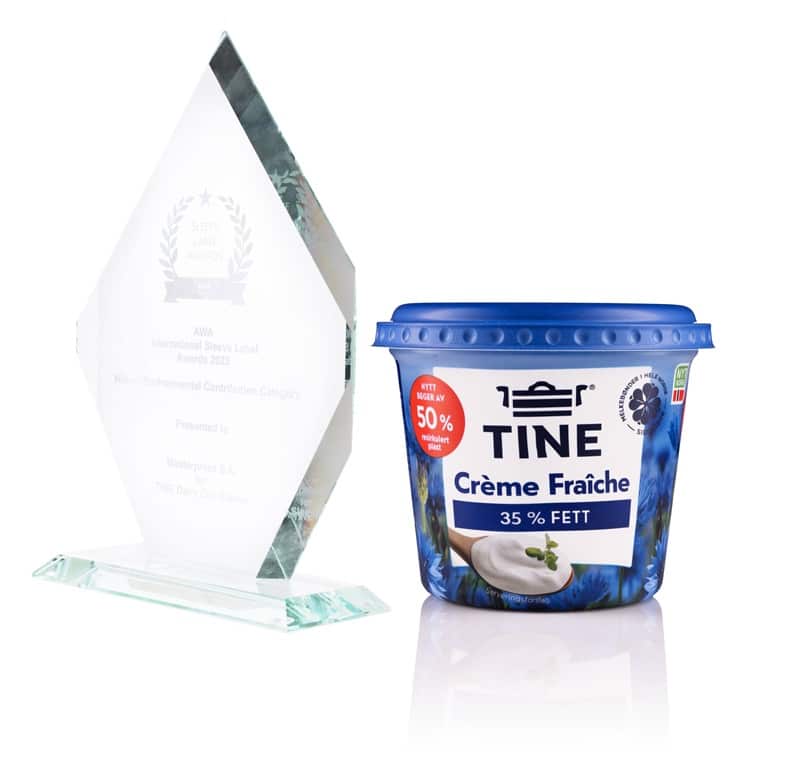
A notable example is the dairy industry’s TINE 300g Dairy Cup Sleeve, made by Masterpress for Berry Superfos Lidköping. Polymers
This innovation reflects RecyClass’ “designed-for-recycling” standards and uses a low-density polyolefin shrink sleeve, creating a “mono-material-like” solution for polypropylene cups.
Innovation in Material Choice
Previously, dairy cups were primarily made from polystyrene, a material lacking effective recycling streams. The rejection of non-recyclable polystyrene packaging by major retail chains prompted a shift to polypropylene for dairy cups. This change required a compatible shrink sleeve material to ensure the recyclability of the entire package. Polymers
The solution was a polyolefin shrink sleeve, identified as PP in recycling processes, allowing it to be sorted and recycled alongside polypropylene. Masterpress’ development was validated by Tomra’s testing and RecyClass certification, confirming the polyolefin shrink sleeves’ recyclability on PP containers.
Conclusion
The future of sustainable packaging lies in embracing diverse materials and technologies to reduce environmental impact. Balancing innovation with practicality, the industry must ensure that new solutions are both environmentally friendly and effective in real-world applications. Polymers
This involves technological advancements, strategic material choices, consumer engagement, and industry-wide collaboration, leading the charge in ecological responsibility and setting a sustainable course for packaging’s future.