Iran Pushes BRICS to Take Stronger Stance Against U.S. and Israel
Iran BRICS foreign ministers meeting
Iran Pushes BRICS to Take Stronger Stance Against U.S. and Israel
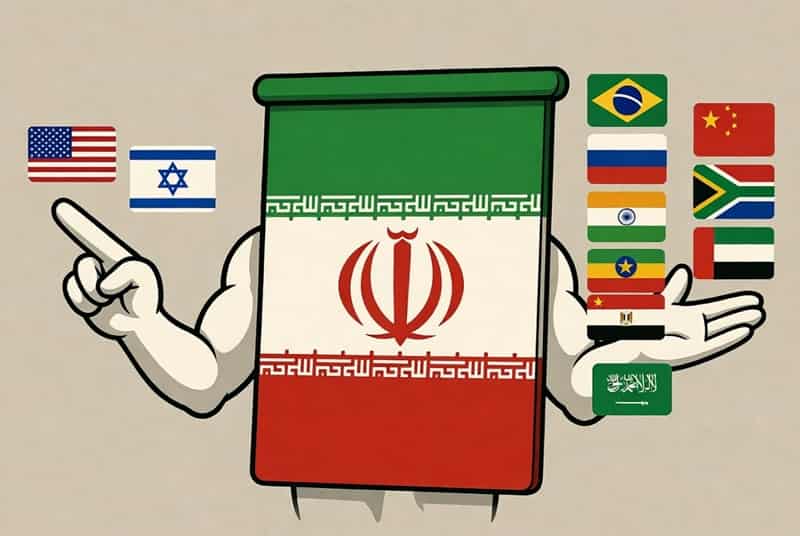
Iran used the BRICS foreign ministers’ meeting in New Delhi to call for stronger political support against the United States and Israel, highlighting growing diplomatic tensions inside the bloc.
Iranian Foreign Minister Abbas Araqchi urged BRICS countries to explicitly condemn what he described as violations of international law by Washington and Israel. He portrayed Iran as a victim of what he called “illegal expansionism” and regional destabilization.
The appeal signals Tehran’s attempt to widen international backing beyond direct negotiations with Washington. By bringing the issue to BRICS, Iran is seeking support from major emerging economies while regional tensions remain fragile.
Divisions Inside BRICS Become More Visible
The New Delhi meeting also exposed clear differences among BRICS members and partner countries.
Tensions reportedly increased after Araqchi accused the United Arab Emirates of involvement in military operations against Iran, despite Emirati representatives attending the same BRICS+ gathering.
Because BRICS decisions are typically based on consensus, disagreements between Iran and the UAE may complicate efforts to release a unified statement on the conflict.
The divisions underline a broader challenge for the bloc: balancing political solidarity with competing national interests.
Maritime Security Concerns Intensify
Regional instability has also increased pressure on international shipping routes.
An Indian-flagged vessel traveling from Somalia to the United Arab Emirates sank in Omani waters after a fire broke out onboard. All 14 crew members were rescued by the Omani Coast Guard.
According to maritime security assessments cited by Reuters, the explosion may have been linked to a drone or missile strike.
The incident raised concerns in India, which later described the attack as “unacceptable.” The episode demonstrated how countries trying to maintain diplomatic balance are increasingly being affected by the wider conflict.
India Prioritizes Trade and Shipping Stability
India, which will chair BRICS in 2026, adopted a more cautious tone during the meeting.
Foreign Minister Subrahmanyam Jaishankar emphasized the importance of protecting maritime trade routes through the Strait of Hormuz and the Red Sea. He also criticized unilateral sanctions and coercive economic measures that disproportionately impact developing economies.
India’s position reflects its direct exposure to disruptions in Gulf shipping routes. Attacks on commercial vessels have affected energy supplies, trade flows, and maritime safety for Indian interests in the region.
Rather than endorsing stronger rhetoric, New Delhi appears focused on preserving regional stability and securing uninterrupted trade.
What Happens Next
The key question is whether BRICS can agree on a meaningful common position.
Iran is pushing for stronger condemnation of the United States and Israel, while India continues to prioritize diplomacy, maritime security, and economic stability. Ongoing tensions involving the UAE further complicate efforts to reach consensus.
For many countries involved, the conflict is no longer only a political issue. The growing risks to shipping, energy supplies, and international trade are becoming equally urgent concerns.
As diplomatic pressure and maritime instability converge, BRICS faces increasing difficulty in presenting a unified response to one of the region’s most sensitive geopolitical crises.
More….